

Since I just returned from almost a month in Europe, I’ve decided to answer some reader questions that I get often. Including these two from last year:
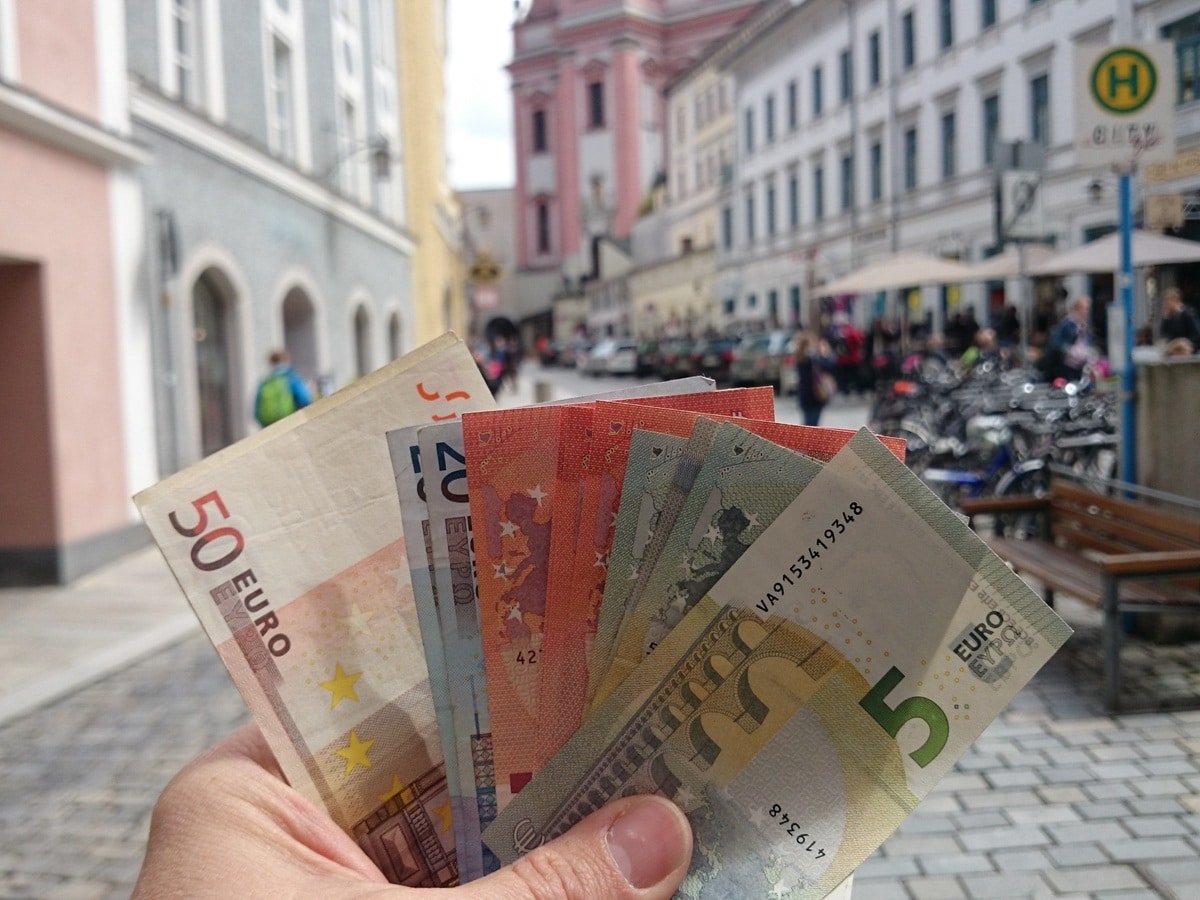 Patti C wrote: “Big question: Should I exchange $ here into Euros? Or at JFK or in Italy? I’m bringing US cash using my credit card when it’s allowed but want to have some Euros on me too.” Sydney L wrote to me a day later, asking: “I had a question for you in terms of taking EUR when traveling to Greece. Do you recommend converting USD to EUR when withdrawing cash from an ATM in Greece or converting the same here in the US before heading to Greece?”
I just came back from both Italy and Greece and have been to both countries multiple times. Things have changed over the years, which is a good thing because in the old days (27 years ago), before both countries adopted the Euro (Italy in 1999 and Greece in 2001), you had to use either the Lira or Drachma. These days, you can just use the Euro or your credit card.
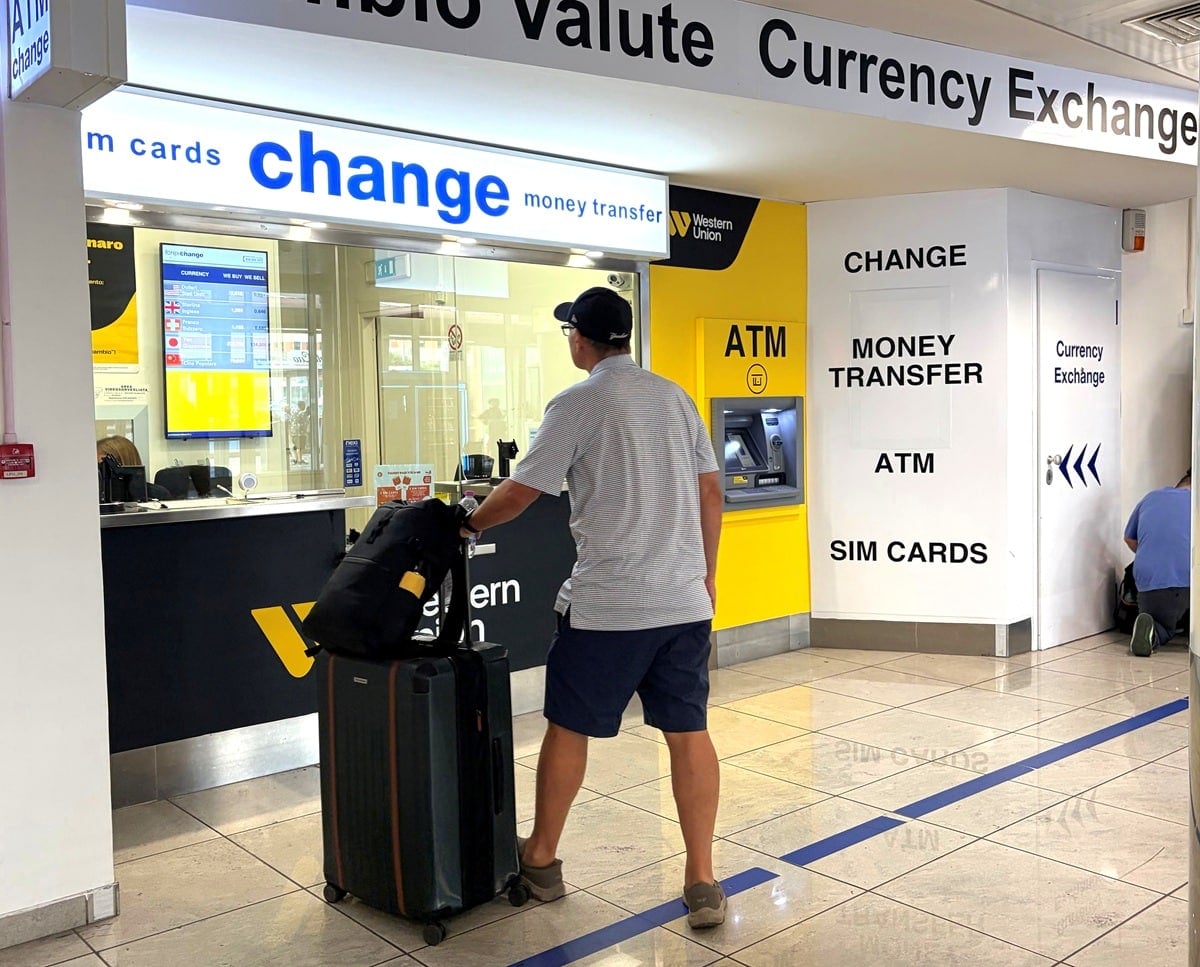 Personally, I never exchange money before leaving the United States. And I avoid the currency exchange booths at airports because their rates are usually terrible. (My wife snapped the photo of me above two days ago at Naples Airport, where I was checking out the ridiculous exchange rates.)
Instead, I withdraw cash from ATMs at major European banks, preferably ones affiliated with my bank, which helps keep transaction fees low or eliminates them altogether. I use those ATMs either when I arrive at the airport or at a bank near my hotel during daytime hours. I also avoid standalone ATMs and hotel front desks, as they often have unfavorable exchange rates and higher fees. Related: How to Avoid Bank of America’s International ATM Fees.
I almost always carry a hundred euros in my carry-on, usually left over from previous trips and ready for the next one. I also keep some small euro banknotes on hand for markets and public transportation in case I cannot use my credit card. But about 95 percent of the time, I just use my credit card or pay with Apple Pay. I even used Apple Pay to buy disposable cutlery at a grocery store for 0.30 euros, about 37 cents, in Helsinki yesterday.
Before you leave for your next trip, make sure your credit card company and bank know that you’re traveling internationally. Also, make sure they don’t charge foreign transaction fees and when paying or withdrawing money abroad, always choose to be charged in the local currency (euros) not USD. If you pick USD, you’ll get hit with a terrible conversion rate (called Dynamic Currency Conversion).
KEEP READING
–How to Save Money With a Secret Third Carry-On
–How to Use Your Wireless Headphones to Watch In-Flight Movies
–10 Airport Security Hacks Every Traveler Should Know
–How to Get the Best Coach Seat on the Plane
–The Sleep Hack Every Traveler Needs to Know
Want more travel news, tips and deals? Sign up to Johnny Jet’s free newsletter and check out these popular posts: The Travel Gadget Flight Attendants Never Leave Home Without and 12 Ways to Save Money on Baggage Fees. Follow Johnny Jet on MSN, Facebook, Instagram, Pinterest, and YouTube for all of my travel posts.



My wife and I recently went to Greece. The Athens airport ATM and the ATM at the Sofitel Hotel across from the airport each was going to charge 15% to withdraw money. (The symbol for our credit union system was listed on each ATM.) When we withdrew money from the Greece national bank in Samos, Greece, there was 0% charge. Check the transaction fee, and cancel the transaction if the ATM is charging you excessive fees.
Another tip – When paying with a credit card, always select the local currency to settle your tab. Your credit card bank will give you a better exchange rate than the local merchant’s bank.
Thanks! I did include that towards the bottom of the post
I know that you usually leave a tip for the hotel staff when you travel, Johnny. I do that as well, so I do need a small amount of local cash for this purpose.
We went to The Netherlands and Belgium a couple years ago. Not one place accepted cash, only cards. Not even the little ice cream cart on the street. I went to the bank to get some Euros (Rabobank), and they told me that they don’t have cash there. Can you imagine? A bank that doesn’t carry any cash. We never got one Euro. And we didn’t need it. Cash is dead. I thought it was partly due to the pandemic. People didn’t want to touch anyone else’s money because it notoriously carries germs.
Thanks for sharing!
I agree with Sandy’s experience in Scandinavia. In 2018 we visited Denmark and Sweden on a cruise – neither use the Euro and we never had a need for the local currency. Everything was paid by credit card. On a cruise in 2023, we again visited Denmark and Sweden as well as Norway, also not on the Euro, and again, never a need for local currency.
And the same was true for our visits to the UK – we would withdraw about 40 or 50 Pounds and be hard pressed to spend it.
In the Euro countries, we do make a small withdrawal from a bank ATM, but we are finding less and less need for cash anywhere. Even in Rome a couple of years ago we could pay for a 2 Euro gelato with a card – this in a country that was famous for its cash oriented society.
The best deal is to open a checking account with Charles Schwab Bank, done online. No fees for the account and they reimburse ATM fees worldwide. This is popular advise from many savvy travelers as the best way to deal with ATMs overseas.
Great advice!
My bank (Bank of America) has great currency conversion rate and I get an extra bonus as a preferred customer. I simply order a few hundred in the local currency to have some cash in case credit cards aren’t taken or can just use for things like beers or burn at the airport duty free shop on the way home. Worst case I convert it back and don’t lose too much. Agree airport currency exchanges are brutal. ATMs can be good but I got a $20 fee using one in Vietnam which really offset get $100 worth of Dong
I recently returned from a trip to Scandinavia. Before I left, I had gotten Swedish and Norwegian currency. When I got to the hotel in Sweden, I asked the front desk if I might get some small bills since the bank I got them from only gave me large denominations. The hotel informed me that they have no cash and were unable to do that.
I went to a small store assuming I could purchase something and get change in local currency. The store said they no longer take cash. As I traveled through Sweden, I found that to be the general rule. Even street vendors only wanted credit cards.
I found the same to be true in Norway. Many stores and restaurants had signs saying “cards only”. I guess foreign banks must get a cheaper rate on credit card transactions than those in the United States.
I do usually carry a small number of euros for travel in countries that accept those. Mexico also seems to prefer pesos to credit cards.
Wow! Good to know. Thanks for sharing
Johnny I agree wholeheartedly with your advice but you could go a little further to tell them that all public transport and taxis want credit cards, not cash. Most stores in Greece wouldnt take cash at all, insisting on cards. They don’t have a register with cash in it, just a terminal to waive your card it. Get an ATM card and a credit card with no foreign transaction fees and you are golden. Bank ATM’s are safe, especially in the lobby rather than out on the sidewalk, don’t use the ones on the street or in a store. I also took about $100 in euro small bills and coins for tips.
Good to know! Thank you for sharing