

This article has been produced in partnership with TESSAN. JohnnyJet.com may earn a commission on purchases made through the links below.
International travel comes with a long packing checklist but there’s one small detail that’s surprisingly easy to overlook: figuring out how you’re going to charge and use your electronics once you arrive. Different countries use different outlet types and, in many cases, different voltages, so tossing your usual phone charger, hair dryer or curling iron into your suitcase without checking compatibility first can be an expensive mistake.
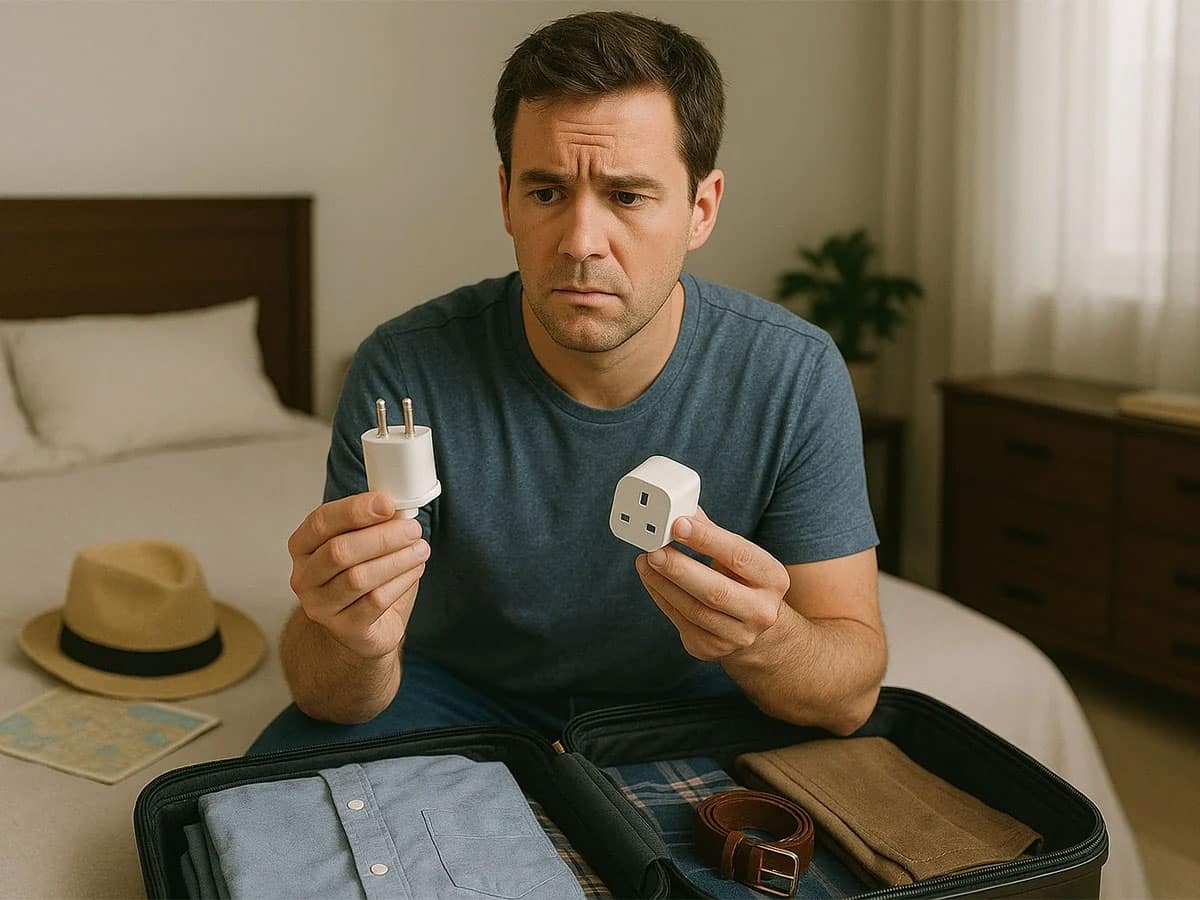
If you’ve ever stared at your curling iron or phone charger and wondered, “Do I need a travel adapter or a voltage converter for this thing?” you’re definitely not alone. The terms are often used interchangeably, but adapters and converters do two very different jobs. An adapter allows your plug to fit into a differently shaped electrical outlet, while a voltage converter changes the voltage coming from the outlet. Knowing which one you need, and checking the voltage rating on your devices before you leave, can save you from arriving home with a fried flat iron or other damaged electronics.
Here’s how to pack smart and power up safely, no matter where you go.
Travel Adapter vs. Converter
Here’s the golden rule: Adapters change the shape of your plug. Converters change the voltage.
Travel adapter: This little gadget lets your plug physically fit into a different country’s outlet. It doesn’t change the electrical voltage, just the plug configuration.
Voltage converter (or transformer): This device changes the voltage coming from the outlet to a voltage your appliance can use. It may be necessary for certain single-voltage appliances when traveling somewhere with a different electrical voltage.
Why Voltage Matters
Electrical standards vary around the world. In the U.S. and Canada, household electricity is generally 120V, while much of Europe and many other destinations use 220–240V. Japan uses 100V.
If you have a single-voltage device designed only for 110–120V and plug it into a 220–240V outlet using nothing but a plug adapter, you could damage the device. That’s where the right voltage converter comes in.
But here’s the good news: Many of the electronics we travel with today, including phone and laptop chargers, are designed to accept a wide range of input voltages. Check the tiny print on the charger or power supply. If you see an input range such as “100–240V, 50/60Hz,” you generally don’t need a voltage converter—you just need the appropriate plug adapter for your destination.
Devices That Usually Just Need a Travel Adapter
Many modern electronics have power supplies that support 100–240V, including:
- Phones and phone chargers
- Tablets
- Laptops
- E-readers
- Camera battery chargers
- Some electric toothbrushes
Never assume, though. Always check the voltage information printed on your particular charger or device before plugging it in abroad.
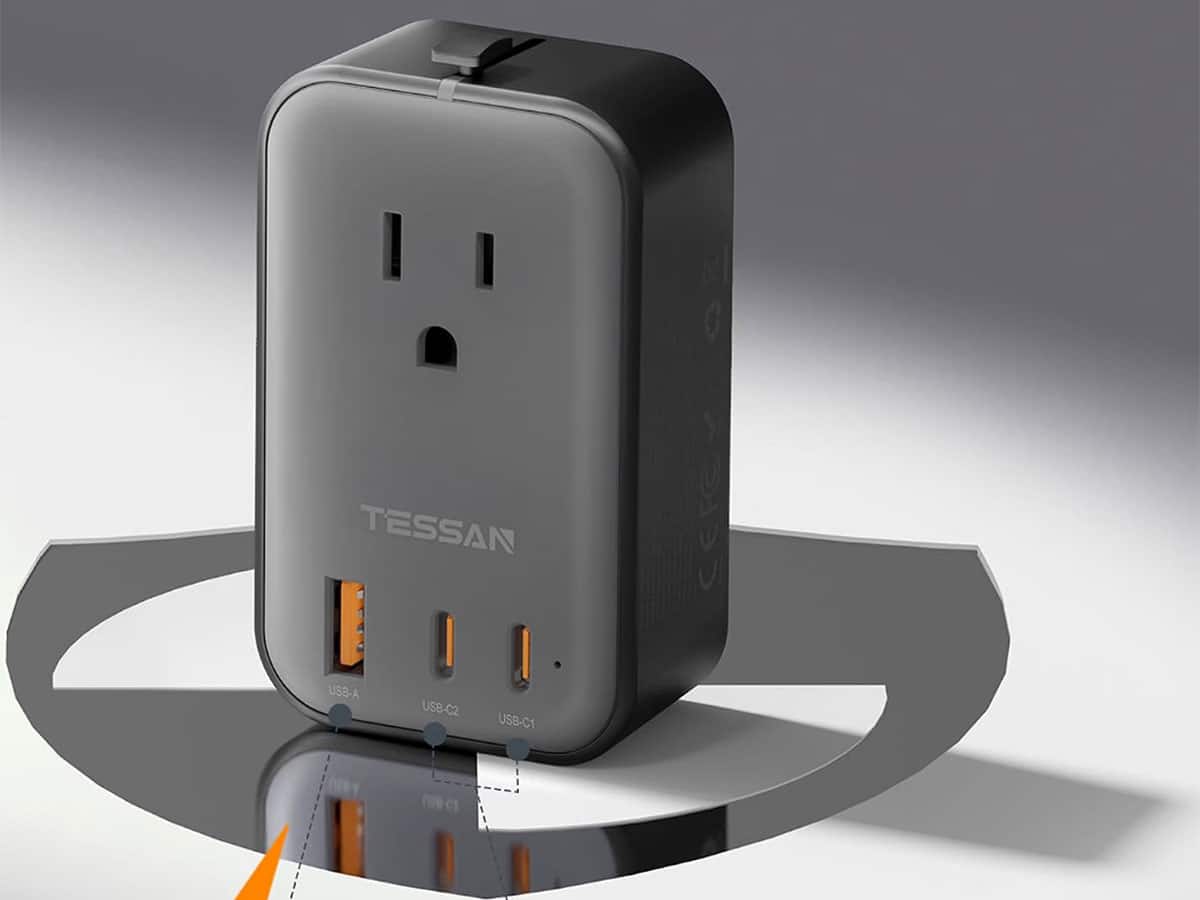 For travelers who visit multiple destinations, a universal adapter can be much easier than collecting individual adapters for different countries. The TESSAN Universal Power Adapter is designed with multiple international plug configurations, making it a convenient option for travelers who want one adapter for trips to different parts of the world.
One important thing to remember: A universal power adapter is still an adapter, not a voltage converter. Before plugging an appliance into its AC outlet, make sure that appliance supports the voltage supplied at your destination.
What About Hair Dryers, Curling Irons and Straighteners?
This is where you really need to pay attention to the label. Hair dryers, curling irons and straighteners can draw considerably more power than a phone charger, and not all of them are dual voltage. Check your appliance for its supported voltage before packing it. If it lists a range such as “100–240V,” it can generally be used within that voltage range with the appropriate plug adapter.
If your appliance only lists 110V or 120V and you’re traveling somewhere that supplies 220–240V, a simple travel adapter is not enough. You’ll need an appropriate voltage converter that is compatible with the appliance and rated to handle its power requirements.
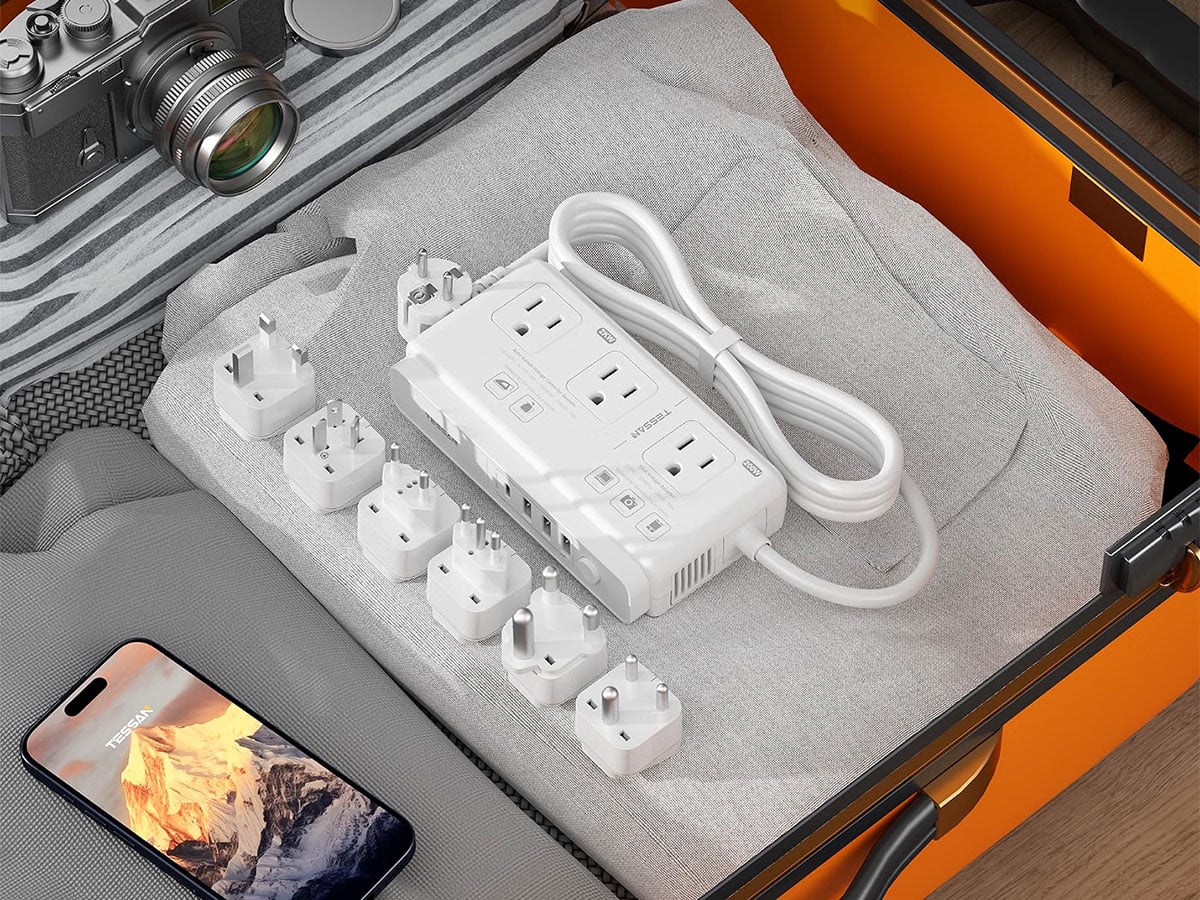 The TESSAN Voltage Converter US to Europe, 220 to 110 Voltage Converter is designed for this kind of situation, stepping higher-voltage electricity down for compatible lower-voltage devices. It also comes with multiple international plug adapters, which can make it useful for trips involving more than one destination.
However, don’t assume that owning a converter means you can plug any 110V appliance into it. Always check the converter’s wattage limits and manufacturer instructions against the appliance you plan to use. High-powered appliances such as hair dryers can require substantially more wattage than smaller electronics, and not every travel converter is designed to handle them.
For frequent travelers, an even easier solution may be to buy dual-voltage hair tools or use the hair dryer provided by your hotel.
Plug Types Around the World
There are 15 plug and socket types used around the world, designated Type A through Type O. Some of the ones travelers encounter most often include:
Type A/B: Used in the U.S., Canada, Mexico and other destinations; Japan primarily uses Type A and also uses Type B in some locations.
Type C/E/F: Common across continental Europe, although the exact socket type varies by country.
Type G: Used in the United Kingdom, Ireland, Singapore and other destinations.
Type I: Used in Australia, New Zealand, China and other destinations.
Type D/M: Used in India and certain other countries and regions.
Because plug standards can vary from one destination to another, and some countries use more than one socket type, it’s always smart to check your specific destination before you leave.
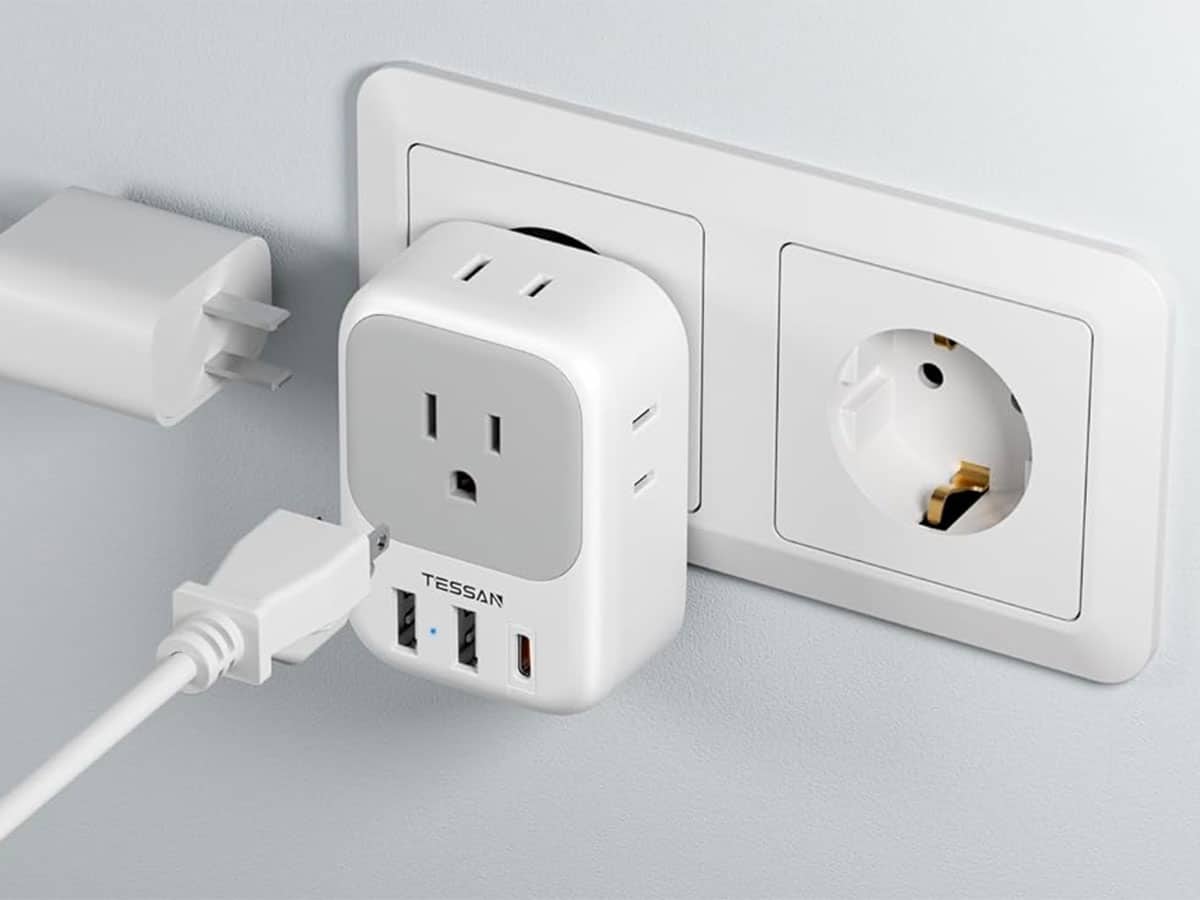 If you’re heading to continental Europe, you may not need a full universal adapter. The TESSAN European Travel Plug Adapter (2-Pack) uses a Type C plug and is designed for many popular European destinations. Having two is also handy when hotel rooms have inconveniently placed outlets or two travelers need to charge devices at the same time.
Just keep in mind that a Type C adapter is not appropriate for every European destination. In particular, the United Kingdom and Ireland use Type G outlets. And, like the universal adapter, this Type C plug adapter does not convert voltage. The device you plug into it still needs to be compatible with the local voltage.
What to Pack: A Quick Cheat Sheet
Phone, tablet or laptop with a 100–240V charger: Travel adapter
Dual-voltage hair tool: Appropriate travel adapter
110/120V-only appliance in a 220–240V destination: Compatible, properly rated voltage converter
Traveling to several countries with different outlets: Universal travel adapter
Traveling primarily through continental Europe: Type C adapter may work for many destinations, but check each country on your itinerary
High-wattage single-voltage appliance: Check the appliance wattage and converter specifications carefully before using it or consider a dual-voltage alternative
Pro Tips for Packing Smart
Check your device labels. Look for the input voltage. If it says “100–240V,” you generally won’t need a voltage converter when traveling somewhere within that range, although you may still need a plug adapter.
Don’t confuse an adapter with a converter. Being able to physically plug your device into an outlet doesn’t mean it can safely handle the electricity coming out of it.
Don’t assume your adapter has surge protection. Some travel adapters specifically do not include surge protection, so check the specifications of the individual product rather than assuming it’s built in.
Be careful with power strips. If you bring one abroad, make sure the power strip itself is rated for the voltage you’ll be using and that you remain within the electrical limits of the strip, adapter and wall outlet.
Invest in a universal adapter if you travel frequently. One compact adapter that supports several major plug types can be much easier to pack than a collection of individual country adapters.
Consider dual-voltage hair tools. If you travel internationally often, they can be much simpler than packing a voltage converter.
Recommended Must-Haves
For trips to multiple countries: TESSAN Universal Power Adapter
For many continental European destinations: TESSAN European Travel Plug Adapter 2 Pack, Type C Plug
For compatible 110/120V appliances in 220–240V destinations: TESSAN Voltage Converter US to Europe, 220 to 110 Voltage Converter
A portable power bank is another smart addition for keeping phones and other USB-powered devices charged while you’re on the go.
When it comes to international travel adapters and voltage converters, the trick is knowing your devices and your destination. With the right set-up, you can stay powered up across the globe without any sparks flying. So, before you zip up your suitcase, double-check your plugs, voltages and devices. A little planning goes a long way toward keeping your electronics (and your hair!) safe.
KEEP READING
–How to save money with a secret third carry-on
–How to use your wireless headphones to watch in-flight movies
–10 airport security hacks every traveler should know
–How to get the best coach seat on the plane
–The sleep hack every traveler needs to know
Want more travel news, tips and deals? Sign up to Johnny Jet’s free newsletter and check out these popular posts: The Travel Gadget Flight Attendants Never Leave Home Without and 12 Ways to Save Money on Baggage Fees. Follow Johnny Jet on MSN, Facebook, Instagram, Pinterest, and YouTube for all of my travel posts.


I would stay away from converters. It’s too easy to fry hair tools. Converters are not strong enough to make the conversion in all products. It is much better to purchase hair tools that work with both 110 & 220v. This way you can travel with ease, knowing that you only have to change the plug end. It is not hard to find most dual voltage hair tools. Hair dryers will take a little longer to find but you can get them.
Just returned from Sicily where the travel adapters I used for previous visits to France DID NOT FIT most Italian sockets. Most Italian sockets are Type L and need a fractionally different plug from the French Type C/E.