Just because something is legal in the United States doesn’t mean you can bring it into another country. The U.S. State Department is reminding Americans to check their bags carefully before traveling internationally or risk serious legal consequences.
 The U.S. State Department just sent out an important travel reminder that every American planning an international trip should read. The message is simple but could save you from spending your vacation in a foreign jail: “Legal in the United States does NOT mean legal everywhere.”
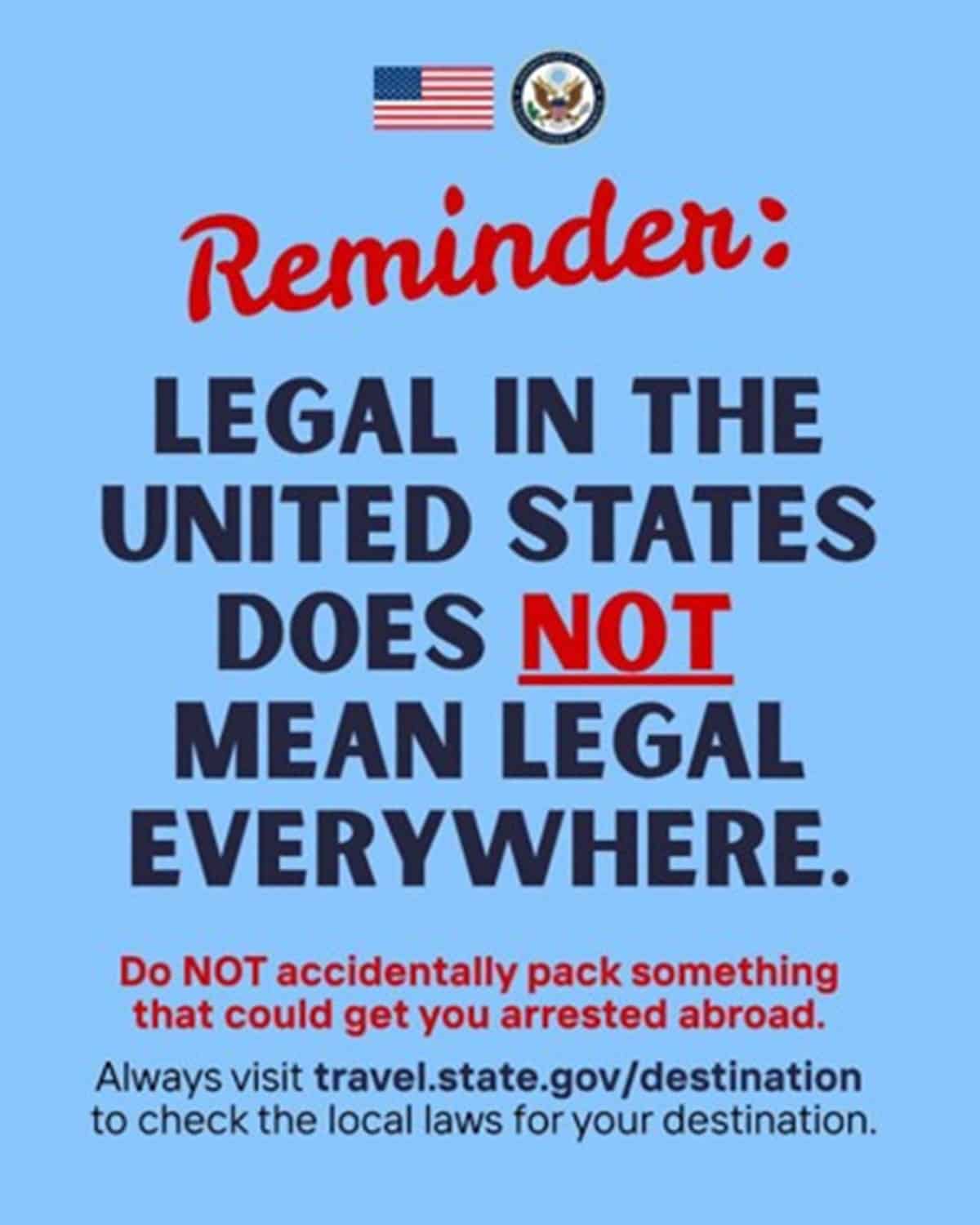 The State Department warns that Americans are subject to local laws when traveling abroad and that some everyday items we don’t think twice about packing could be illegal in other countries. According to the warning, items that could cause problems include:
- Certain prescription and over-the-counter medications
- THC and CBD products, including medical marijuana
- Weapons and ammunition
- Fresh produce and certain food items
The State Department advises travelers to go through their bags, pockets and toiletry kits before leaving home to make sure nothing prohibited accidentally slips through.
This is something I’ve written about multiple times over the years because the consequences can be life-changing. Unfortunately, we’ve seen Americans learn this lesson the hard way.
Americans arrested in Turks and Caicos over stray bullets
Remember the headlines in 2024 when multiple American tourists were arrested in Turks and Caicos after authorities discovered ammunition in their luggage? I covered several of those cases, including an American cruise passenger who was arrested after ammunition was discovered during a security screening in Grand Turk.
Another traveler, Ryan Watson of Oklahoma, was arrested after authorities found four rounds of ammunition in his bag. The travelers faced potentially severe prison sentences under the territory’s strict firearms and ammunition laws, even though they reportedly had no guns with them. The cases made international headlines and served as a wake-up call for travelers who assumed a few forgotten bullets wouldn’t be a big deal.
It doesn’t matter whether something is legal in your home state or whether you accidentally left it in your bag. When you enter another country, you’re subject to that country’s laws. If you own a firearm, my advice is to never use the same bag for international travel that you use for hunting, shooting or storing ammunition. It’s simply not worth the risk. And don’t assume that because your luggage cleared TSA screening in the United States, everything inside it is legal at your destination.
Even common cold medications can get you into trouble
This warning doesn’t just apply to firearms, ammunition or recreational drugs. Years ago, I wrote about how common over-the-counter medications sold in American pharmacies can be restricted or prohibited in other countries. Japan is a particularly good example.
Certain medications containing stimulants or other restricted ingredients are prohibited, even if you have a valid U.S. prescription. Some medications used to treat ADHD, including Adderall, cannot legally be brought into Japan.
Certain cold and sinus medications sold in the United States may also contain ingredients that are restricted in Japan. That’s why it’s important to check the actual ingredients in your medication rather than relying on the brand name. Not every Tylenol product, for example, is prohibited in Japan. The specific formulation matters.
And remember, having a doctor’s prescription doesn’t automatically make a medication legal in another country. If you take prescription medication, check with the destination country’s embassy or relevant government agency well before departure. Some countries require advance approval or special documentation.
Don’t forget about THC and CBD products
With marijuana legal for recreational or medical use in many U.S. states, it’s easy for travelers to forget that other countries have very different rules. Some countries have extremely strict drug laws, including serious penalties for possessing even small amounts of cannabis.
That includes products travelers might consider harmless, such as CBD oils, gummies, creams and other cannabis-derived products. Just because you bought something legally at home doesn’t mean you can take it across an international border.
My advice is to leave THC and CBD products at home unless you’ve confirmed that they’re permitted at your destination and at any countries you’re transiting through.
Even food can cause problems
Another item on the State Department’s warning list is fresh produce and certain foods. Many countries have strict agricultural import regulations designed to protect their crops, livestock and ecosystems. Something as innocent as an apple, orange or other fresh fruit tucked into your carry-on could violate local import rules. I always recommend finishing or disposing of restricted food before going through customs and declaring any food items when required.
My advice: Check your bags before every international trip
Before leaving for the airport, I recommend taking a few extra minutes to inspect your luggage thoroughly. Here’s what I would do:
- Empty every pocket and compartment of your carry-on, backpack and checked luggage.
- Check toiletry bags for medications, CBD products or other potentially restricted items.
- Review your prescription and over-the-counter medications to ensure they’re permitted at your destination.
- Make sure there is no ammunition or other prohibited equipment hiding in a bag you’ve used previously.
- Check agricultural and customs restrictions before packing snacks or fresh foods.
- Review the rules for every country on your itinerary, including transit stops where you may have to clear customs.
The State Department recommends visiting travel.state.gov/destination to research local laws and restrictions before packing. I would also check the destination country’s official customs and health authority websites for specific import requirements.
Bottom line
International travel is one of the most rewarding experiences in life, but it comes with responsibilities. I’ve traveled extensively around the world and one thing I’ve learned is that you can never assume another country’s laws are the same as ours.
What might seem like an innocent mistake at home could lead to fines, confiscation, detention or even imprisonment abroad. And while the U.S. Embassy may be able to provide consular assistance if you’re arrested, it cannot simply override another country’s laws or demand your release.
Keep reading: