

I just got a text from my cousin asking: “Did you use your phone in Italy, and how much did it cost?” It’s a question I get all the time.
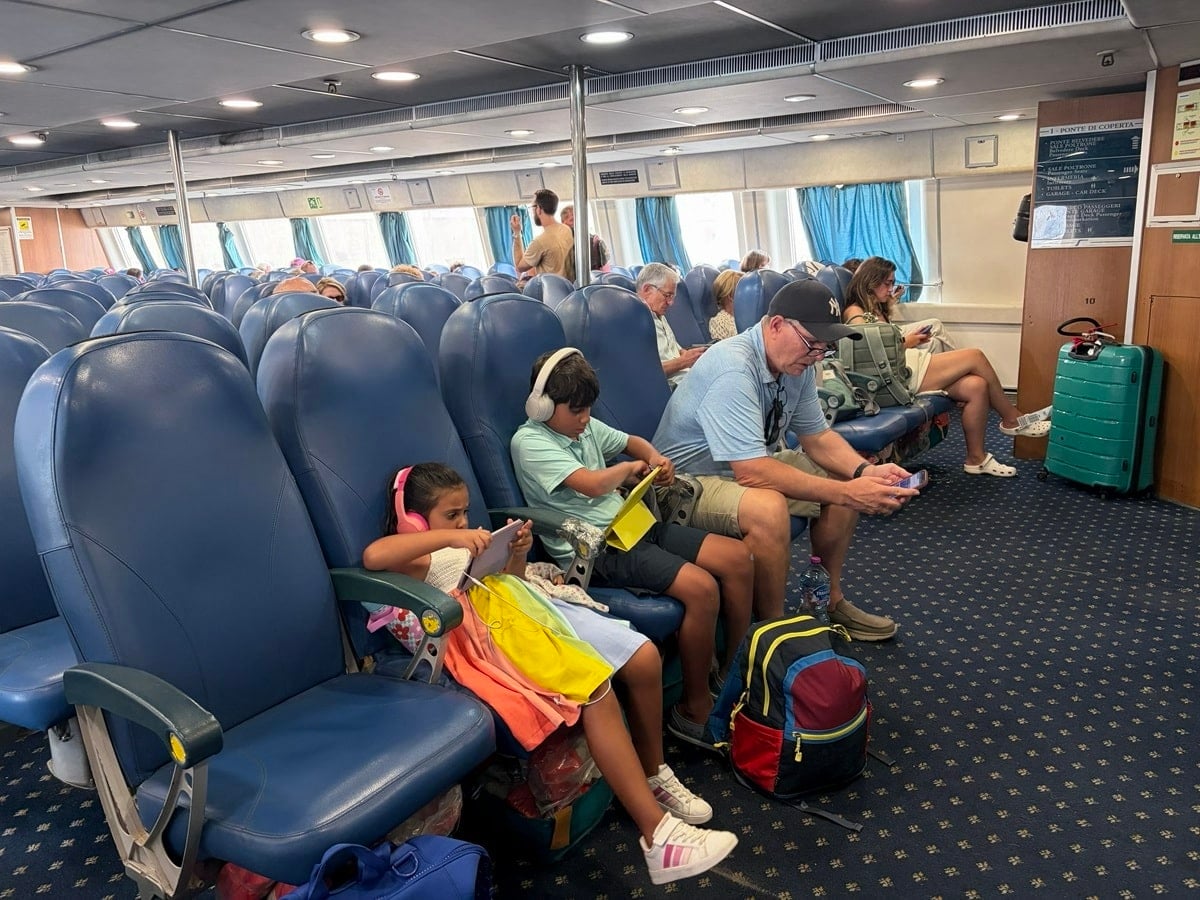 The answer depends on your carrier and your plan, so it’s always worth checking with your provider before you travel. I have T-Mobile’s unlimited plan, which includes international data, but I’ve found that speeds can be painfully slow in some countries. Sometimes it’s so sluggish that I can’t even reliably pull up directions. FYI: Photo was taken on 90-minute ferry to Ischia on June 23, 2026 (my phone worked the whole time).
That’s why I now use an eSIM whenever I travel internationally.
For those unfamiliar, Apple introduced eSIM technology in 2018, and most newer smartphones support it, including the iPhone XR, XS, XS Max and every iPhone model since the iPhone 11.
Why I use an eSIM
An eSIM lets you purchase a local or regional data plan without swapping physical SIM cards. You simply download a plan before your trip and activate it when you arrive.
There are plenty of reputable providers, including Airalo, Holafly, GigSky, Maya Mobile and Ubigi.
I’ve personally been using Ubigi (the transaction appears as Transatel) for the past couple of years after a recommendation from a frequent-traveling friend. It has worked well for me in multiple countries and offers coverage in more than 190 destinations worldwide.
How to set it up
The process is easy:
- Download the Ubigi app.
- Create an account.
- Install the eSIM by following the instructions in the app.
- Choose and purchase a data plan.
- Activate it when you land.
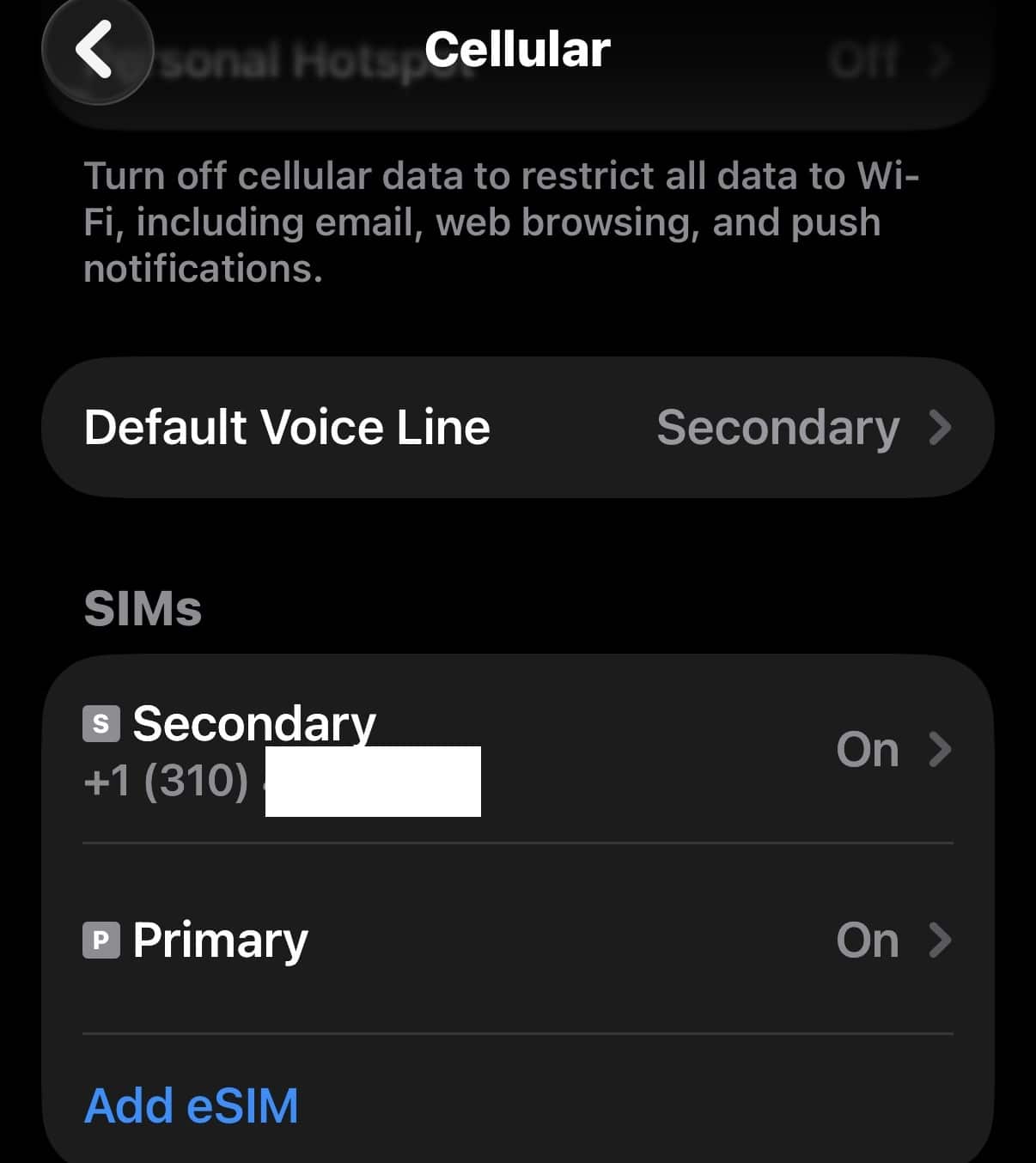
- I find changing Ubigi to my ‘primary’ and T-Mobile to ‘secondary’ works best. See screenshot below.
 What it costs
 What it costs
Pricing varies by destination and data package, but plans are generally affordable. On my recent trip to France, Austria, Hungary, Slovakia, Italy, Montenegro, Greece and Finland, I purchased a EUROPE UNLIMITED plan but you can also get them for specific countries if you’re not moving around like me. This gave me fast, reliable service throughout the trip.
One feature I especially like is that Ubigi allows hotspot and tethering use, so you can share your connection with family members or other devices if needed. I really needed this the first night at our Airbnb in Ischia because the internet was down and I had work to do. It worked great.
One important cruise tip
I traveled to so many countries this trip because I was on two different cruises. The first one was Viva Moments down the Danube River. The other was an ocean cruise from Rome on Enchanted Princess. If you’re taking an ocean cruise (not a river cruise), remember that your eSIM won’t help once you’re out at sea. Cellular roaming charges on cruise ships can be extremely expensive so be sure to turn to airplane mode.
As soon as I board, I turn off cellular data and connect to the ship’s Wi-Fi instead. It’s an easy way to avoid any unpleasant surprises on your phone bill. I actually set a reminder for each day around 4pm when I know I will be back onboard to switch my phone to airplane mode using FollowupThen. I also set a daily alarm on my phone just to make sure.
The best endorsement I received was when I returned home, a friend of mine who who works for AT&T asked me: “Are you using AT&T International Day Pass on your travels?” I replied: “No, I have T-Mobile and I’m using an eSIM.”
His response: “Veteran move.”
After using eSIMs on multiple international trips, I’d have to agree. They’re one of the easiest ways to stay connected abroad without worrying about finding a local SIM card or racking up roaming charges.

it totally depends on how old your phone is. I have been using pixel phones since about the pixel sheree and I believe anything pixel 5 or newer has esim as an option. The problem you run into is if you’re on a major carrier your phone might not be unlocked. I have had great success using esims on my Android phones and suggest it to everyone. Usually, as long as your phone is more than a year old, your carrier will let you unlock it.
Thank you!
Just like you We have T-Mobile. Always had good service for data and texting.
If necessary will buy a one-day plan which includes phone calls. Otherwise phone calls are $.20 a minute. Which is less than the one-day plan.
Of course we are vacationing and don’t really need the Internet for anything and if we had an emergency, we would use the $.20 per minute.
I have never heard of this. Is it available for Android phones or only iPhones and does it matter who your carrier is? Thanks! I really enjoy your newsletters!
It doesn’t as long as you have a newish phone and it’s unlocked