With the holiday shopping and travel season almost here, scammers are looking for new ways to separate people from their hard-earned money. And thanks to artificial intelligence, some of their tricks are becoming more convincing than ever.
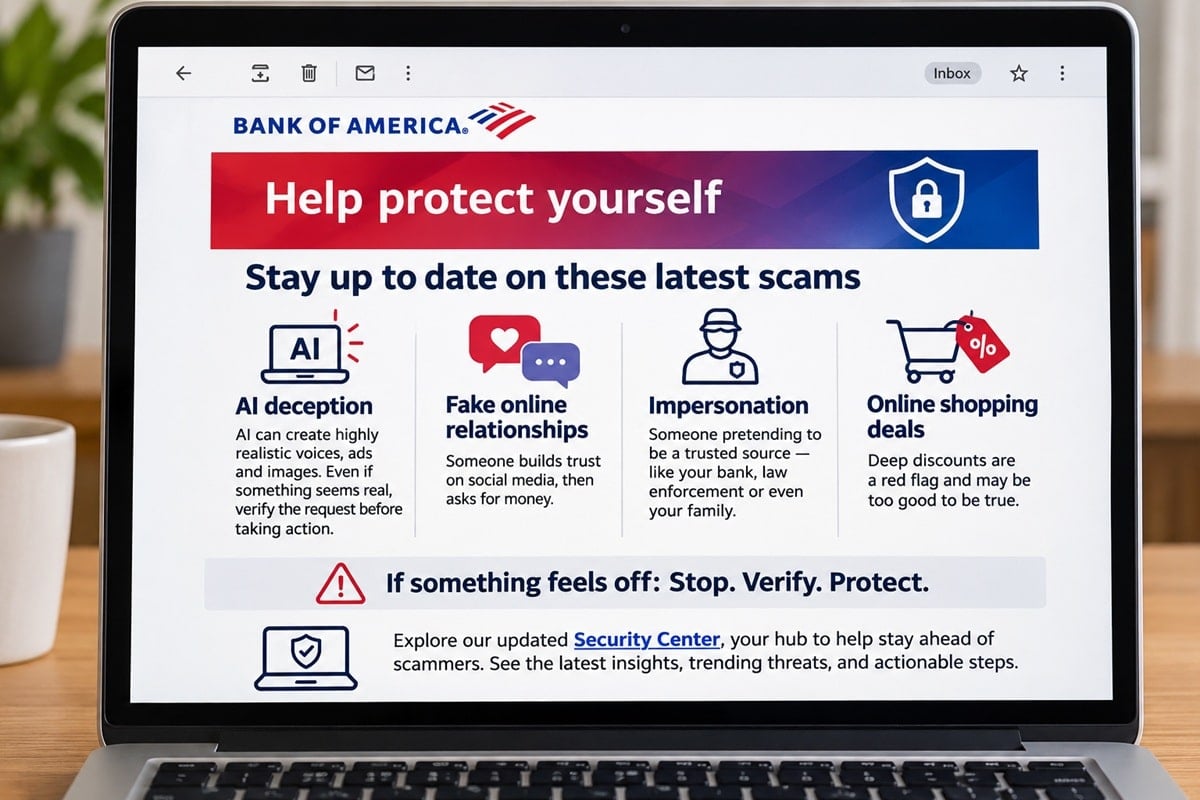
I received an email from Bank of America warning customers about four scams to watch out for. While none of these scams is entirely new, the technology criminals are using and the ways they’re targeting victims continue to evolve.
I’ve written about Bank of America’s scam warnings before, including scams involving travel bookings, fake tickets and toll payments. But this latest email caught my attention because some of these scams could easily fool even experienced travelers and shoppers.
The bank’s simple message was: “Stop. Verify. Protect.”
That’s advice everyone should follow, especially during the busy holiday season when people are distracted, rushing to buy gifts, booking trips and juggling a million other things.
Here are the four scams Bank of America is warning customers about and what you can do to avoid becoming a victim.
1. AI Deception: When You Can’t Believe Your Eyes or Ears
This is probably the most frightening scam on Bank of America’s list because artificial intelligence has made it easier for criminals to create convincing fake voices, images, videos and advertisements. Think about how much information people share publicly on social media. A scammer may be able to use a short audio clip to imitate someone’s voice and then contact their family members pretending there’s an emergency.
Imagine getting a frantic phone call from someone who sounds exactly like your child, spouse or parent. They claim they’ve been in an accident, arrested or stranded somewhere and need money immediately. Your first instinct might be to help. That’s exactly what the scammer is counting on. Travelers should be especially careful because these scams often involve someone claiming to be stranded overseas, missing a flight or needing emergency funds.
How to protect yourself: If someone contacts you asking for money, even if the voice sounds familiar, hang up and call that person using a number you already know. Don’t trust caller ID, either, since scammers can spoof phone numbers.
Families should also consider establishing a private verification phrase that only trusted family members know. Don’t share it publicly or use something easily guessed from social media. And remember, just because a video looks authentic or a voice sounds familiar doesn’t mean it’s real.
2. Fake Online Relationships: When Friendship Turns Into Fraud
Bank of America is also warning about scammers who build relationships online before eventually asking for money. These scams can begin innocently enough. Someone reaches out through social media, a dating app or an online community. They seem friendly, interesting and genuinely interested in getting to know you.
Over time, they build trust. Sometimes this happens over weeks or months. Then comes the request for money.
Perhaps they claim to have a medical emergency, a business problem or an unexpected expense. Sometimes they say they want to visit you but can’t afford the airfare. Other times, they claim to be traveling or working overseas and suddenly need financial assistance. The stories can be elaborate, and scammers are often skilled at manipulating people’s emotions.
How to protect yourself: Never send money, gift cards, cryptocurrency or banking information to someone you’ve only met online, no matter how convincing their story sounds. Be particularly suspicious if someone repeatedly makes excuses about why they can’t meet in person or participate in a live video call. Keep in mind that even video calls aren’t foolproof now that AI-generated impersonations are becoming more sophisticated.
If someone you’ve never met asks for money, that’s a major red flag.
3. Impersonation Scams: Your Bank, the Police or Even Your Family
This is one of the scams I worry about most because criminals have become incredibly good at pretending to represent legitimate organizations. They might call, text or email claiming to be from your bank, a government agency, law enforcement or a company you regularly do business with. They may even know your name, address or other personal information, making the interaction seem legitimate.
The scammer will often create a sense of urgency, claiming there’s suspicious activity on your account or that your money is at risk. Then they’ll ask you to provide sensitive information, share a verification code, click a link or transfer money to supposedly protect your funds.
Here’s something everyone needs to remember: Your bank will not ask you to move money to another account to keep it safe. If someone tells you to do that, it’s a scam.
My wife, Natalie, once had an experience with someone pretending to be from Bank of America. Fortunately, she recognized the warning signs and contacted the bank directly rather than trusting the caller. That’s exactly what everyone should do.
How to protect yourself: If you receive an unexpected call or text from your bank, don’t use the phone number or link provided in the message. Instead, open your banking app or call the number on the back of your debit or credit card.
Never share one-time verification codes with someone who calls you, and don’t let anyone pressure you into making an immediate financial decision.
Travelers should also watch for impersonators pretending to represent airlines, hotels, rental car companies or booking websites. A fake customer service number appearing in a search result can be just as dangerous as a fraudulent phone call.
4. Online Shopping Deals: When the Price Is Too Good to Be True
With Black Friday, Cyber Monday and the holidays approaching, this warning couldn’t be more timely. Bank of America says deeply discounted online deals can be a red flag. Scammers create fake shopping websites and social media advertisements that look like legitimate retailers. They may advertise popular electronics, designer merchandise or other expensive products at unbelievably low prices.
You place an order, enter your credit card information and wait for a package that may never arrive. In some cases, the criminals aren’t just trying to steal the purchase price. They’re also collecting payment information and personal details. And this doesn’t just apply to holiday gifts.
Travelers should be careful when they see unusually cheap airline tickets, hotel stays, vacation rentals or attraction tickets advertised through unfamiliar websites.
I’ve warned readers about travel-related scams Bank of America has highlighted because vacation planning can be an especially tempting time to jump on a deal without doing enough research.
How to protect yourself: Before purchasing from an unfamiliar website, check the URL carefully, look for independent reviews and verify that the company is legitimate. Don’t assume a website is safe simply because it appears in a sponsored search result or has a professional-looking design.
Whenever possible, use a credit card rather than a debit card for online purchases because credit cards generally offer stronger protections against fraudulent charges.
And if someone insists you pay with gift cards, cryptocurrency or a wire transfer, walk away.
My Advice: Slow Down Before You Click, Pay or Respond
I’ve traveled millions of miles over the years, and one thing I’ve learned is that scammers love creating urgency. They want you to panic. They want you to act before thinking. And they definitely don’t want you to take a few minutes to verify their story.
That’s why I think Bank of America’s advice is worth repeating: Stop. Verify. Protect.
Before sending money, sharing personal information or clicking a suspicious link, ask yourself whether the request makes sense. If there’s even a little doubt, contact the company or person directly through a trusted phone number or website.
And don’t assume you’re too smart or experienced to fall for a scam. These criminals are professionals, and some of their tactics are remarkably sophisticated.
You can find more information and security tips at Bank of America’s Security Center.
Bottom line: Whether you’re shopping for holiday gifts, booking your next vacation or simply answering your phone, a few extra seconds of caution could save you a lot of money and headaches.
Have you received a suspicious call, text or email pretending to be from your bank, an airline or another trusted company? I’d love to hear about it in the comments. Sharing these experiences can help other travelers recognize the warning signs before it’s too late.