This article has been produced in partnership with TESSAN. JohnnyJet.com may earn a commission on purchases made through the links below.
Summer might be prime time but there’s something magical about Europe in the fall. The summer crowds start to thin, temperatures cool down and suddenly wandering the streets of Paris, Rome or Amsterdam with a coffee in hand sounds even more appealing.
 But international travel also comes with a few logistical details that are very easy to forget until you’re standing in a hotel room with 8% battery and a phone charger that doesn’t fit into the wall.
Before you zip up your suitcase, spend a little time getting the practical stuff sorted. From downloading offline maps to figuring out exactly how you’ll charge all those devices, these 10 simple steps can make your European getaway a whole lot smoother.
Check Your Passport … Even If You Know It Hasn’t Expired
Don’t just check your passport’s expiration date. Check the entry requirements for every country on your itinerary. For Americans visiting Europe’s Schengen Area, for example, the U.S. State Department says your passport should be valid for at least three months beyond your planned departure from the EU. Some destinations elsewhere have different requirements, so it’s worth checking well before you leave rather than discovering a problem at the airport.
While you’re at it, take a photo or scan of your passport and save it somewhere secure that you can access from another device. You might also want to have a paper photocopy tucked away separately from your actual passport. Hopefully you’ll never need either, but if your passport disappears, you’ll be very glad you have them.
Know What’s Happening With Europe’s New Entry Rules
There’s been so much chatter about Europe’s changing entry requirements that it’s understandable if you’ve stopped keeping track.
Here’s where things stand: Europe’s new Entry/Exit System, or EES, is now fully operational. It electronically records entries and exits for eligible non-EU travelers visiting the Schengen Area for short stays and uses biometric information including a facial image and fingerprints. In other words, the arrival process may look a little different than it did on your last European vacation.
Then there’s ETIAS, the European Travel Information and Authorisation System, which is a separate travel authorization program for visa-exempt travelers. As of September 2026, ETIAS is not yet in operation, and the EU says travelers do not need to take any action yet.
If you’re traveling later in the fall, however, check the official ETIAS website again shortly before departure, since the program is expected to begin in the last quarter of 2026. And if your trip includes the United Kingdom, remember that it has its own entry requirements; U.S. travelers generally need a UK Electronic Travel Authorization (ETA) for short visits.
Figure Out Your Phone Plan Before You Land
This is one of those things that’s infinitely easier to deal with from your couch before you leave home than from baggage claim after an overnight flight.
Check what your wireless carrier charges for international roaming and compare that with your other options. Depending on your phone and itinerary, an international plan through your existing carrier may be the simplest choice. An eSIM can also be an easy and often economical option, especially if you’re visiting several countries.
Whatever you choose, set it up before departure if possible. You want to land, turn on your phone and go, not start researching data plans.
Download Offline Maps
Even with an international data plan, there will inevitably be a moment when your signal disappears at the wrong time. Download offline maps for the cities and regions you’ll be visiting before you leave home. This can be a lifesaver when you’re driving through the countryside, emerging from an underground train station or trying to find your hotel on a maze of tiny streets.
While you’re at it, save your hotel addresses, train stations, airport terminals and any restaurants or attractions you already know you’ll be visiting. It’s a tiny bit of pre-trip homework that can save a lot of stress.
Get Your Charging Situation Sorted Out
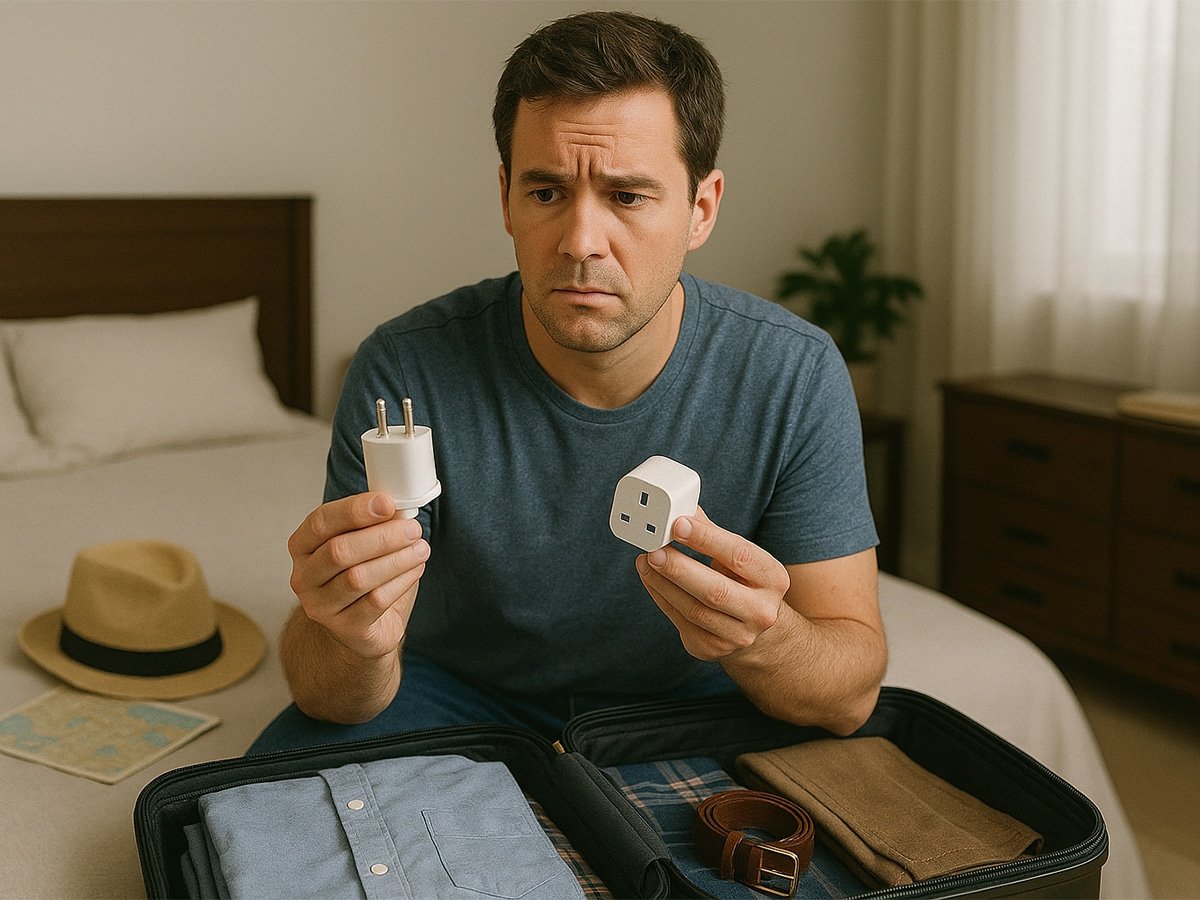
Most of continental Europe uses Type C plugs, although plug types can vary by country. The UK and Ireland, for example, use Type G plugs. That means you’ll need the appropriate adapter to plug your U.S. devices into the wall.
For a trip focused on continental Europe, the TESSAN Type C European Travel Plug Adapter is a particularly handy option. It has four AC outlets plus USB-A and USB-C ports, so one hotel outlet can handle several devices at once. The foldable plug is also a nice touch when suitcase space is at a premium.
If your itinerary includes several countries (say France, the UK and then somewhere farther afield), a universal adapter makes more sense. The TESSAN Universal 28W Travel Adapter has built-in Type C, G, I and A plugs and five USB ports (three USB-C and two USB-A), so you can use one compact adapter across more than 150 countries.
One important distinction: a plug adapter is not necessarily a voltage converter. Many modern electronics such as phones, tablets and laptop chargers are dual-voltage, but higher-powered appliances (especially hair dryers, curling irons and hair straighteners) may not be. Always look at the voltage information printed on the device or charger before plugging it in overseas. TESSAN specifically notes that its standard universal travel adapters do not convert 220V to 110V.
Build a Small Travel Tech Kit
Once you’ve figured out the adapter situation, gather all of your tech in one place rather than tossing chargers into random suitcase pockets.
Think phone cable, smartwatch charger, earbuds, power bank, camera charger and any other cords you use regularly. A short spare charging cable is also worth packing; they have a mysterious habit of disappearing on vacation.
If you travel with a lot of electronics or you’re sharing outlets with a partner or kids, a multi-port adapter can dramatically cut down on charger clutter. Another option is the TESSAN Ultra Thin Universal Travel Adapter PD 45W, which supports the major plug types used across Europe, the UK, Australia/China and North America/Japan and offers USB-C fast charging up to 45W.
Keep your essential chargers and adapter in your carry-on rather than checked luggage. If your suitcase takes a detour to another city, at least you’ll still be able to charge your phone.
Prepare for Fall Weather (Which Can Mean Almost Anything!)
Packing for Europe in fall can be tricky because “fall weather” can mean sunshine and 75 degrees in one city and cold rain in another.
Check the forecast a few days before departure, but don’t take it too literally. Layers are your friend: lightweight sweaters, a packable waterproof jacket, comfortable closed-toe shoes and a scarf can handle a surprising number of weather situations without taking over your suitcase.
A small umbrella like this one from ShedRain is worth considering, too. And if your trip covers several destinations, check the weather in each one. Rome in October and Copenhagen in October are two very different packing assignments.
Download Everything You Might Need
Assume you’ll have Wi-Fi and cellular service most of the time but prepare for the moments when you don’t.
Download airline apps and save your boarding passes. Download train tickets, museum tickets and reservation confirmations. Save your hotel information somewhere accessible offline. Download your airline’s entertainment app before you get on the plane and add a few movies, podcasts or books to your device for good measure.
I also like taking screenshots of particularly important QR codes and tickets. Digging through an email inbox while a line forms behind you is not how anyone wants to begin a vacation.
Give Your Credit Cards a Quick Check
Before leaving, make sure you know which cards in your wallet charge foreign transaction fees and which don’t. A 3% fee here and there may not sound dramatic, but over the course of a European vacation, it can add up.
Also make sure you know your PINs, especially if you plan to withdraw cash from an ATM. And add your primary cards to your phone’s digital wallet if you haven’t already; contactless payment is extremely common across much of Europe.
It’s still smart to carry more than one physical payment method, though. Keep a back-up card somewhere separate from your everyday wallet so a lost or stolen wallet doesn’t leave you completely stranded.
Make a “First 24 Hours” Plan
You don’t need to schedule every minute of your vacation (in fact, please don’t!) but having your arrival day loosely figured out makes everything easier.
Know how you’re getting from the airport to your hotel. Save the hotel address. Check whether you can buy your train or transit ticket ahead of time. Find out whether your hotel has 24-hour reception if you’re arriving late. And identify somewhere nearby where you can grab food if you land after a long travel day.
Most importantly, keep everything you’ll need for those first 24 hours in your carry-on: medications, toiletries, a change of clothes, underwear, chargers and your travel adapter. Here’s how to pack a 24-hour bag for travel.