Everest Base Camp is one of those trips that people are constantly curious about, and for good reason. It is the walk to the foot of the tallest mountain on Earth, through Sherpa villages and scenery that doesn’t look real until you’re standing in it. It’s also nothing like booking a week in Europe, and according to the trekking experts at Magical Nepal, the people who struggle most are rarely the least fit. They are usually the ones who were surprised by something they could have planned for.
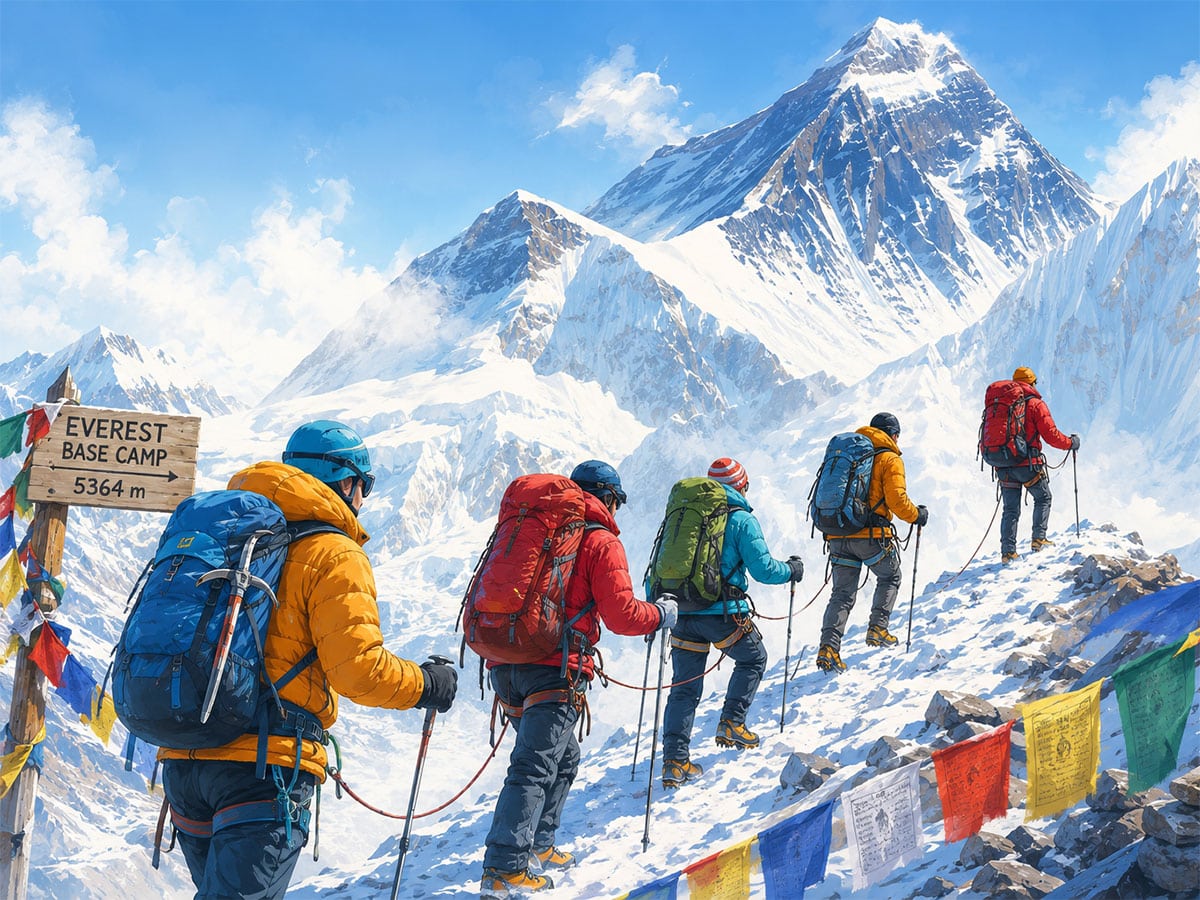
To help answer the questions first-time trekkers ask most often, we turned to the experts at Magical Nepal. Here are the ten things they say you should know before trekking to Everest Base Camp.
1. You Need a Licensed Guide Now So Plan for It
Start here, because the rules changed and it catches many people off guard. As of the 2026 season, foreign trekkers can no longer walk to Everest Base Camp on their own. You have to go with a licensed guide booked through a government-registered agency, and there are checkpoints at Monjo and Namche Bazaar that actually check.
According to the team at Magical Nepal, a guide-only arrangement runs about 25 to 40 US dollars a day. While some independent hikers may not love being told they cannot go solo, this is real altitude, and a good guide watches your health, reads the weather, sorts out your teahouse beds, and gets help fast when something goes wrong. For the money, that is a lot of peace of mind.
FYI: Book through an agency registered with the Nepal Tourism Board so your guide is properly licensed, and the porters are insured and paid fairly.
2. Altitude Is the Real Challenge, Not the Distance
If there is one thing the experts emphasize most, it is this. The daily walking is not brutal. You cover 5 to 7 hours on uneven trails, and plenty of people in their sixties do it comfortably. What sends trekkers home early is the thin air.
Base Camp sits at 5,364 meters. That is high enough that your body needs time to adjust, which is why any honest itinerary builds in two rest days, one at Namche Bazaar (3,440 meters) and one at Dingboche (4,410 meters). Do not skip them to save time. On those days, you still hike a little higher and then come back down to sleep, which is exactly how your body learns to handle less oxygen.
The advice from experienced guides is simple: go slow, drink far more water than feels natural, and learn the early signs of altitude sickness like a headache that won’t quit, nausea, dizziness, no appetite, and broken sleep. If you feel them, tell your guide right away. Coming down even a few hundred meters clears up most cases. Pushing through does not, and that is how a good trip goes bad.
If you want to ask about a medication like Diamox, have that conversation with your own doctor before you leave. That is a question for someone who knows your medical history, not something to sort out on the trail.
3. The Lukla Flight Might Not Leave From Kathmandu
Here is the surprise that catches nearly everyone. During the busy seasons, roughly mid-March through mid-May and late September through November, flights to Lukla do not leave from Kathmandu at all. They leave from Manthali Airport in Ramechhap, about four to five hours east by road.
That means a very early start. You leave Kathmandu around 1 a.m., drive through the night, and catch a short 15 to 20-minute flight into Lukla in the morning, when the mountain weather is calmest. Outside those peak windows, you fly straight from Kathmandu in about 30 to 35 minutes.
Either way, the mountain gets the final say. Cloud and wind close Lukla regularly, and flights get delayed or grounded with little warning. One recommendation from the experts is not to book your trip too tightly. Add two to three spare days at the end, and do not book your flight home for the day after you are due back in Kathmandu. That buffer is what saves the whole trip when the weather turns.
4. Timing Your Trek Changes the Whole Experience
Two seasons stand out. Spring, from March to May, brings warming days, blooming rhododendrons lower down, and the pre-monsoon climbing teams heading for Everest itself. Autumn, from late September to November, brings the clearest skies of the year and firm, dry trails.
Both are beautiful, and both are busy. In October, you will share the path with a lot of other people, and in the villages, you may end up sharing a room with a stranger or sleeping in the dining hall when beds run short. The upside of that crowd is company at dinner and plenty of people to point you in the right direction. Autumn is also the start of the climbing season, so you may see expedition teams heading for their own base camps, which is a fun thing to watch from the trail.
Winter is quiet and stunning but seriously cold, and some teahouses close for the season. The monsoon months of June through August bring cloud, mud, and leeches at lower elevations, and the most flight cancellations. Pick your window based on whether you care more about empty trails or reliable mountain views. Whichever you choose, the first clear look at Everest from the ridge near Tengboche tends to stop everyone in their tracks.
5. Train Before You Go (But You Don’t Need to Be an Athlete)
One piece of advice that often reassures first-time trekkers is that this is not technical mountaineering. There are no ropes and no ice axes on the standard route. It is a lot of walking, day after day, at altitude.
According to experienced trekking guides, the people who enjoy it most are the ones who trained their legs and their patience. In the two or three months before the trip, walk hills with a loaded daypack, climb stairs, and get in some steady cardio a few times a week. If you already hike on weekends and stay active in daily life, you are most of the way there. Strong legs and a calm head beat raw fitness on this trail every time.
6. Permits Are Simpler Than They Used to Be
Good news on the paperwork, because it actually got easier. You now need two permits: the Sagarmatha National Park Entry Permit of around 3,000 NRS (USD 20) and the Khumbu Pasang Lhamu Rural Municipality Permit of around 2,000 to 3,000 NRS (USD 15–20). The old TIMS card is no longer required on this route. Your agency arranges all of it before you fly, which is one less thing to worry about.
Note: The park counters take cash in Nepali rupees only, so carry enough and keep your permits dry and easy to reach for the checkpoints.
7. Teahouse Nights Are Simpler and Colder Than You Expect
Set your expectations early on accommodation, because basic is part of the deal. You sleep in family-run lodges called teahouses, usually in a twin room with thin walls and no heating in the bedrooms. The warm room is the dining hall, where a central stove gets lit in the evening, and everyone gathers for dinner.
The guides at Magical Nepal recommend ordering the dal bhat. It is lentils, rice, and vegetables; it usually comes with free refills, and it is the fuel the whole trail runs on. They also suggest eating a real breakfast, even if you are not normally a porridge-and-eggs person at 7 a.m., because you will burn through it.
Hot showers, Wi-Fi, and charging your phone almost always cost extra, and the price climbs the higher you go. Bring a sleeping bag rated well below freezing, because the nights up top get bitterly cold even in peak season, and a warm night’s sleep makes the next day much easier.
8. Carry Cash and Don’t Count on Staying Connected
The last reliable ATMs are in Namche Bazaar and they run dry during busy weeks. Past that point, it is a cash economy. Work out roughly what you will spend on snacks, drinks, hot showers, charging and tips, then carry that in Nepali rupees with a comfortable cushion on top.
The signal is patchy and gets worse the higher you climb. You can buy a local SIM in Kathmandu and Wi-Fi cards on the trail, but do not count on either one holding up. The guides recommend letting friends and family know you may be offline for a couple of weeks and embracing the opportunity to disconnect. Many trekkers end up grateful for the break from their phones.
9. Pack Smart, Layer Up and Break In Your Boots
The mountains can throw warm sun and freezing wind at you on the same afternoon, so dressing in layers is the whole game. A base layer, a fleece or light mid-layer and a proper waterproof shell will carry you through most days, with a warm down jacket for the cold mornings and evenings up high.
One of the most common mistakes guides see is people arriving with brand-new boots. Wear yours for weeks at home first, on real hills, until they are shaped to your feet. Fresh boots plus long downhill stretches equal blisters that can wreck an otherwise great week.
Pack blister plasters, a way to purify water so you are not buying plastic bottles the whole way up, and keep in mind the flight baggage limit is tight at roughly 10 kilograms checked and 5 kilograms carry-on. Many experienced trekkers find that packing light ends up being an advantage because it forces you to bring only what you actually need.
10. Get Insurance That Covers High Altitude and Helicopter Rescue
The experts consider this one of the most important parts of planning. Insurance is not something to overlook and here it is not optional. As of 2026, you have to show proof of travel insurance that covers high-altitude trekking and helicopter evacuation before your permits will be issued.
There is a good reason for that beyond the paperwork. A standard travel policy usually will not cover a Himalayan helicopter rescue, and up here, that helicopter can be the thing that saves a life. Make sure your policy covers trekking to at least 6,000 meters and includes emergency evacuation, and get it confirmed in writing before you leave home. You cannot buy this kind of cover once you are already in Nepal, so sort it out early.
When everything comes together, the payoff is worth every step. You climb Kala Patthar (5,545 meters) in the dark, the sky turns from black to gold, and Everest is standing right there in front of you. Even the guides who have made the climb hundreds of times still stop to take the photo every single trip.
Come prepared, respect the altitude, give yourself a buffer and the trek to Everest Base Camp will be one of the most memorable adventures you can have.