

Thank you to the Oasis of Death Valley for hosting my stay so I could write this detailed experience about Death Valley and the National Park’s historic hillside family owned property.
Maybe it was ironic that I arrived in Death Valley National Park, thinking about life and death. My mom had just been admitted to a hospital on the other side of the country and sleep felt impossible knowing she was there alone. In the middle of this beautifully vast, yet unforgiving landscape, I found myself wondering not only what adventure the next day might bring, but also how quickly I could reach the nearest airport.
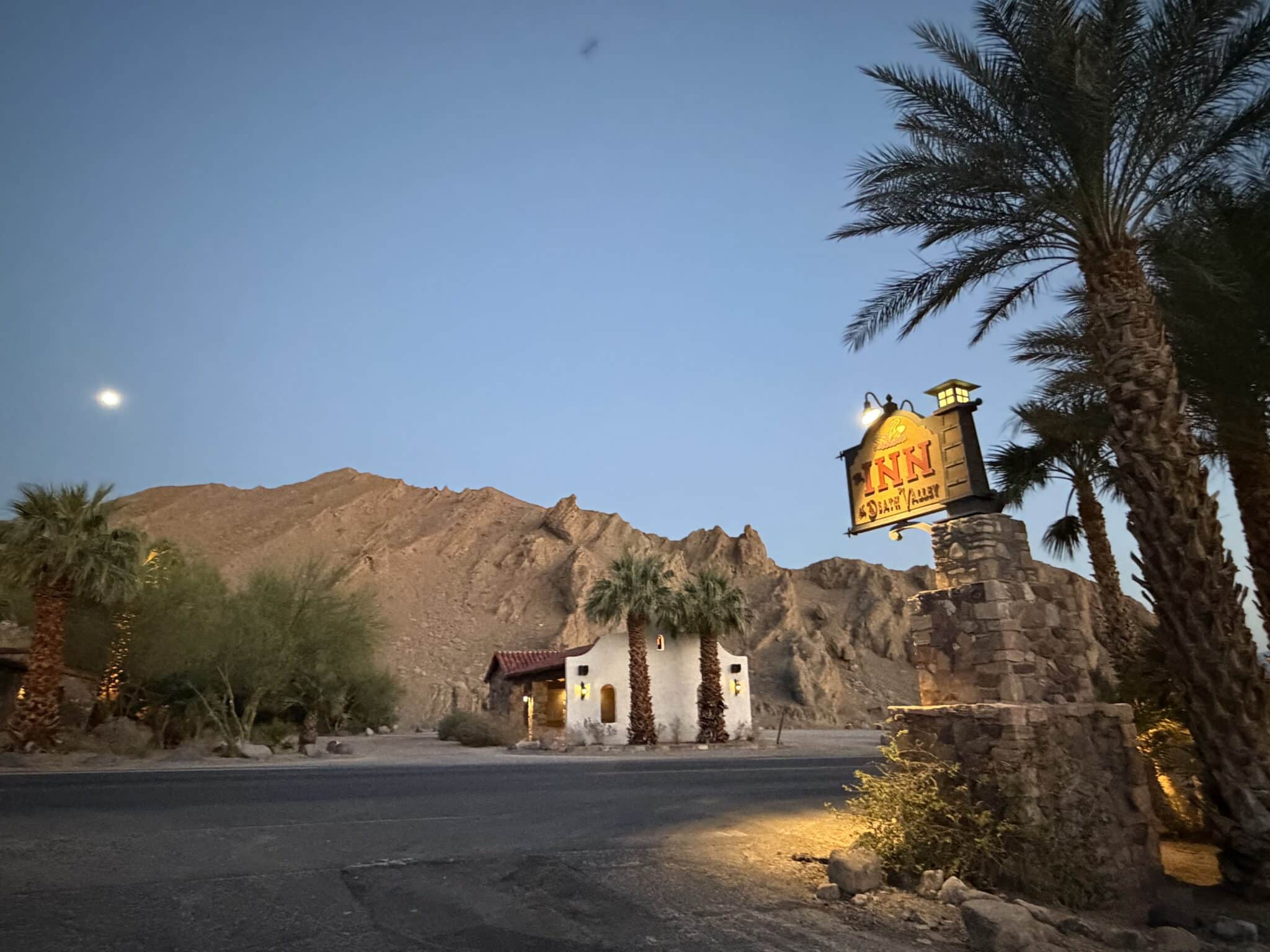
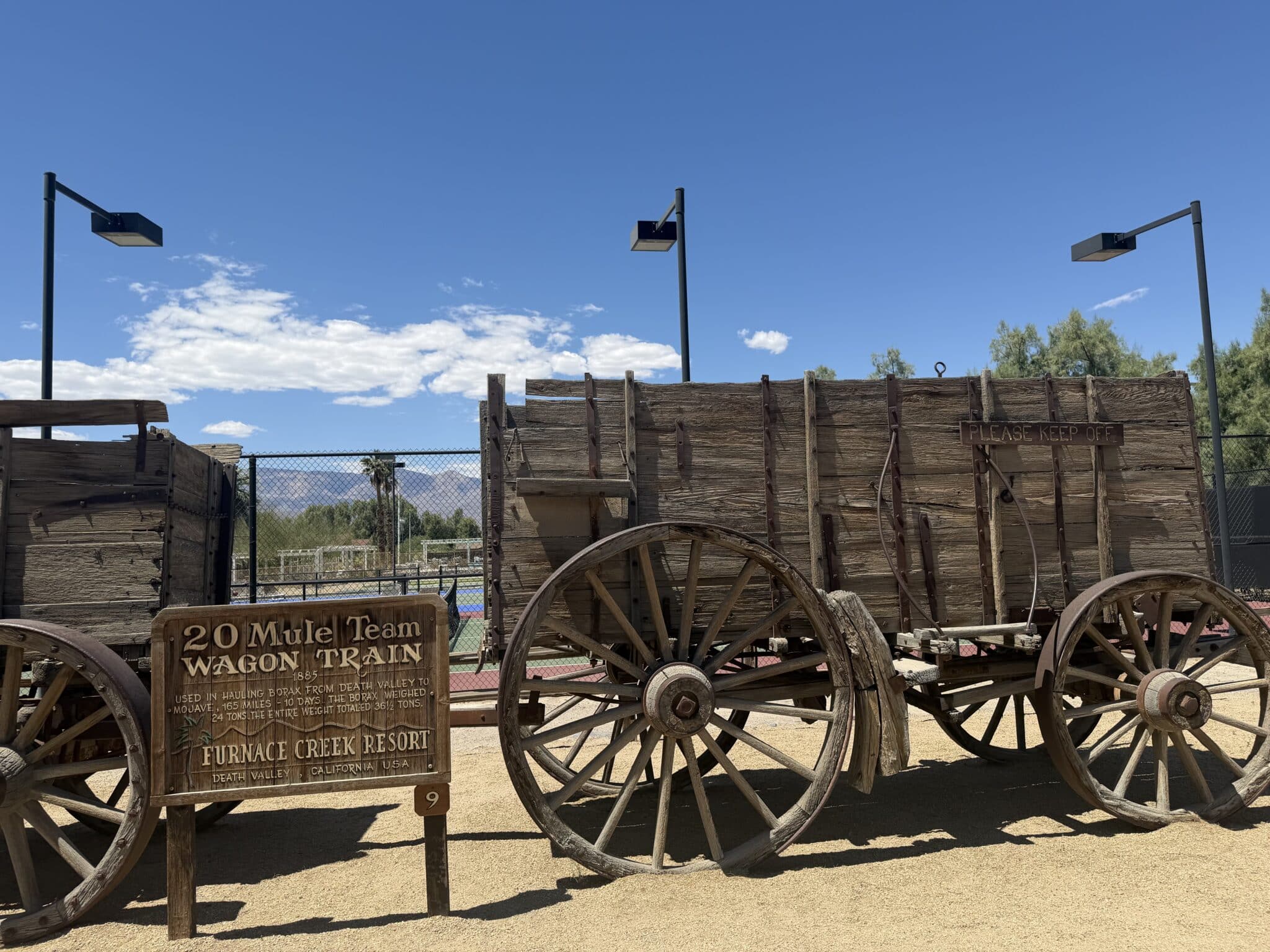
After a four-and-a-half-hour drive from Los Angeles, we pulled into the center of an otherworldly terrain and settled into The Inn at Death Valley, part of the larger Oasis at Death Valley resort. Originally opened in 1927 as the Furnace Creek Inn, by the Pacific Coast Borax Company, the property helped transform Death Valley from a mining outpost into a treasured national park. Less than two hours from Las Vegas and five hours from Los Angeles, the park is surprisingly accessible.
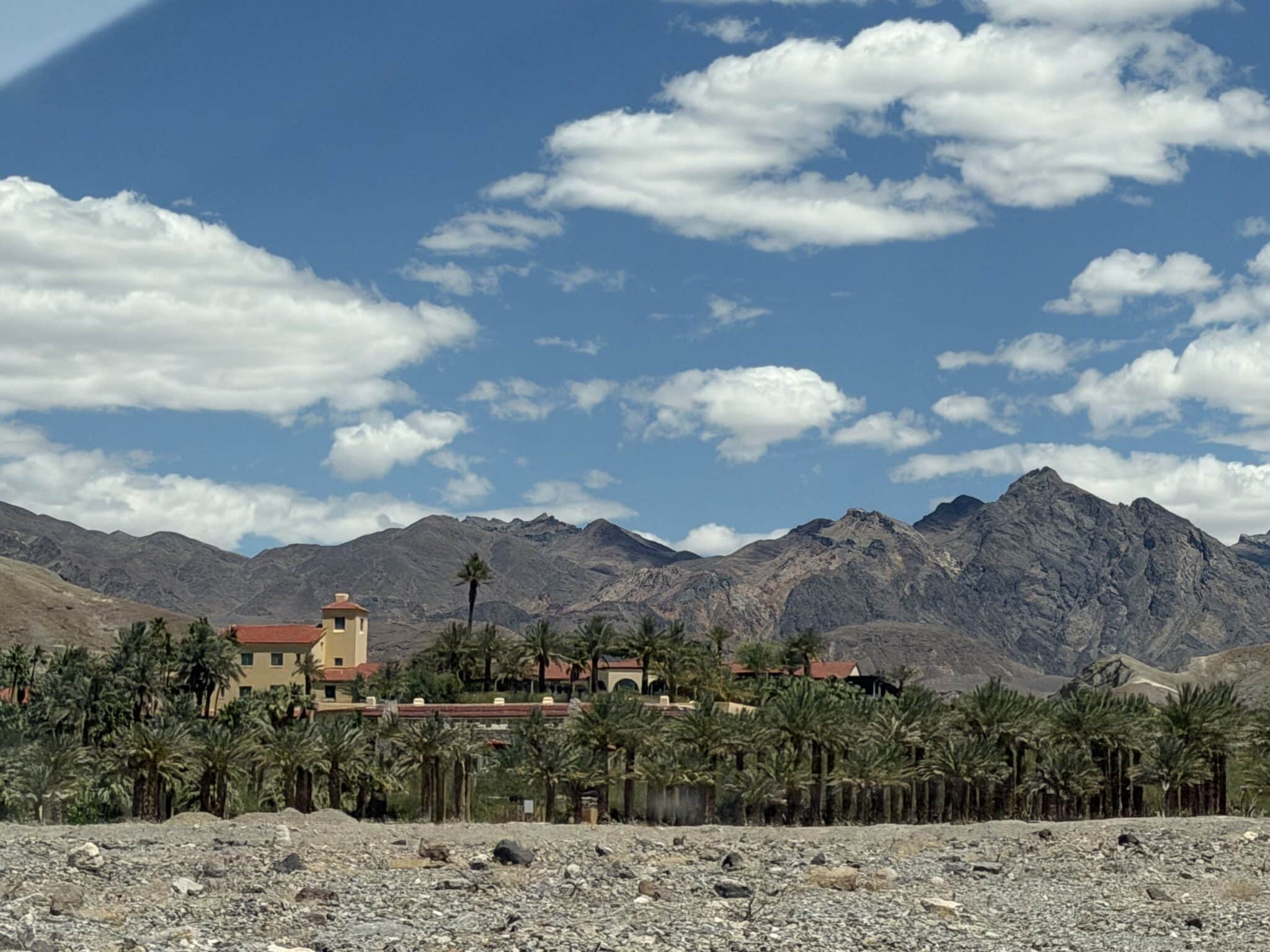
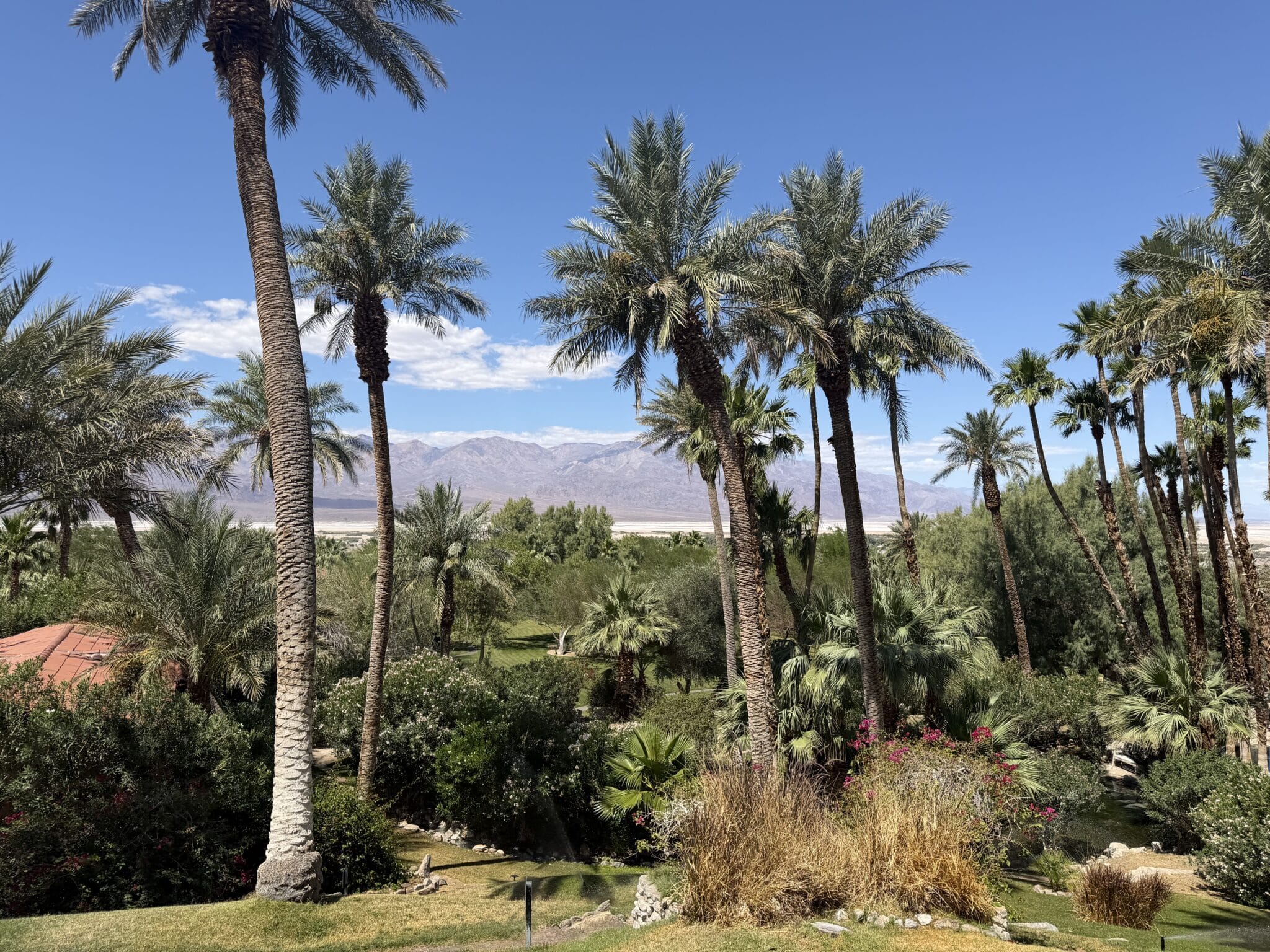
What struck me immediately was the contradiction: a lush oasis of palm trees and manicured gardens spilling down a hillside in one of the harshest climates on Earth. Natural springs feed small waterways and wetlands weave through the grounds, attracting migratory birds and desert wildlife. Here, life persists, even thrives, where mere existence seems least likely.
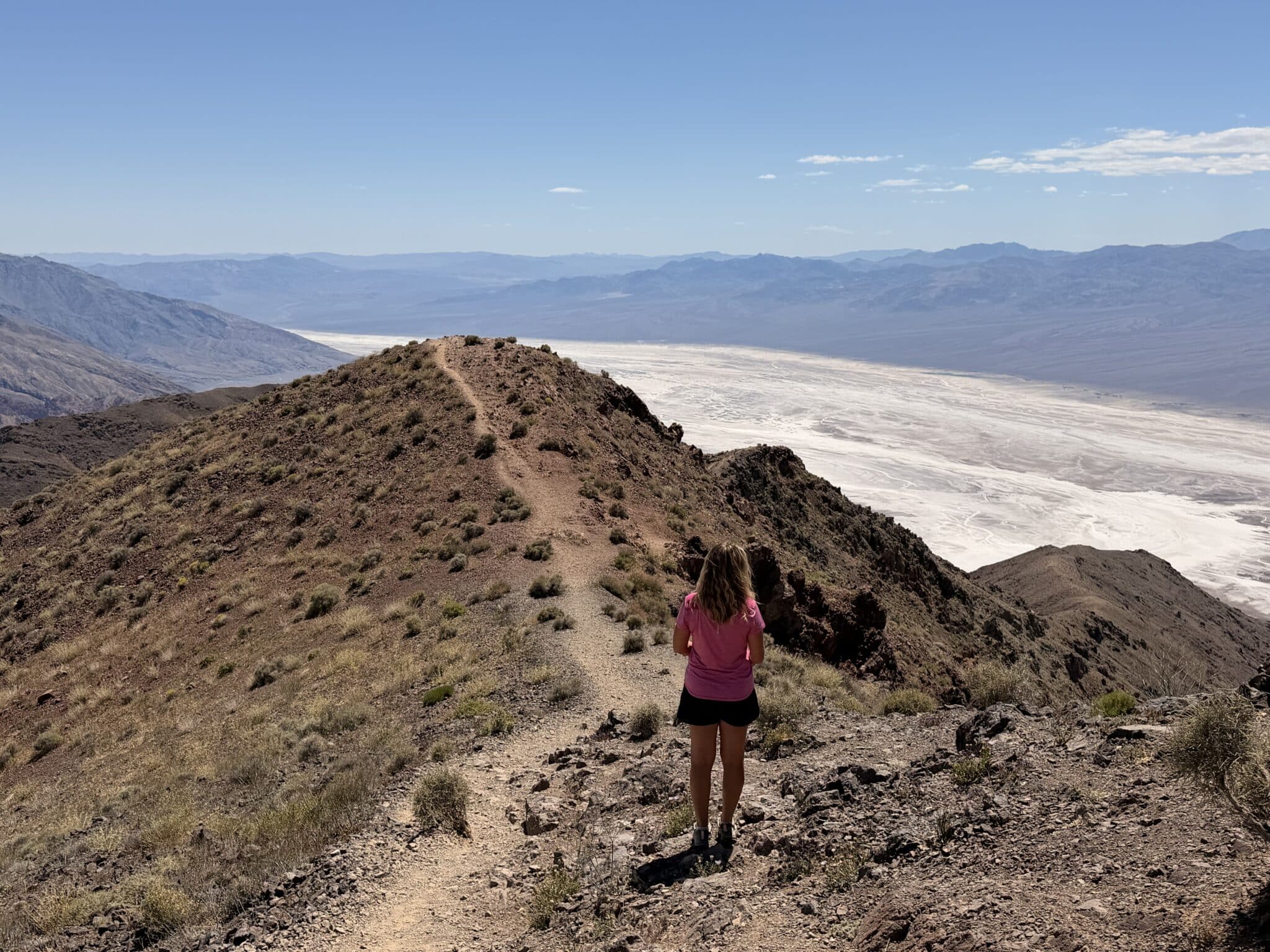
Spanning 3.4 million acres, Death Valley is the largest national park in the contiguous U.S., known for being the hottest, driest, and lowest place in North America. Its stark beauty – salt flats, sculpted dunes, and jagged mountain ranges – feels almost extraterrestrial. It’s precisely this extremity, along with the area’s tranquility, that continues to draw travelers seeking something different.
I came chasing that sense of wonder, hoping the landscape might fill something intangible. The Oasis at Death Valley rises from the stark desert, a self-contained haven in the middle of extremes. It’s home to three distinct resort experiences: The Inn at Death Valley, a refined, Old-Hollywood-style retreat; The Ranch at Death Valley, a casual, adventure-driven base suited for families; and Fiddlers’ Campground, a practical option for road-trippers on a budget.
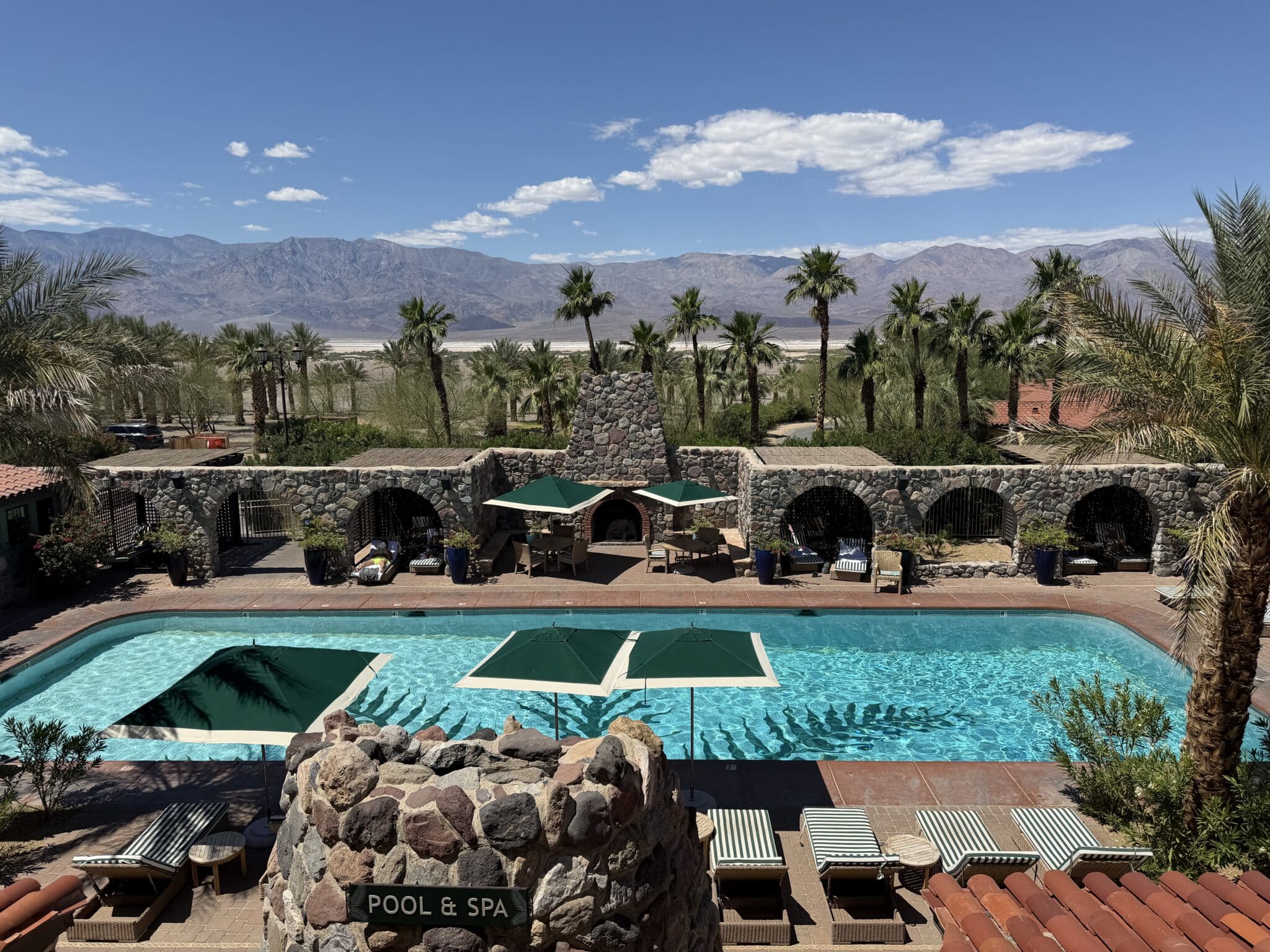
A recent $200-million renovation breathed new life into the property, updating accommodations while preserving the historic character. The addition of spacious Inn Casitas (over 500 square feet) and Ranch Cottages (around 400 square feet) brings a more contemporary, private feel to the desert experience.
The Inn, in particular, carries a timeless atmosphere – something akin to a grander version of Two Bunch Palms in Desert Hot Springs, with a similar restorative, tucked-away energy. A spring-fed pool and adjoining spa sit on a terrace overlooking the valley, alongside a golf course (the lowest in the world) and easy access to the best areas of the park. The culinary program is surprisingly robust, transforming a challenging destination into something deeply enjoyable and serene.
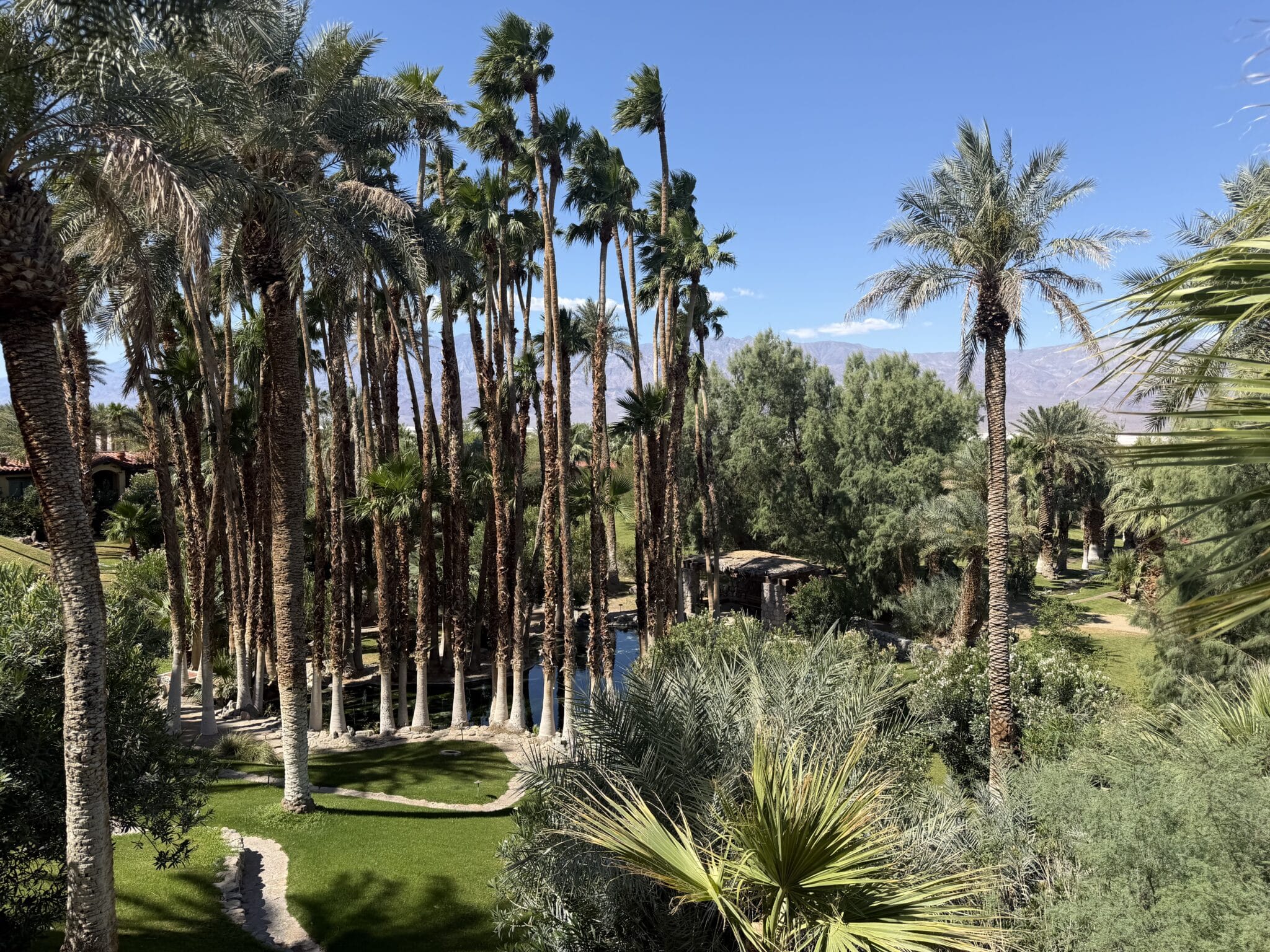
Rooms are designed to frame the landscape – many featuring outdoor seating that invites you to linger over the views of the Panamint Mountains. Mornings and evenings, especially, feel cinematic – quiet, expansive, and saturated in shifting light.
Given the remoteness, the dining options are unexpected. The terrace at the Inn’s Dining Room quickly became a favorite, where a seasonal dinner menu is paired with sweeping sunset views featuring shades of copper and violet lighting the desert sky. Even on hotter days, the experience translates indoors without losing its sense of place. The beverage program leans regional – like a Justin Cabernet from Paso Robles or a Prickly Pear Mezcal Margarita.
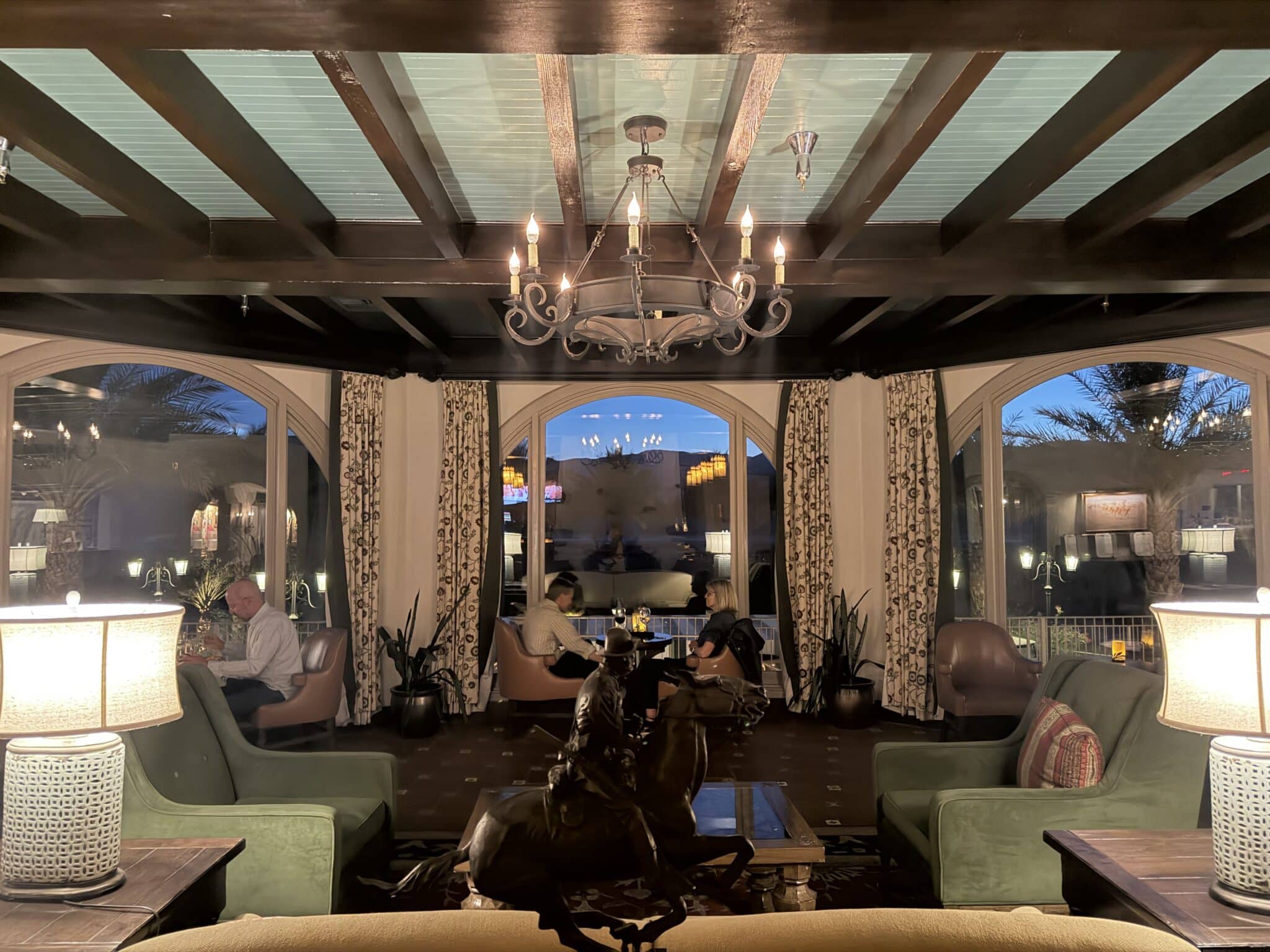
And then there’s the date bread: house-baked and subtly iconic, a staple since the 1930s. It appears at breakfast, accompanies dinner, and is sold at the Ranch’s general store. It’s a small but memorable detail that ties the property’s present back to its past.
Since the Timbisha Shoshone Tribe are the original stewards of this land, with roots stretching back thousands of years, a visit to Timbisha Village offers a meaningful (and delicious) place to expand your food journey. Their local shop serves fry bread tacos – pillowy fried dough finished simply with honey and cinnamon – while the Three Sisters Soup at The Inn at Death Valley draws on Native tradition with a hearty mix of Anasazi beans, butternut squash, roasted corn, tomatoes, and greens. It’s deeply comforting, reminiscent of a rustic minestrone my Italian grandmother used to make.
After exploring the extremes of Death Valley National Park, a satisfying, substantial meal at the Inn Dining Room is well-earned. Enjoy achiote-marinated Red Bird Farms chicken “pollo asado” with masa cake and pickled onions, or braised beef short ribs over mashed potatoes. Even a seemingly unexpected dish – like rigatoni with wild mushrooms, garlic truffle cream, and a wedge of salmon – feels extraordinarily satisfying.
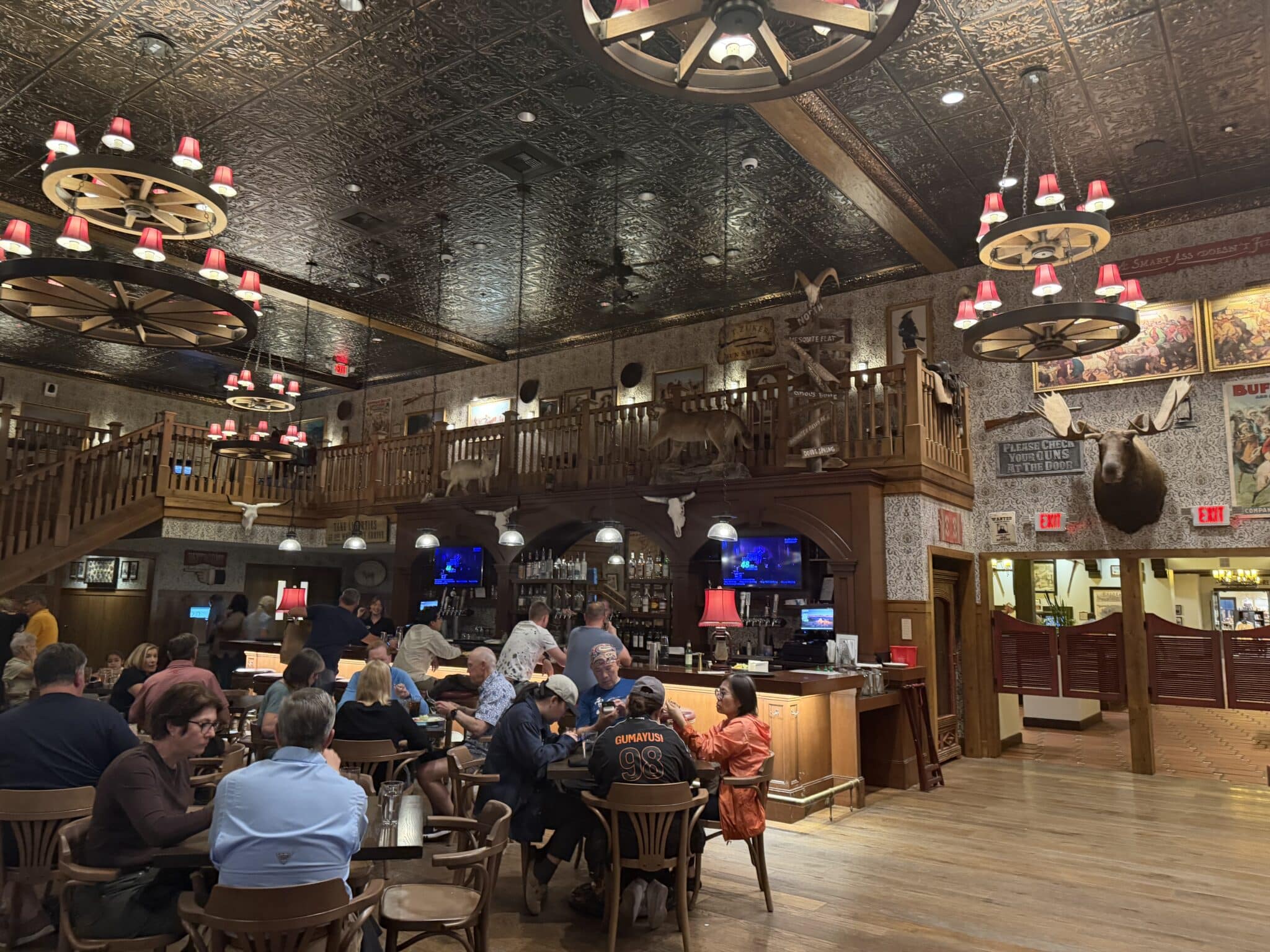
For something more casual, the Western-themed Last Kind Words Saloon at The Ranch at Death Valley offers an ice-cold beverage with your choice of barbecued meat. For big eaters, a full-service buffet option can be found at Restaurant 1849, and pub fare is served all day at Wild Rose Tavern.
In spring and summer, sunrise comes early. So around 5 a.m., a drive out to Badwater Basin, a vast 200-square-mile salt flat sitting 282 feet below sea level, is perfect timing. Formed from the remnants of ancient Lake Manly, its thick hexagonal salt crust stretches endlessly, often resembling a dusting of snow. Walking across it in silence, the only sound was the faint crunch beneath my feet – “snap, crack, pop” – in a place so still it feels almost suspended in time. I didn’t see a soul in sight for hours.
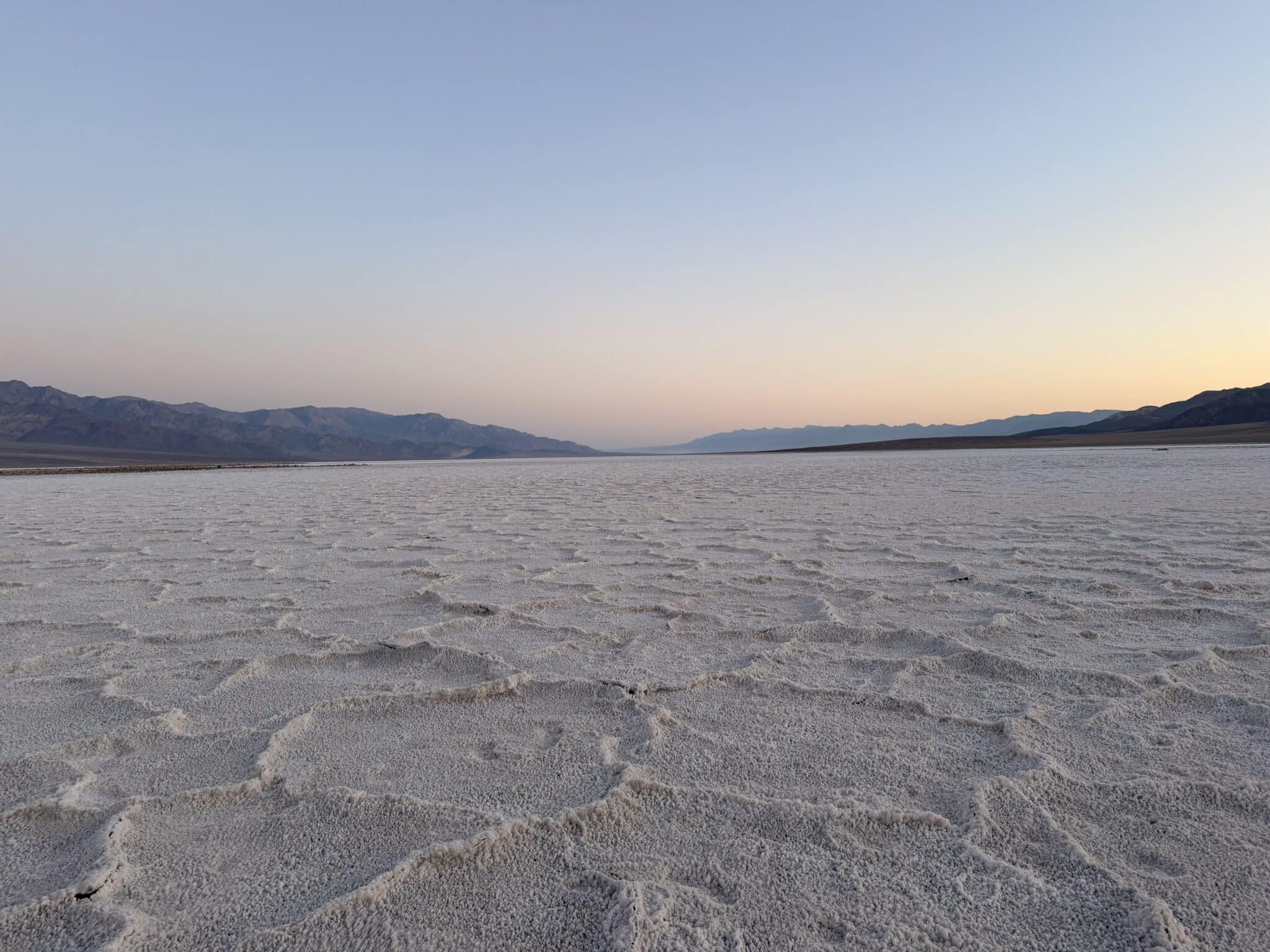
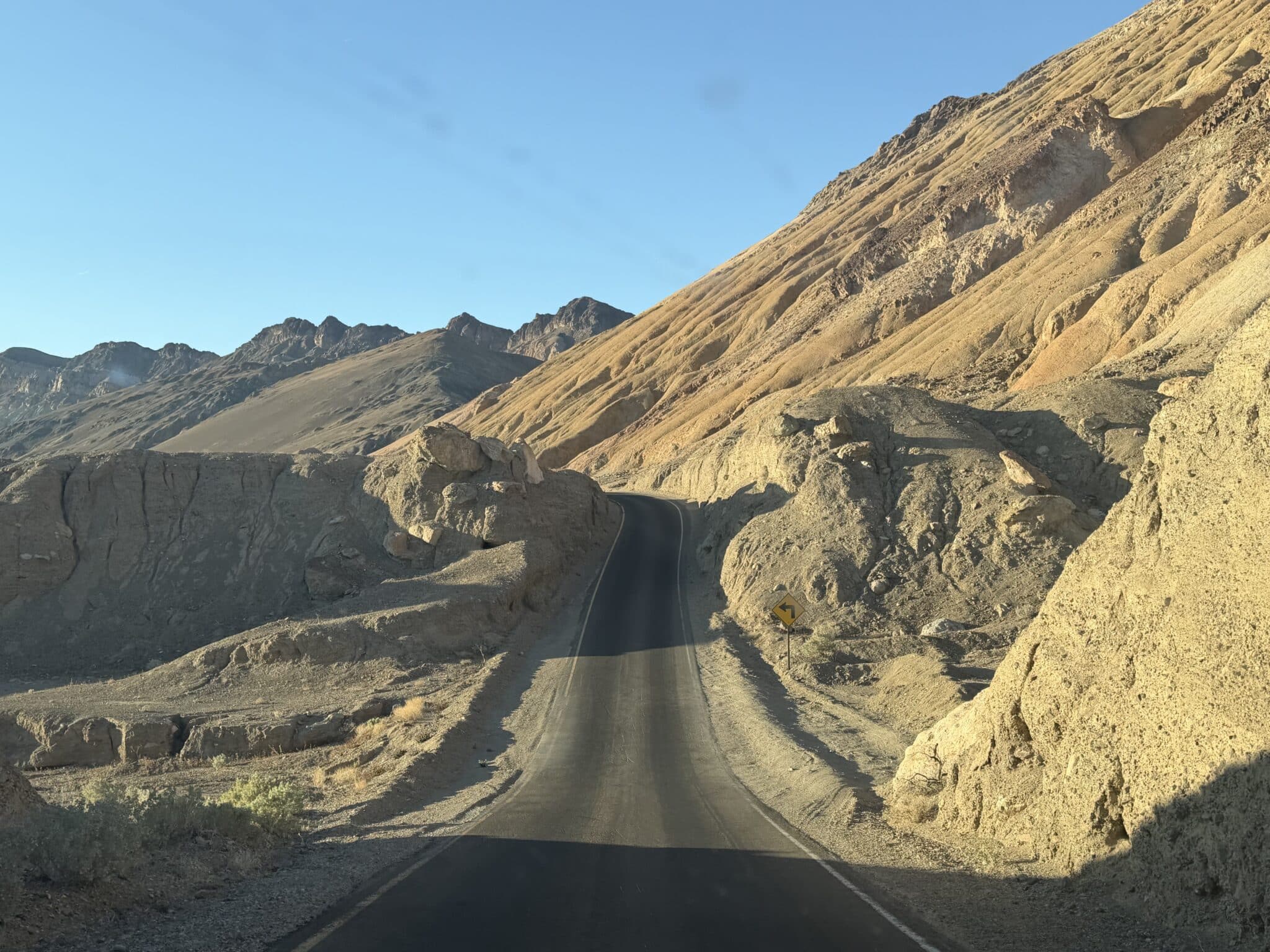
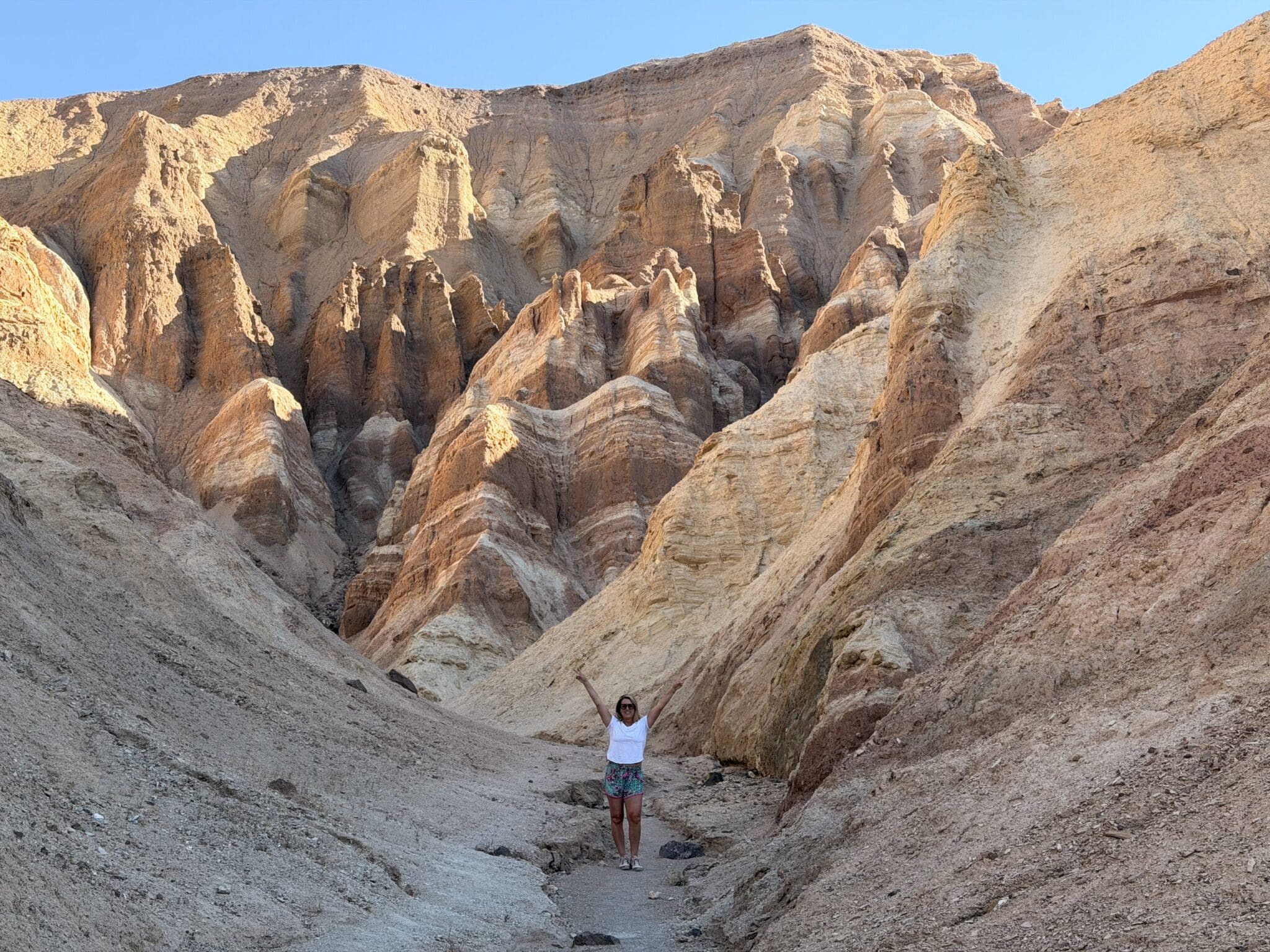
By late spring, only a shallow, mirror-like pool of water remains, reflecting the stark, almost eerie landscape. Driving further along on the Artists’ Drive Scenic Loop, a one-way paved road, the terrain shifts into something lunar: undulating mud hills and mineral-streaked washes that looked like tan, mocha, and golden makeup foundation shades. As the sun rises, natural rock formations illuminate in watercolor palette hues of pale green, pink and purple. It feels like being dropped on an alternate planet.
At Devil’s Golf Course, the jagged salt formations left behind by evaporated water are sharp, chaotic, and strangely beautiful. Tread lightly. Golden Canyon offers a variety of short hikes through winding passageways of golden rock. The sun’s shadows stretch across the canyon walls, creating a surreal, almost cinematic atmosphere. That otherworldly quality isn’t accidental. Parts of Star Wars and Return of the Jedi were filmed in and around Death Valley, standing in for the desert planet Tatooine. It’s easy to see why.
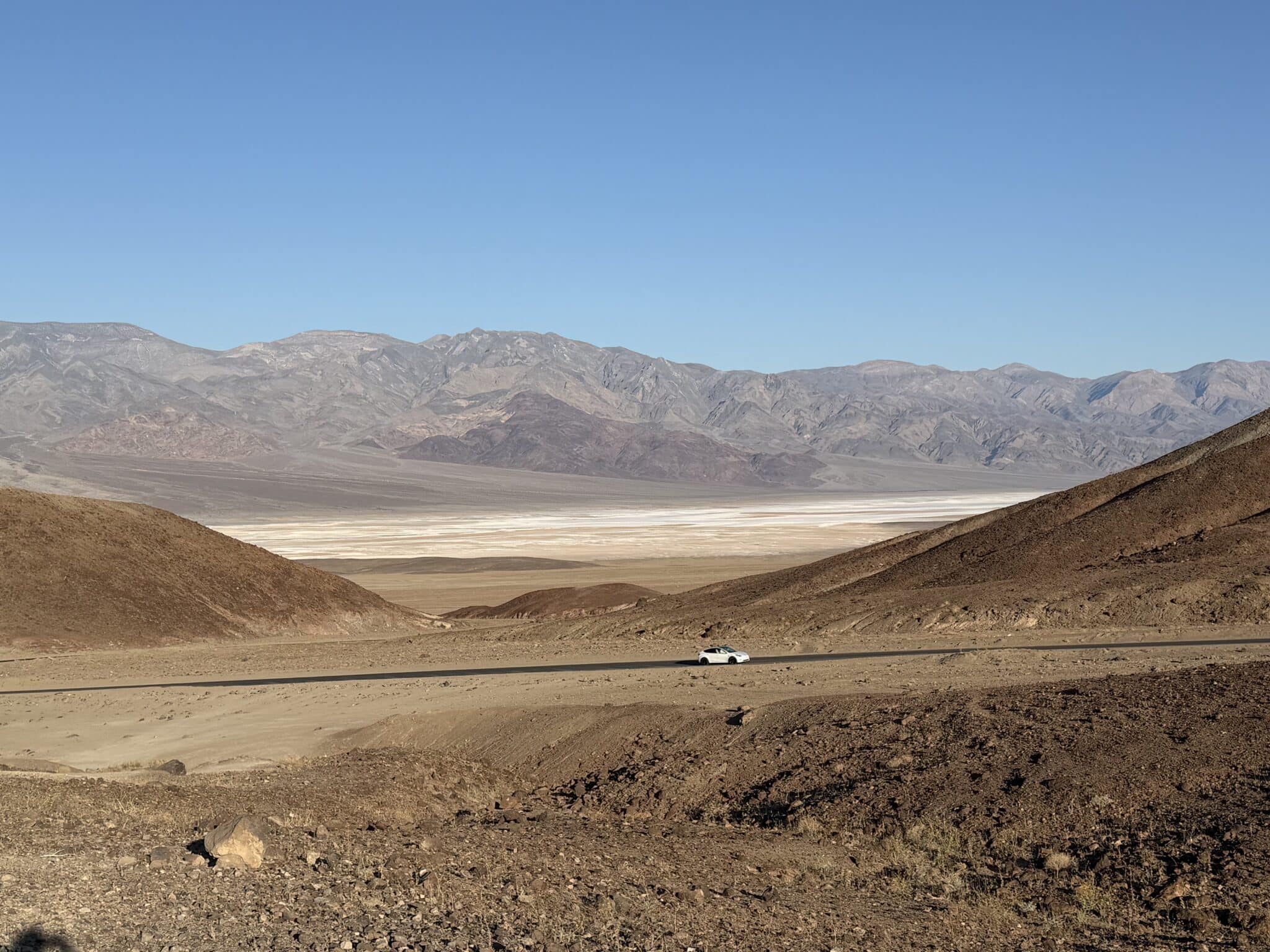
Later, at sunset, a lone coyote joined my climb up to majestic Zabriskie Point. From this iconic overlook, the badlands unfold in waves of gold and brown, carved over millennia by water and time – proof that even in one of the driest places on Earth, transformation is constant.
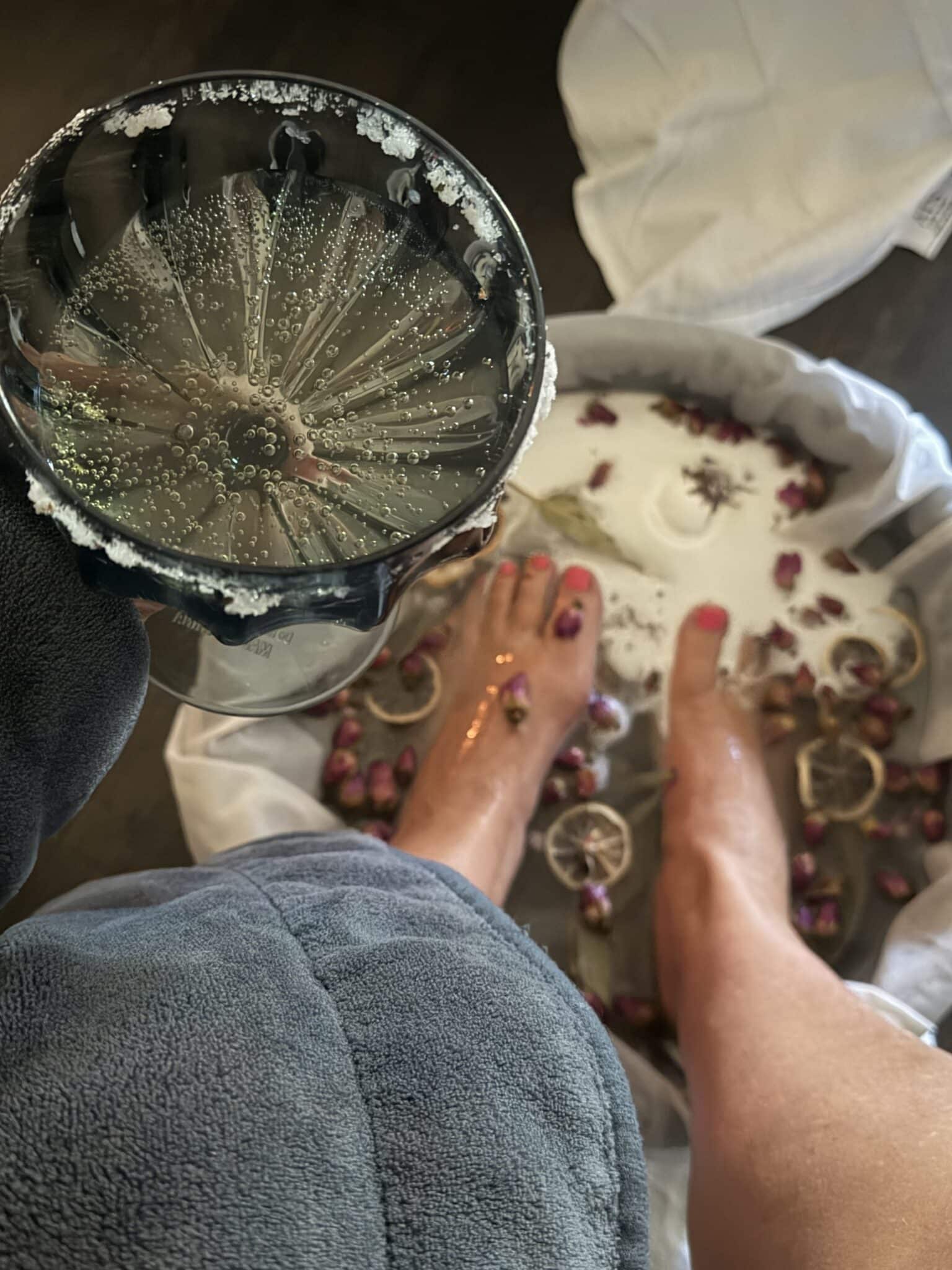
Back at the Inn, the Spa offers a welcome reprieve from the day’s extremes. Poolside, treatments draw on the desert itself – a massage with Mojave Gold cream, a full-body exfoliation, and an infrared thermal wrap to restore sun-parched skin. A cooling cryo-globe facial with prickly pear serum refreshes, while a desert floral foot soak and botanical drink complete the ritual. The experience leaves you feeling lighter in spirit but also noticeably smoother, hydrated, and glowing. Ending the day fully moisturized is a must!
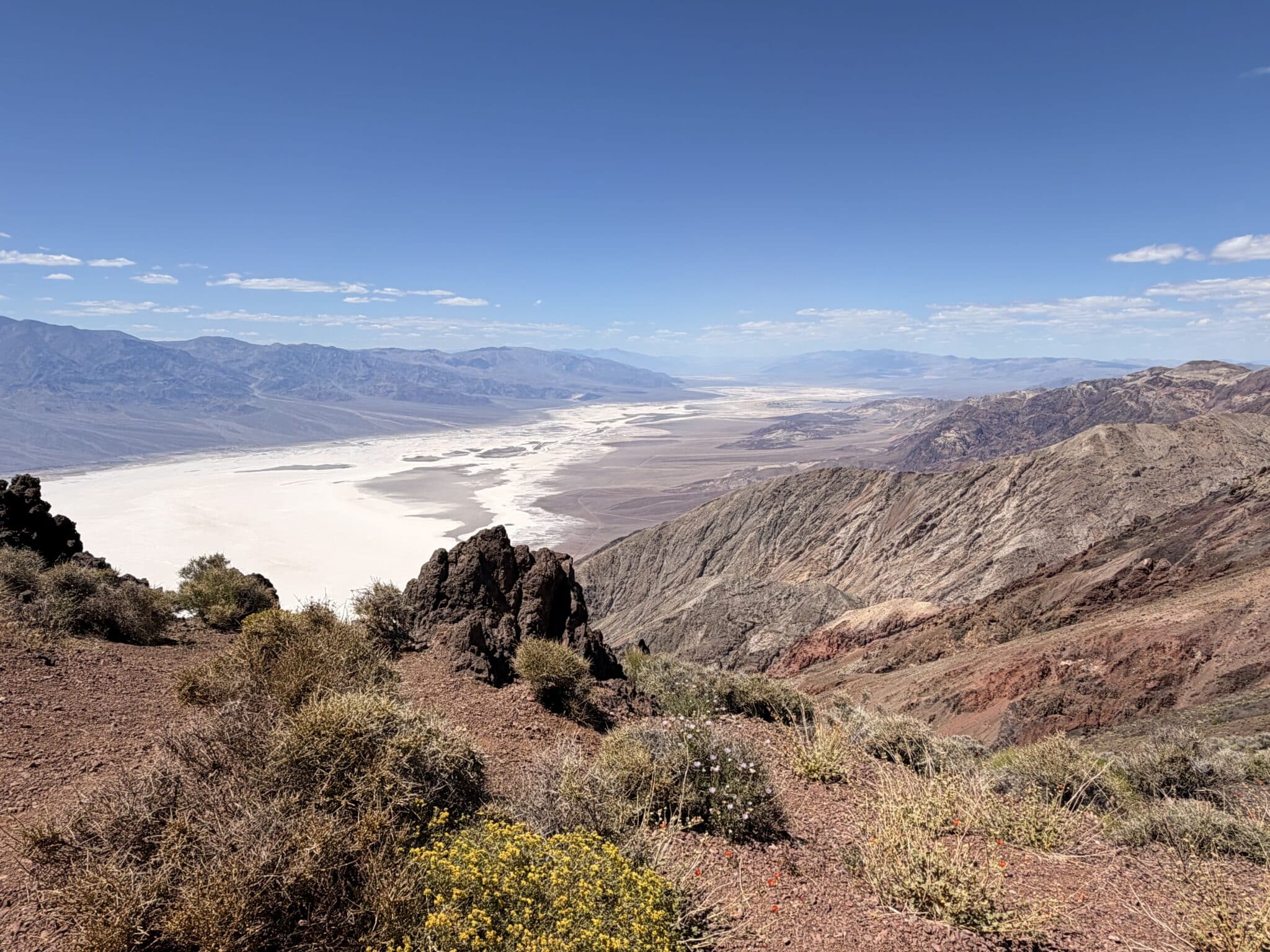
Sad to leave the valley’s stillness, this road trip was about to trade silence for sparkle – the nearby neon glow of the Las Vegas Strip. On the drive out of Death Valley, the scenery shapeshifted in mesmerizing ways and I made a point to stop at the property’s Borax Museum and 1950s-style Ice Cream Parlor before spiraling up to Dante’s View – towering 5,575 feet above where I was the previous day in Badwater Basin.
Death Valley left me with a profound sense of wonder. From the otherworldly salt flats of Badwater Basin and the rainbow-hued hills of Artist’s Palette, this land of extremes reveals beauty at every turn. Whether you’re seeking adventure, solitude, or simply a new perspective on the natural world, Death Valley proves that even in one of the harshest environments on Earth, life and beauty can thrive.
Pro Tips: While we learned from locals that Germans love to visit Death Valley in the insanely hot summers on motorcycles, the best time to visit for hiking, exploring and to avoid dangerous extreme heat is November to March. Make sure your car has fuel and you have been plenty of water available.



hi melisa , i am in the US travelling from Switzerland. I came across your nice blog and very curious and eager to visit Death vally. we will visit Las vegas this week and since its the middle of summer, i have been warned by many not to go to Death valley in this month.
I am only concerned if I am being only scared or it is really unbretheable at this week if i plan to visit basic points mentioned in your blog. I have 2 kids 13 and 19 years but we do not plan to hike anywhere. Basically just see the landscapes and come back to Vegas. Is that really doable in your exp ? Any pointers that you would suggest like risks of riving or beter to get into an overnight stay etc? We live in Swiss so these kind of landscapes are rare, so wanted to take a chance to see the wonders of desert but do not want to risk life. Pls guide if you could. We fly to Vegas on Tuesday. And will be in Vegas for 4 days, so one of two days we can spend in Death valley.