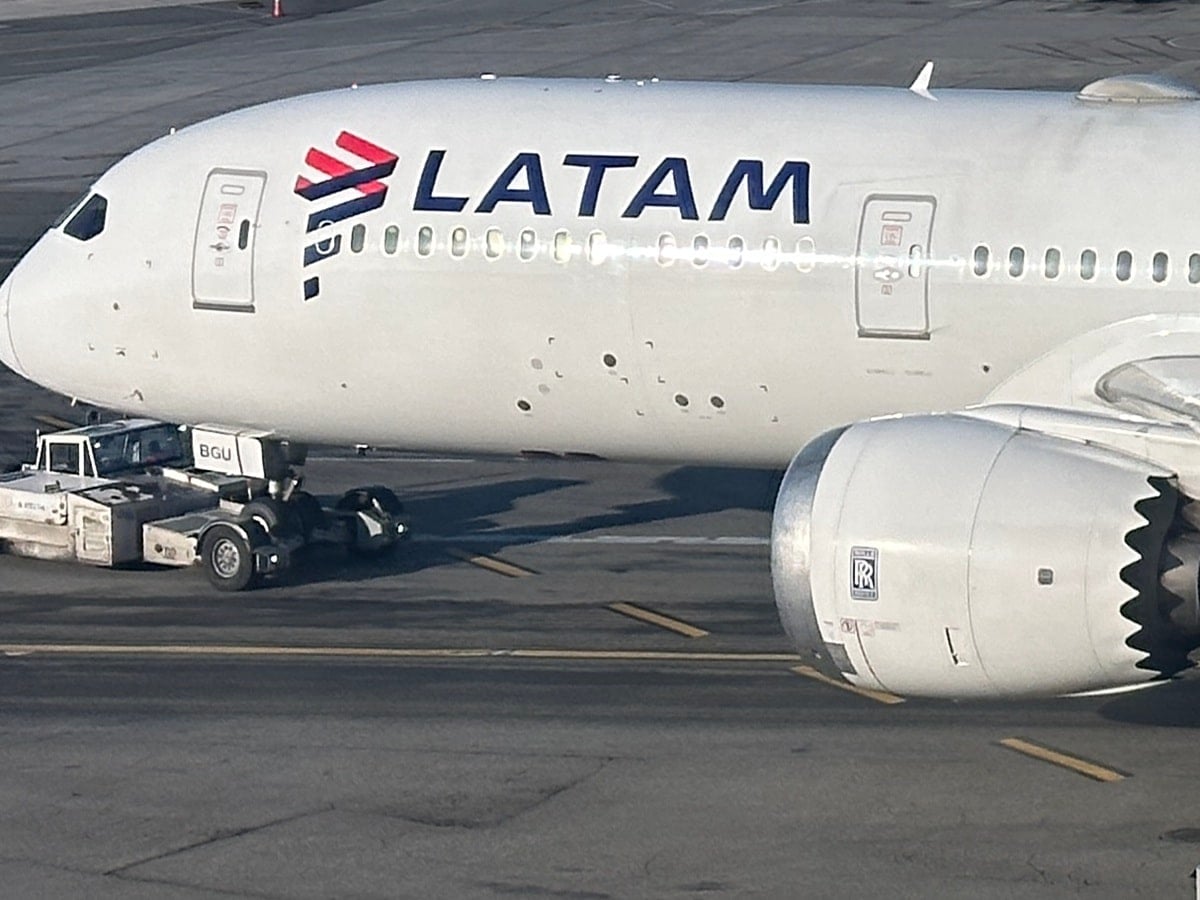
 A LATAM Airlines Boeing 787-8 Dreamliner has been grounded on Easter Island, one of the world’s most isolated inhabited locations, after an airport airstairs vehicle tore off one of the aircraft’s passenger doors during a ground handling incident.
Can you get a ferry permit for a missing door? https://t.co/jLWv2tOTVU
— Scott Manley (@DJSnM) May 31, 2026
The accident occurred on Friday at Mataveri International Airport (IPC), the sole airport serving Easter Island, a remote Chilean territory in the southeastern Pacific Ocean. The island lies approximately 3,759 kilometers (2,335 miles) west of Santiago, making it one of the most geographically isolated commercial aviation destinations in the world.

According to reports circulating within the aviation community on X (embedded above), the aircraft suffered significant damage when an airstairs truck collided with the L2 door on the left side of the Boeing 787-8. Images and videos shared online show the door completely detached from the aircraft, prompting an immediate grounding while engineers assess the extent of the structural damage.
The unusual nature of the incident quickly went viral among aviation geeks online. After science communicator and aviation enthusiast Scott Manley asked, “Can you get a ferry permit for a missing door?”, ferry pilot and Nomadic Aviation Group co-founder Steve Giordano responded that such an outcome would be highly unlikely without extensive engineering review.
“Potentially possible, but unlikely,” Giordano wrote. “Boeing would need to review the engineering and specifically provide limitations and guidance.” He also noted that aircraft manufacturers generally do not recommend even taxiing an aircraft with an open door because of the potential for structural stress on the airframe.
The aircraft’s location adds another layer of complexity. While Easter Island is exceptionally remote, some aviation observers pointed out that it is not completely isolated. As X user @malalves noted, the island receives between 12 and 14 weekly flights to and from Santiago, making it feasible to transport specialized tools, replacement parts, and engineering personnel to perform at least some repair work on-site.
Aviation experts note that the Boeing 787’s composite fuselage requires careful inspection following any significant structural impact. Certified engineers are expected to conduct extensive non-destructive testing (NDT) to determine whether damage extends beyond the door frame into surrounding fuselage structures. Such inspections are critical before any further flight activity can be authorized.
If the damage is deemed repairable in the field, engineers could potentially install an approved temporary structural patch or blanking plate over the affected area. Subject to regulatory approval and strict operating limitations, that could allow a one-time ferry flight to Santiago, where the aircraft would undergo a full door replacement and comprehensive repairs. However, any such move would require approval from aviation authorities and compliance with manufacturer airworthiness requirements.
The incident highlights the operational challenges airlines face when serving remote destinations. Even with regular air links to the mainland, major maintenance events can quickly become complex logistical exercises when specialized equipment and certified personnel must be transported thousands of kilometers to reach an aircraft.