This article has been produced in partnership with TESSAN. JohnnyJet.com may earn a commission on purchases made through the links below.
Do you remember what it was like to travel before electronics? I do. When I was traveling between New York City (I grew up in nearby Connecticut) and Los Angeles for college in the 1990s, no one had smartphones and only a handful of passengers had laptops. Most people read newspapers, magazines or books, or watched the inflight movie du jour on a screen hanging from the middle of the cabin. Most of the time, I rawdogged it.
Fortunately, those days are over. Thanks to our phones, tablets and laptops, long flights can fly by instead of feeling like they take forever.
Of course, there are downsides. We’ve all encountered rude passengers watching videos or talking on speakerphone without earbuds or headphones. And all those lithium-ion batteries we travel with can pose a fire risk if they’re damaged, overheated or packed incorrectly. More on that below.
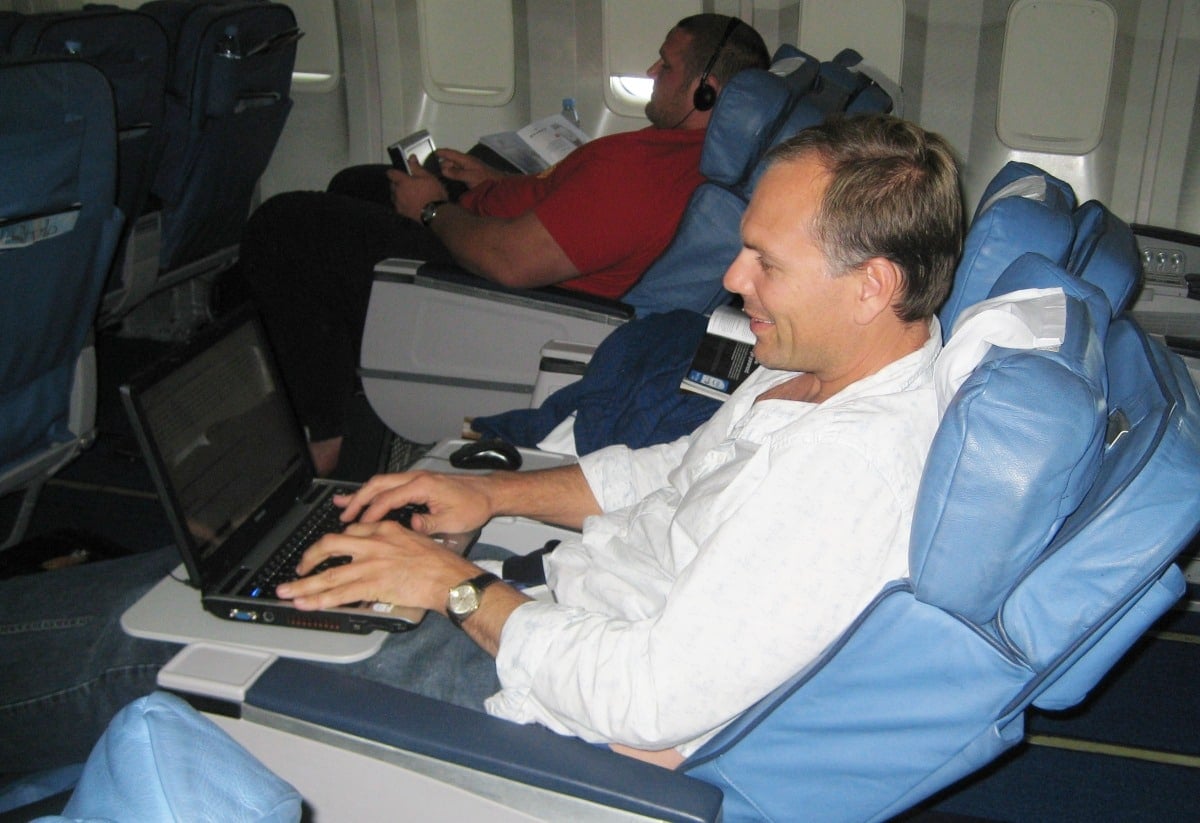
When I first started traveling with a PC laptop, the battery would die within two hours. I had to bring an extra battery and all kinds of crazy adapters for the weird power ports airlines used.
These days, batteries last much longer but you usually can’t just swap one out since they’re built into our devices. And while many newer planes have regular AC outlets and/or USB ports, you can’t count on them being available or working.
I have no idea what parents did when traveling with kids back then. It must have been brutal.
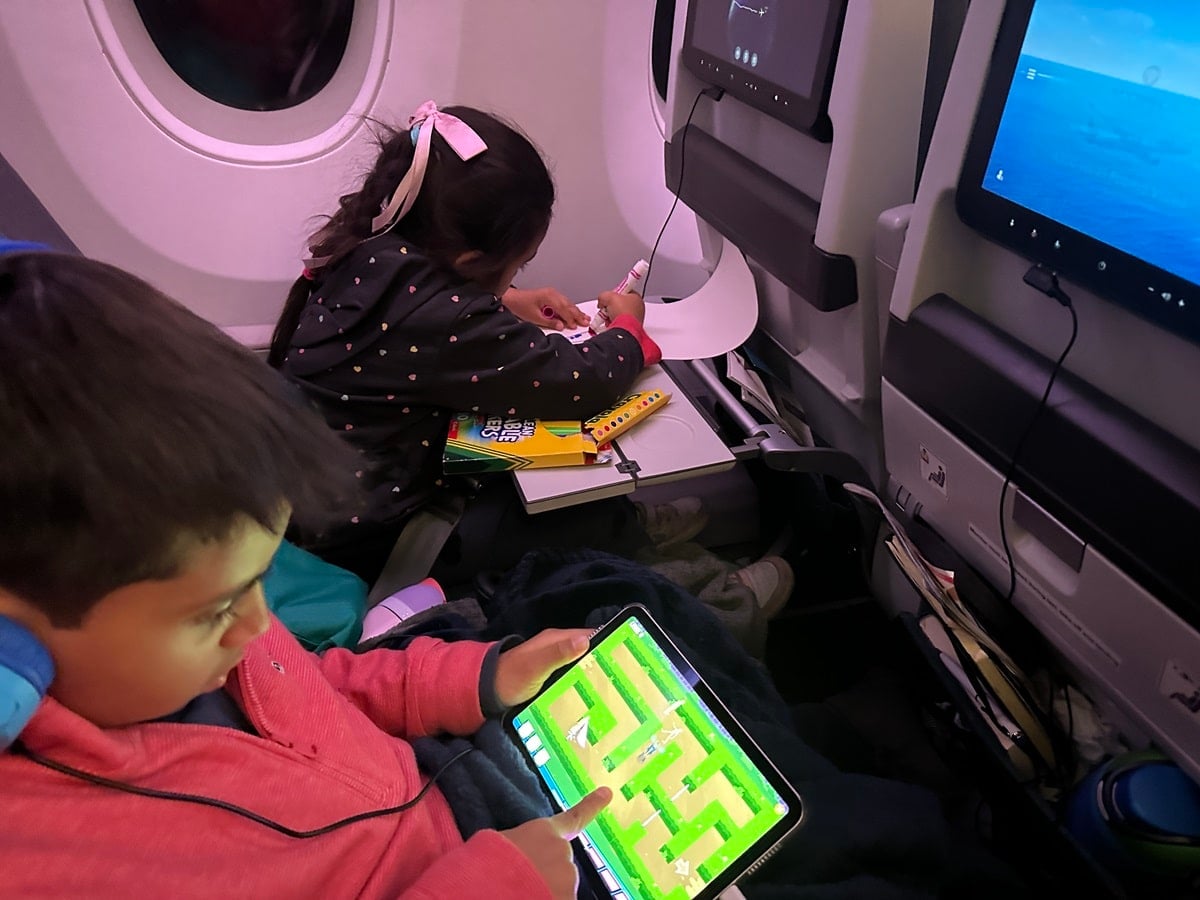 Once our kids were old enough, my wife and I started letting them use iPads with kid-friendly headphones (sometimes wired, sometimes wireless) when we travel. They don’t get iPad time at home, so that makes flying a real treat. Now they think the longer the flight, the better.
The challenge is keeping everyone’s devices charged. Here are the steps my wife and I take before and during every trip.
Charge everything before leaving
This sounds obvious but it’s probably the most important step. Before leaving the house or hotel, we make sure everyone’s phones, tablets, laptops, headphones, smartwatches and portable chargers are fully charged. Don’t assume you’ll be able to charge at the airport or on the plane. I’ve been on plenty of flights where the outlet at my seat didn’t work.
Download entertainment before you leave
Don’t wait until you’re sitting at the gate to download movies, shows, books, podcasts or games. Airport Wi-Fi can be slow and airplane Wi-Fi isn’t always reliable enough for downloading large files. Before leaving home or your hotel, download enough entertainment to get everyone through the flight and then some.
This is especially important when traveling with kids. The last thing you want to discover after takeoff is that their favorite movie isn’t actually downloaded.
Download all the apps you’ll need
My kids don’t need many apps beyond their entertainment like movies and games but adults should make sure they have the apps they’ll need during their trip. At a minimum, I download the app for every airline we’re flying, plus apps for our hotel, rental car company and any public transportation systems we’re planning to use.
I also recommend downloading the apps for other airlines that could potentially get you to your destination if your original travel plans go sideways. When flights are canceled or severely delayed, having those apps already installed can save valuable time.
RELATED: Check out all the apps you should download to your phone before your trip to Europe
 Bring charging cables and a portable charger
 Bring charging cables and a portable charger
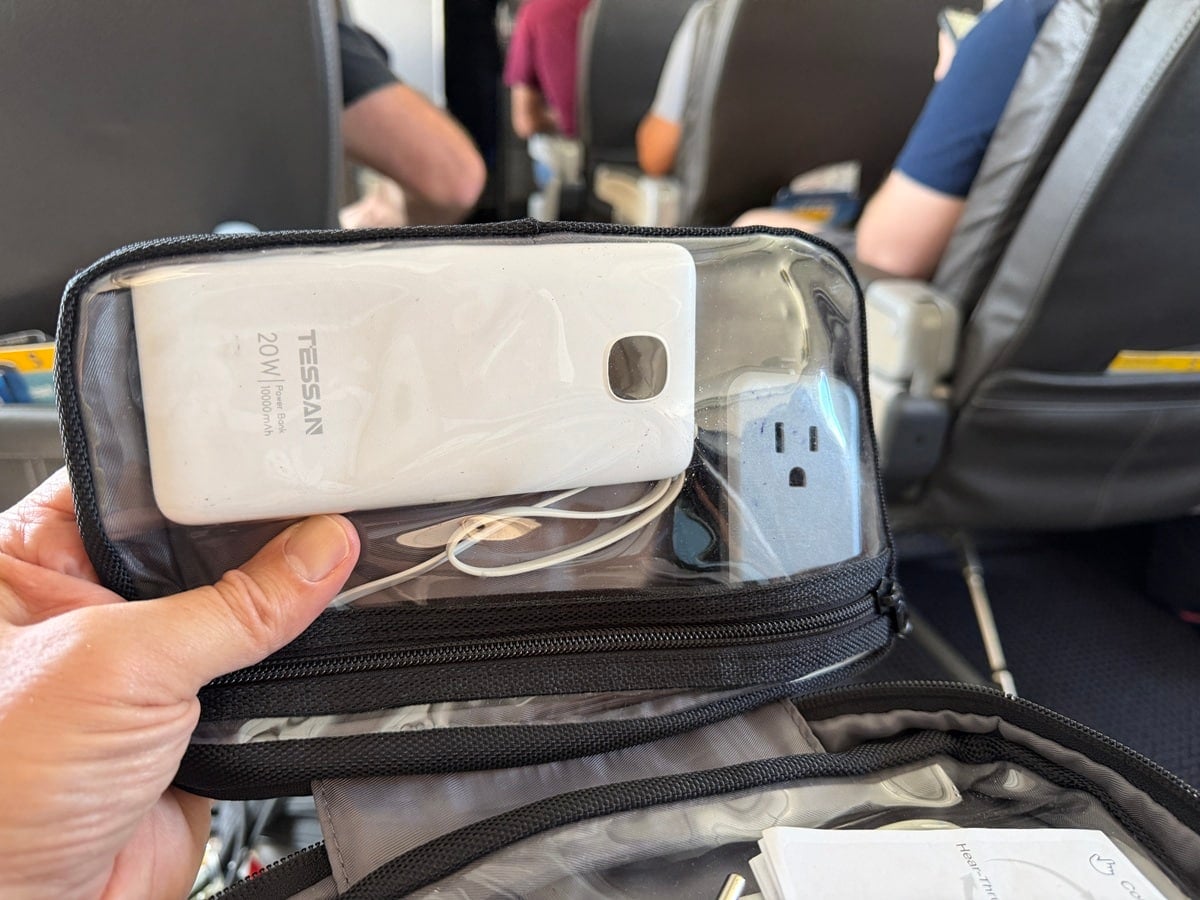
A portable charger is one of my most important travel accessories. It means I don’t have to worry about finding an outlet while sightseeing, sitting in an airport or dealing with a plane where the power outlets aren’t working.
But there’s an important safety issue travelers need to know about. Portable chargers and power banks contain lithium-ion batteries, which can catch fire if they overheat or malfunction. That’s why spare lithium batteries and power banks generally need to travel with you in the cabin rather than in checked baggage.
Airline rules regarding when and where power banks can be used or stored during a flight are also changing, so check your airline’s current policy before you fly. Some airlines prohibit passengers from using a power bank to charge devices during the flight.
Tip: My wife labels our chargers and cables so we know which ones belong to whose device. Another easy trick is buying different-colored cables for each family member. That can prevent plenty of “That’s my charger!” arguments. It also helps you easily know which charger you’re packing up and making sure you’re packing them all and not forgetting any behind in your hotel.
Bring a flat-plug power strip
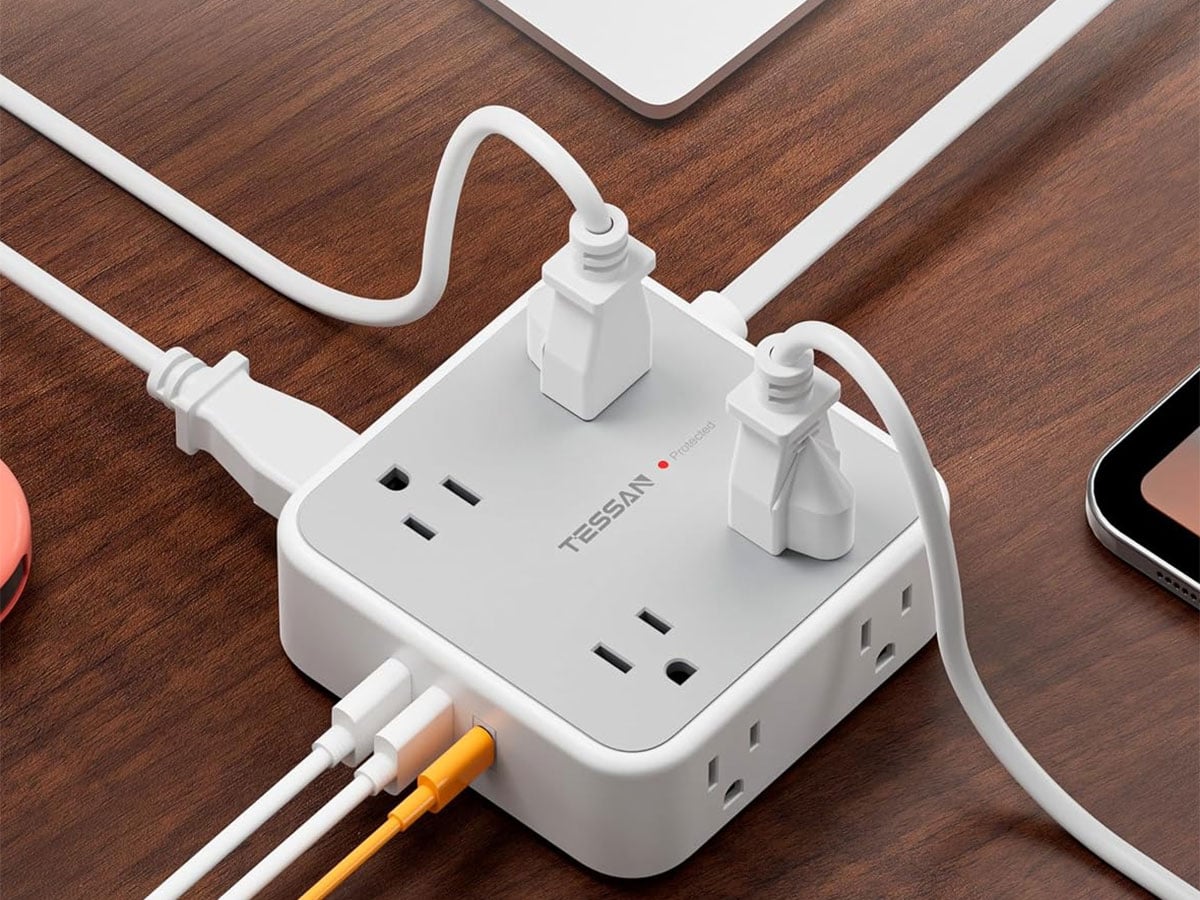
A small power strip is another item that almost always comes with us. It’s especially useful in hotel rooms, where outlets aren’t always conveniently located, and in airports when there aren’t enough outlets for everyone.
If you’re at an airport and the only outlet is already being used, you can politely ask the person if they mind plugging into your power strip instead. They keep their outlet and you both get power.
A flat-plug model is especially useful because bulky plugs don’t always fit behind hotel nightstands and desks.
Bring the right international adapters
If you’re traveling internationally, make sure you have the correct plug adapter for your destination. You can buy a universal travel adapter or country-specific adapters depending on where and how often you travel. Since my family and I travel to Europe frequently, we travel with both a universal adapter and European plug adapters.
One little trick I’ve learned on airplanes: Some aircraft outlets accept multiple plug types. If your U.S. plug won’t stay in because the outlet is worn out, sometimes a European adapter will fit more securely. Obviously, only do this with an outlet designed to accept that plug type.
And remember: A plug adapter changes the shape of the plug. It doesn’t necessarily convert voltage, so always travel with a country-specific voltage converter or check that your device or charger can handle the local voltage.
Stretch your battery when you’re running low
If your battery is getting dangerously low and you don’t have access to power, switch your phone or tablet to Low Power Mode or Battery Saver. You can also lower the screen brightness, turn off Bluetooth if you don’t need it, close power-hungry apps and put your device in Airplane Mode when you don’t need a connection. Those small changes can add up, especially on a long flight.
Be careful with public Wi-Fi
Free airport, hotel and café Wi-Fi is convenient but you should still be cautious when connecting to unfamiliar networks. Make sure you’re connecting to the legitimate network and not a similarly named fake network set up by a scammer. These are sometimes called “evil twin” Wi-Fi networks because they’re designed to look like the real thing.
I also avoid doing sensitive transactions such as banking on unfamiliar public Wi-Fi. A reputable VPN can provide another layer of protection, particularly on networks you don’t control.
And watch out for “juice jacking”
You may have heard warnings about “juice jacking”, where a compromised public USB charging station could potentially be used to access data on a connected device.
Instead of plugging your phone directly into an unfamiliar public USB port, I prefer using my own charging brick plugged into a regular electrical outlet or using my own portable charger.
The FBI has also warned travelers about using free public USB charging stations and recommends carrying your own charger and USB cord and using an electrical outlet instead.
Traveling with a family means traveling with a small electronics store. Between phones, iPads, laptops, headphones, watches and portable chargers, there’s always something that needs juice.
Our strategy is pretty simple: Leave with everything fully charged, download what we need ahead of time, bring plenty of cables and adapters and never assume the airport or airplane will provide reliable power. Do that and hopefully the only thing running out of energy on your next trip will be the kids.