I’m in Las Vegas this week for Virtuoso Travel Week, one of the biggest gatherings in the luxury travel industry, bringing together 4,800 attendees from 105 countries.
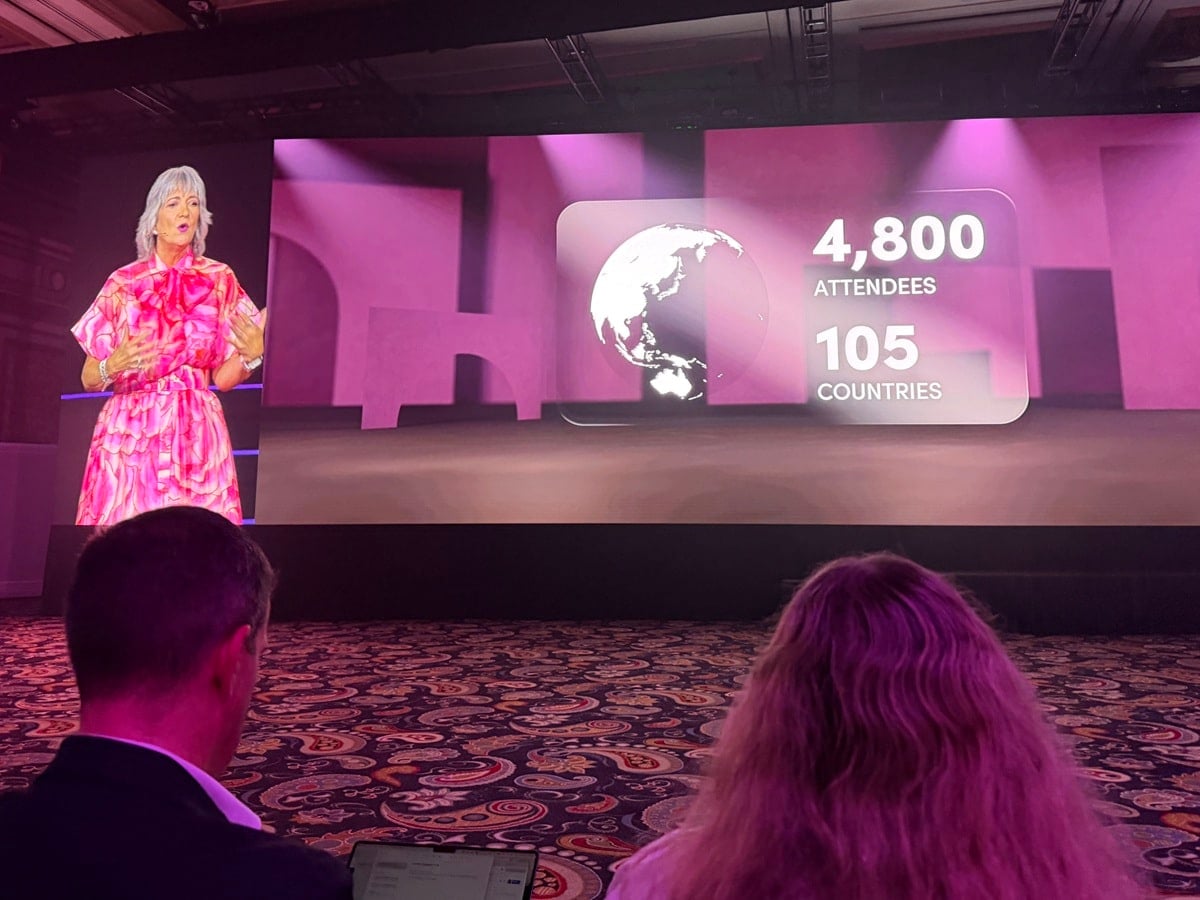 Virtuoso calls the annual event the “Fashion Week of Luxury Travel,” since thousands of travel advisors, hotels, cruise lines, tour operators and destinations from around the world come together to talk about where travelers are going and, more importantly, where travel is headed.
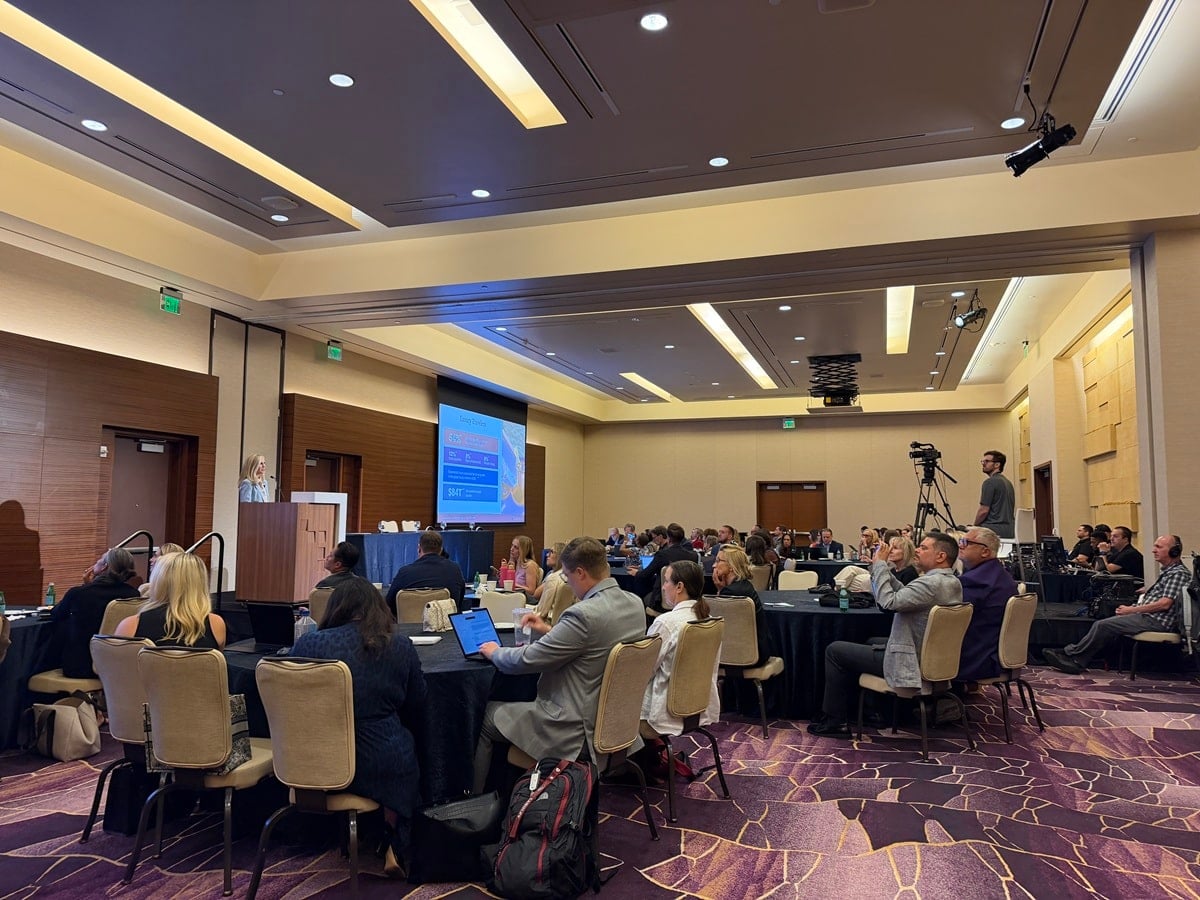 Virtuoso kicked off with a press conference highlighting its latest data and travel trends and I took notes since some of the numbers were pretty eye-opening. Especially when it comes to hotel prices, fall travel and how far in advance people are booking big trips.
Here are 20 takeaways that stood out to me.
1. Fall is the new summer
This was probably the biggest takeaway from the presentation. Travelers are increasingly shifting their big trips away from the traditional summer months and into September, October and November. Virtuoso says fall 2026 bookings are up 59% while sales are up 69%. September sales are up a whopping 77%. There are plenty of reasons this makes sense: cooler temperatures, traditionally smaller crowds and, for families without school-age children, much more flexibility.
2. Shoulder season is becoming peak season
For years, one of my favorite travel tips has been to visit Europe during shoulder season, when you could usually find smaller crowds, better weather and lower prices. The first two are still possible. The last one? Not so much.
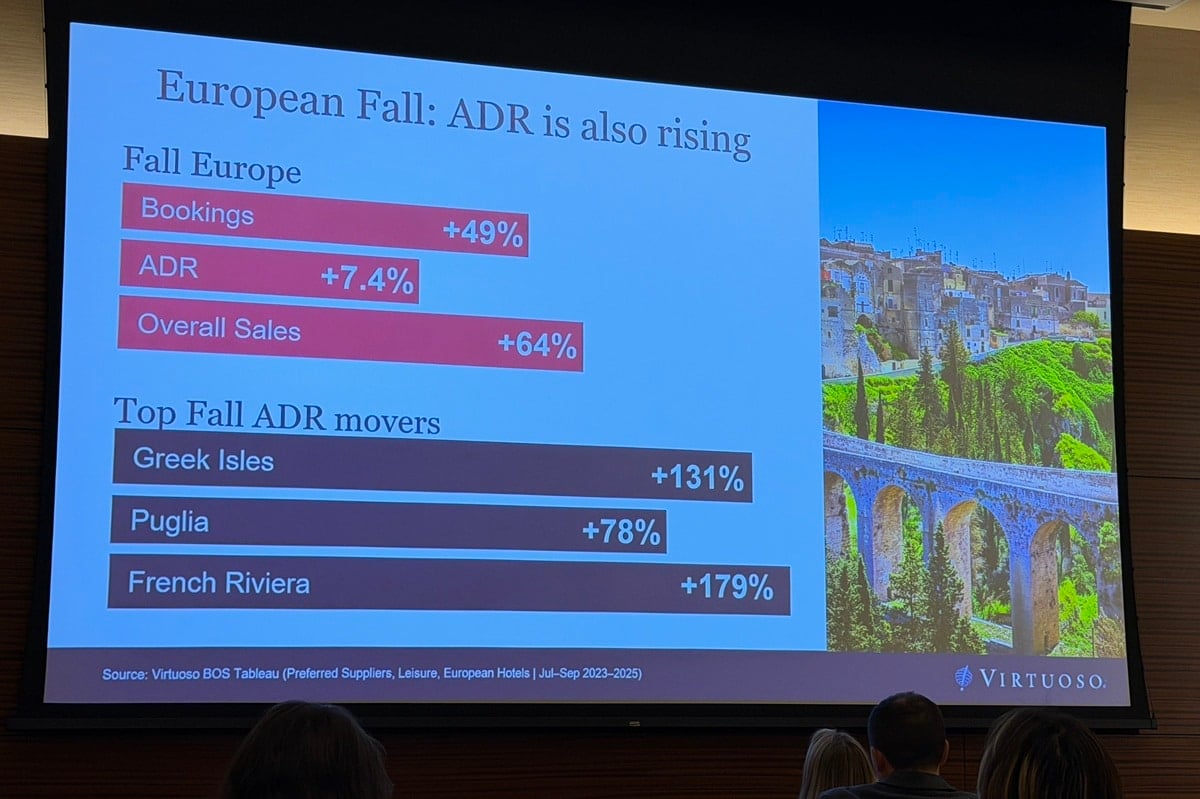
Virtuoso says bookings to Europe this fall are up 49% even though hotel rates have risen more than 7%. In other words, people aren’t necessarily traveling in the fall to save money anymore. They’re doing it because they prefer the experience.
3. Don’t assume September will be cheaper than August
Here’s a stat that really caught my attention: September hotel bookings in Europe have been growing nearly three times faster than August bookings over the past few years. Virtuoso believes September sales could actually surpass August this year. So if you’re planning a European vacation and automatically assume September is going to be cheaper and quieter, you might want to rethink that strategy.
 4. Some European hotel rates are going through the roof
 4. Some European hotel rates are going through the roof
The numbers in some popular destinations are pretty wild. Virtuoso says fall hotel rates on the French Riviera are up 179%, while Puglia is up 78% and the Greek Isles are up 131%. Those are huge increases and another reminder that flexibility with your destination can save you a lot of money.
5. Luxury hotel rates have nearly doubled since 2019
If you’ve been wondering whether hotels really are that much more expensive than they were before the pandemic, the answer is yes. Virtuoso says its luxury international hotels now average $1,653 per night, compared to $985 in 2019. In the U.S., the average is now $1,445, compared to $790 in 2019. Obviously, these are luxury hotels and not representative of what the average traveler pays. But that’s still an incredible jump in just seven years.
6. The most expensive hotels are seeing some of the fastest growth
You might think travelers would start pushing back against these prices, but at the very top of the market, the opposite appears to be happening. Bookings at hotels charging $1,500 or more per night are up 37%, growing at more than twice the rate of lower-priced properties. There’s clearly a group of travelers for whom price isn’t much of an obstacle.
7. The ultra-luxury traveler wants a “hotel within a hotel”
One phrase that came up during the press conference was “hotels within hotels.” Think private clubs, secluded wings, private entrances, dedicated staff and exclusive spaces inside an already luxurious hotel. Virtuoso says 45% of its advisors have seen an increase in requests for ultraluxe travel, including hotels-within-hotels and private members’ clubs with rooms. For ultra-high-net-worth travelers, privacy and exclusivity increasingly seem to be as important as the destination itself.
8. People are booking big trips much further in advance
Another important takeaway, especially if you’re planning a bucket-list vacation: Don’t wait. Virtuoso says global leisure sales for trips one and two years into the future are up 50%. The trend gets even stronger with expensive trips. Bookings worth $50,000 or more are up 47%, while bookings of $100,000 or more are up 49%. One of the travel advisors on the panel, Susan Lawson from Canada, summed up her advice with: Book now and buy travel insurance.
9. Travelers are spending more on fewer, better trips
Virtuoso’s survey found that 60% of clients are prioritizing bucket-list trips, while 30% are taking fewer trips but making them longer and higher quality. That seems to fit with something I’ve been noticing for a while. Instead of squeezing in multiple short vacations, some travelers would rather save up and take one really memorable trip.
10. Travelers are returning to cities
Cities were understandably slow to recover after the pandemic as travelers gravitated toward beaches, national parks and wide-open spaces. That’s changing. Travelers are once again embracing major cities, but instead of just spending a couple of nights in one, they’re increasingly combining several into one longer trip. My family and I just spent 3.5 weeks in Europe and visited eight countries and who knows how many cities.
11. “City-maxxing” is the latest travel buzzword
Virtuoso calls this trend “city-maxxing.” Basically, instead of flying to Paris for a few days and going home, travelers might combine Paris with London, Rome, Florence, Venice or Zurich. About half of these multicity trips cross an international border. France and Italy are the most common country pairing, followed by France and the U.K., then Italy and Switzerland.
12. Italy is at the center of the multicity trend
Italy appears in two out of every five multicity itineraries booked through Virtuoso. That’s not particularly surprising given how easy it is to combine cities like Rome, Florence and Venice by train and then continue into another European country. “Country coupling” is another way to think about the trend: If you’re already flying all the way to Europe, why visit just one country?
13. Not everyone loves the “city-maxxing” trend
One of the travel advisors on the panel, Josie from the U.K., was asked which travel trend she’d like to see disappear. Her answer: city-maxxing. And I understand why. Trying to cram too many cities into one vacation can turn a trip into a checklist rather than a vacation. There are exceptions, of course. Cruises make it easy to sample multiple destinations without constantly packing and unpacking. Which is what we did. We went on a river cruise and an ocean cruise.
14. Hotels are becoming the destination
Another trend that stood out to me is how much the hotel itself has become part of the experience. For some travelers, choosing the right hotel is no longer simply about finding a comfortable place to sleep. The property might be one of the main reasons for taking the trip. That’s helping drive demand for resorts, private villas, branded residences and hotels offering experiences guests might never need to leave the property to enjoy.
15. Wellness travel is booming
Wellness is no longer just about getting a massage at the hotel spa. Virtuoso says bookings at wellness-focused hotels are up 28%, sales are up 44% and average daily rates are up 23%. Trips are increasingly being built around sleep optimization, metabolic health, mental wellness and even medical diagnostics. Virtuoso calls longevity tourism one of the breakout segments.
16. Private jet demand is skewing younger
Here’s one I didn’t expect: Millennials are leading requests for private aviation. Virtuoso advisors say millennial demand for private jets is running 6% above the global average. There’s also simply more wealth at the top. Citing Knight Frank data, Virtuoso said 89 people cross the ultra-high-net-worth threshold every day. The worldwide population of people worth $30 million or more has reached 713,626, up 29% since 2021.
17. AI may actually be contributing to overtourism
This was one of the most interesting parts of the press conference. AI is obviously becoming a huge travel-planning tool, but there’s a problem: AI systems often pull from many of the same sources and recommend many of the same popular places. That means travelers can end up receiving similar itineraries and visiting the same restaurants, attractions and destinations. Virtuoso believes this can actually contribute to overcrowding.
18. Travel advisors are using AI too, but they know its limitations
Virtuoso says 74% of its advisors now use AI in their businesses. But Susan Lawson made an important point during the panel: AI-generated itineraries usually need to be changed. She said AI can be extremely helpful for back-office work, but it doesn’t replace an experienced advisor who actually knows a destination and, just as importantly, knows the client. That’s probably where AI is most useful in travel right now: as a tool rather than a replacement for human expertise.
19. Human travel advice may become more valuable because of AI
There’s an interesting paradox here. The easier it becomes for everyone to generate an itinerary with AI, the more valuable truly personalized advice can become. Three out of four Virtuoso clients say their advisor’s hotel and destination expertise is an important benefit, and three in five value their ability to create experiences tailored specifically to them. Virtuoso also found that 79% of luxury travelers are open to using a travel advisor for future trips. And half of Virtuoso advisors say their clients are actively trying to avoid overtouristed destinations.
20. Family and multigenerational travel aren’t slowing down
This was another trend that caught my attention. In Virtuoso’s July survey of nearly 800 travel advisors around the world, 69% said they’re seeing increased demand for multigenerational and family travel, making it the No. 1 trip type clients are requesting more of. Premium and luxury ocean cruising came next at 63%, followed by celebration travel at 60%. There’s also a big generational divide. Baby boomers are driving cruise demand, while millennials are showing more interest in beach vacations and newer luxury travel experiences.
My biggest takeaway from Virtuoso Travel Week is that travelers aren’t necessarily looking for the cheapest trip. They’re increasingly looking for the right trip. They’re traveling during different months, staying longer, combining destinations and, at the high end, spending significantly more money to get exactly what they want.
But there are lessons here even if you’re not spending $1,500 a night on a hotel. If fall really is becoming the new summer, some of the old travel rules need to be reconsidered. September isn’t automatically inexpensive anymore. Shoulder season doesn’t necessarily mean bargains. Popular destinations are getting crowded outside the traditional peak months and waiting until the last minute to book a bucket-list trip could leave you with fewer choices.
For travelers looking for value, that may mean going one step further: Instead of just traveling during shoulder season, start looking for the destinations that haven’t become the next big thing yet. And perhaps the most interesting takeaway of all is that in an era when AI can create a travel itinerary in seconds, good old-fashioned firsthand knowledge may actually be becoming more valuable, not less.