I recently received this question from reader Rodney: “Hi Johnny, just saw your podcast with Leo from a few weeks ago! Do you have any suggestions for neck support pillows? We are going to the Dolomites in a few months on a non-stop flight. Thanks.”
It’s a great question, especially if you’re taking a long-haul or overnight flight.
I originally wrote this post after receiving a similar question from a reader named Debbie, who asked: “Can you recommend a travel neck pillow that is actually comfortable? I hated the one I used on our trip to Africa and looking to upgrade for an upcoming trip. Thanks for any recommendations you may have.”
The truth is, recommending a travel pillow isn’t easy because everyone sleeps differently. Some people need a lot of support under their chin, others like to lean against the window and some can’t stand having anything wrapped tightly around their neck.
I was reminded of this recently when I tried a new travel pillow on a flight from Los Angeles to Paris. I didn’t like it, so I gave it to my wife. She loved it. So there’s definitely no one-size-fits-all answer.
One thing I do know is that I wouldn’t wait until you get to the airport to buy one. Airport stores tend to have a limited selection and prices are usually much higher. Even worse, the pillow you want could be sold out.
A good travel pillow really can make the difference between getting some sleep and arriving exhausted with a stiff neck. And getting some rest is especially important if you’re planning to rent a car and drive after a long overnight flight.
Before buying one, here are several travel pillows worth considering, including a couple I’ve recently tried.
 Pillowpacker Down Alternative Microfiber Inflatable Travel Pillow
Price: $115 CAD ($82 USD)
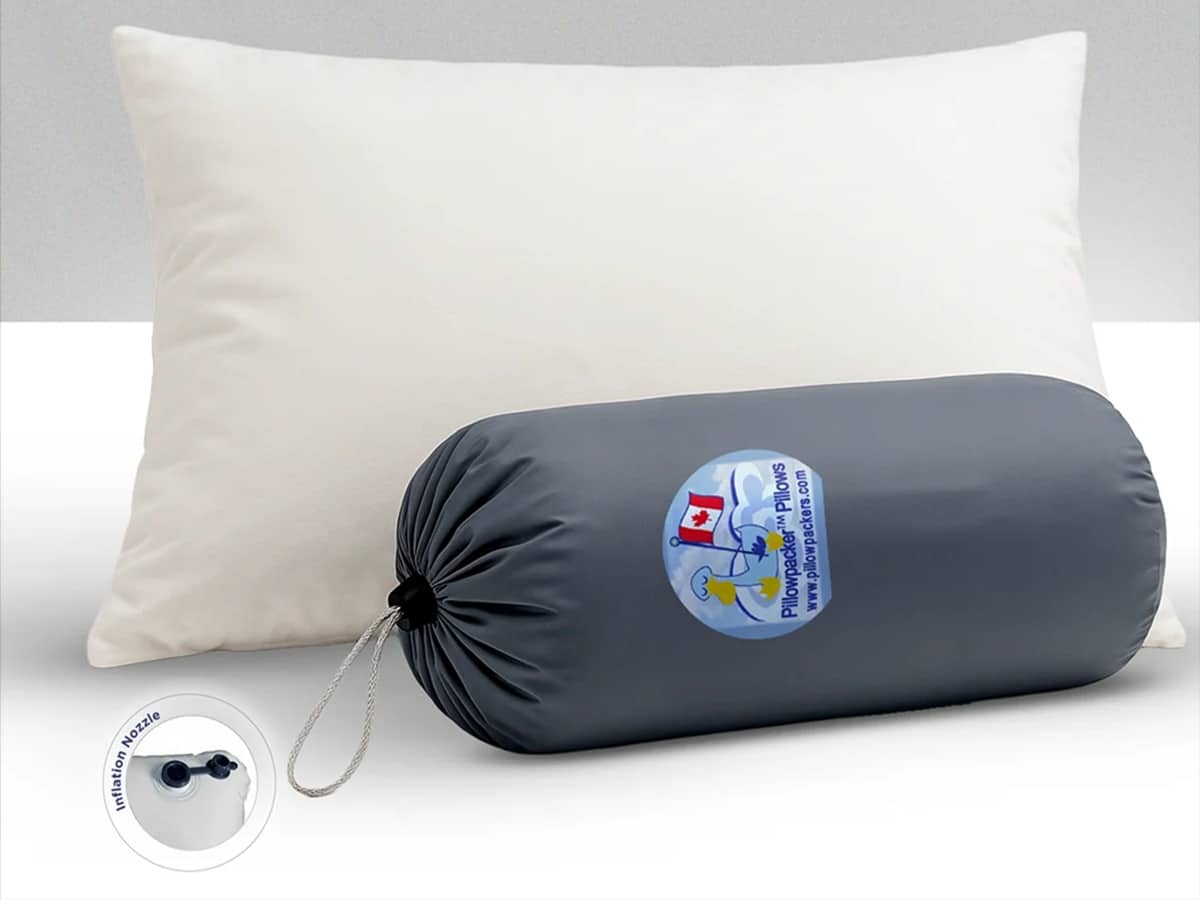
This is one of the more interesting travel pillows I’ve come across because it’s nothing like the U-shaped pillows you usually see wrapped around people’s necks at airports. I was first introduced to Pillowpacker many years ago when the company’s founder, Garry Logue, sent my wife and me pillows to try. Garry recently reached out to let me know that, 16 years later, he’s still making them in Canada.
What I like about the Pillowpacker is that it’s basically a miniature version of the pillow you sleep on at home. It measures 19 by 14 inches and has an inflatable inner core that you blow up to adjust the pillow to your preferred firmness. Put in more air if you want it firmer or less if you like a softer pillow.
The Down Alternative Microfiber version has five ounces of synthetic microfiber fill that’s designed to mimic the feel of down. It’s hypoallergenic and vegan-friendly, which is a nice option for travelers who have allergies or prefer not to use down. It also packs down much smaller than a regular pillow, which is obviously important when you’re traveling.
This isn’t really a neck pillow, so it’s a completely different approach from something like a Cabeau or Trtl. But if you’re someone who doesn’t like having a U-shaped pillow wrapped around your neck and would rather sleep on something that feels more like the pillow you use at home, this is an interesting alternative.
 Vesta Loop Neck Pillow
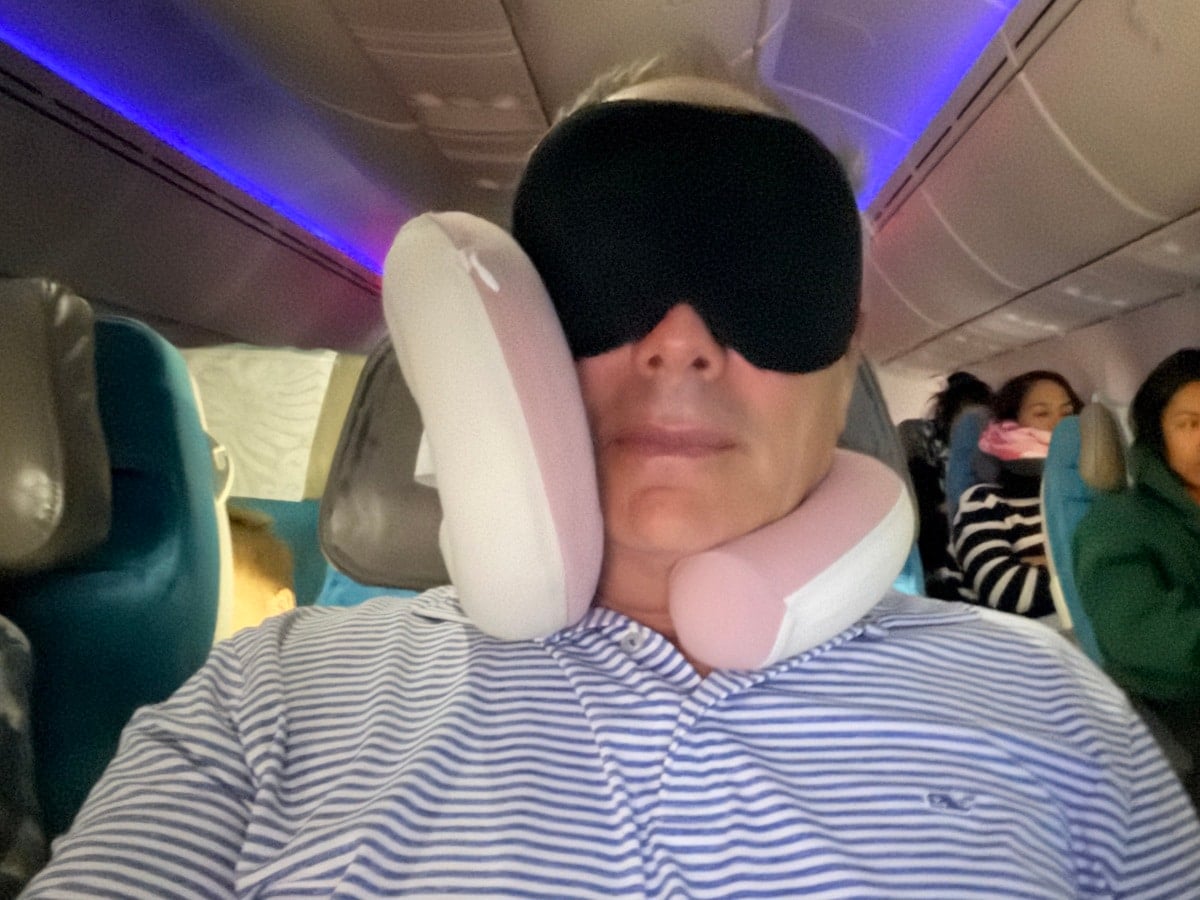 Vesta Loop Neck Pillow
Price: About $60
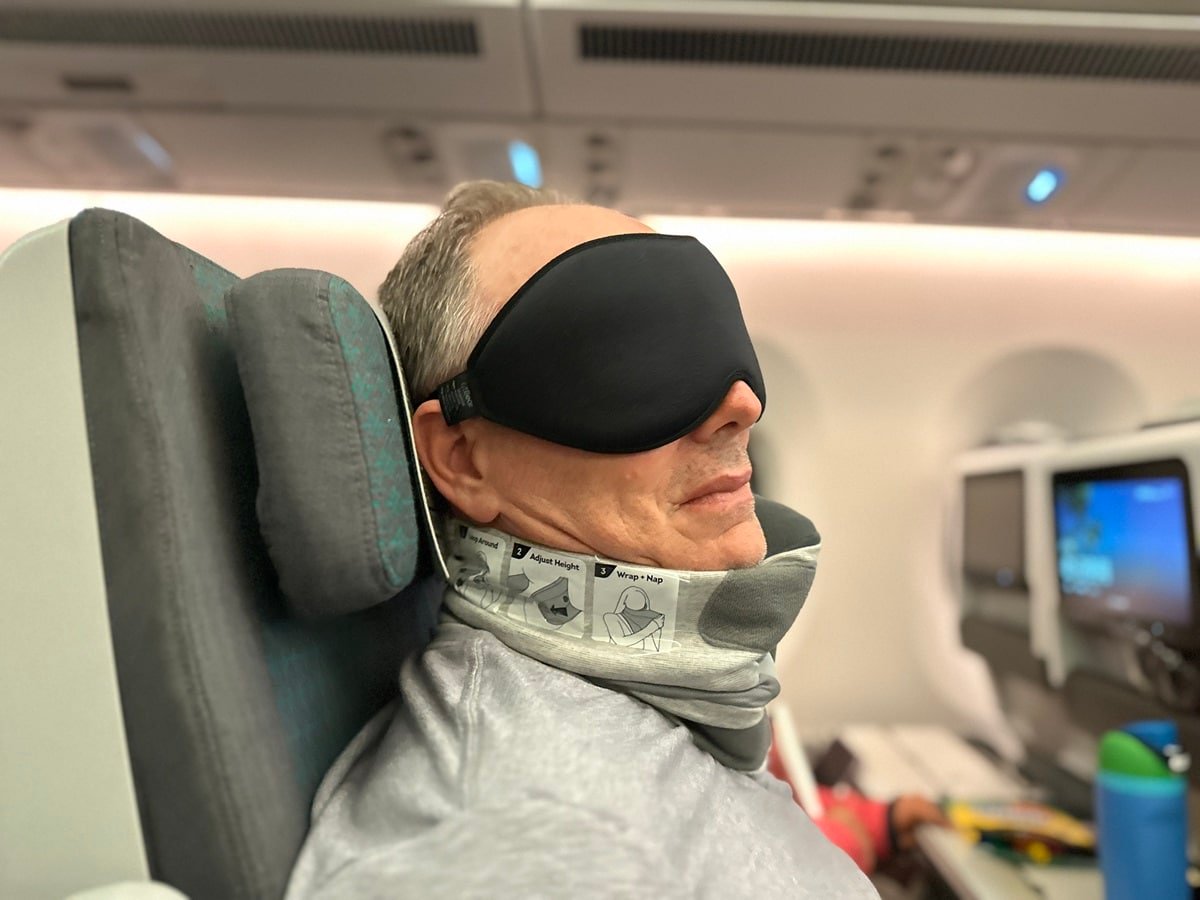
The Vesta Loop is one of the more unusual travel pillows I’ve tried. Instead of the traditional U-shape, it has a spiral wrapping design with S-shaped memory foam that’s designed to provide 360-degree support, including under your chin to help keep your head from falling forward.
I tried the Vesta Loop on my flight from LAX to Paris in June and I didn’t love it. I couldn’t quite get comfortable with it, so I handed it over to my wife to see what she thought. She loved it.
And that pretty much sums up the problem with recommending travel pillows. What works for one person doesn’t necessarily work for another. Everyone sleeps differently and has different preferences when it comes to firmness, positioning and how much neck and chin support they want.
The Vesta Loop wasn’t for me, but my wife’s experience proves that it’s worth considering, especially if you like a pillow that wraps more securely around your neck and provides support from multiple angles.
It also comes with a carrying bag, which makes it easier to pack.
 Cabeau TNE S3: The Neck’s Evolution
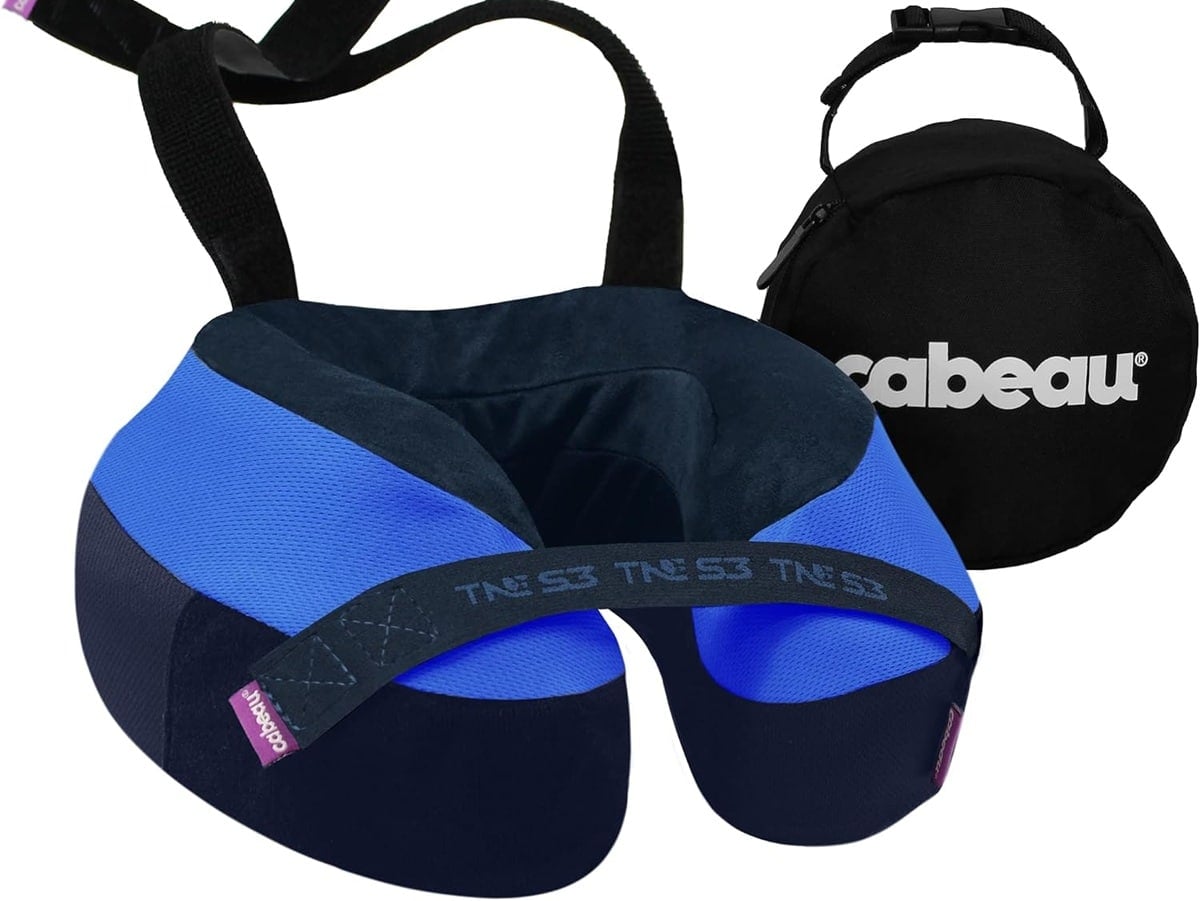 Cabeau TNE S3: The Neck’s Evolution
Price: $59.99
Cabeau has been making travel pillows for years and the TNE S3: The Neck’s Evolution is a more traditional-looking memory foam neck pillow with some clever features. It provides 360-degree support and has a flattened back so you don’t have a giant chunk of memory foam pushing your head forward when you lean against an airplane seat.
It also has straps that can attach to many airplane seat headrests, which can help keep your head from bobbing around after you fall asleep. The cover is removable and washable and the pillow compresses into a travel case, making it easier to attach to your carry-on. If you’re looking for a more traditional memory foam travel pillow, this is a solid option.
 Cabeau Evolution Cool Neck Pillow
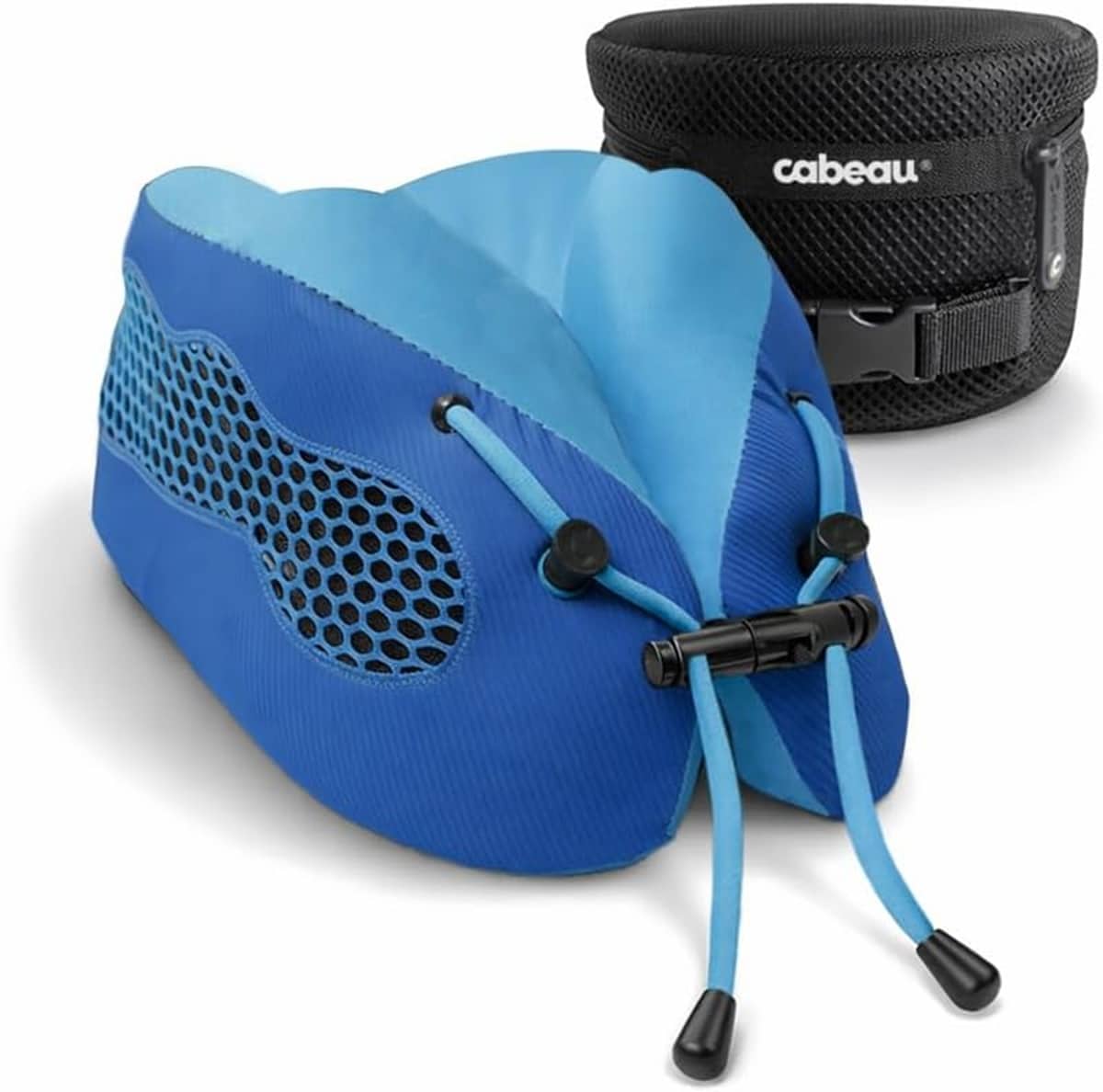 Cabeau Evolution Cool Neck Pillow
Price: $64.99
If you like the idea of a memory foam neck pillow but tend to get hot when you sleep, check out Cabeau’s Evolution Cool. It uses dual-density memory foam but has ventilation built into the pillow to allow heat to escape. It also has raised side supports to help keep your head from falling sideways and a thin, flat back so your head isn’t pushed forward against the seat. The cover is removable and washable and it comes with a travel case that compresses the pillow considerably.
Trtl Travel Pillow
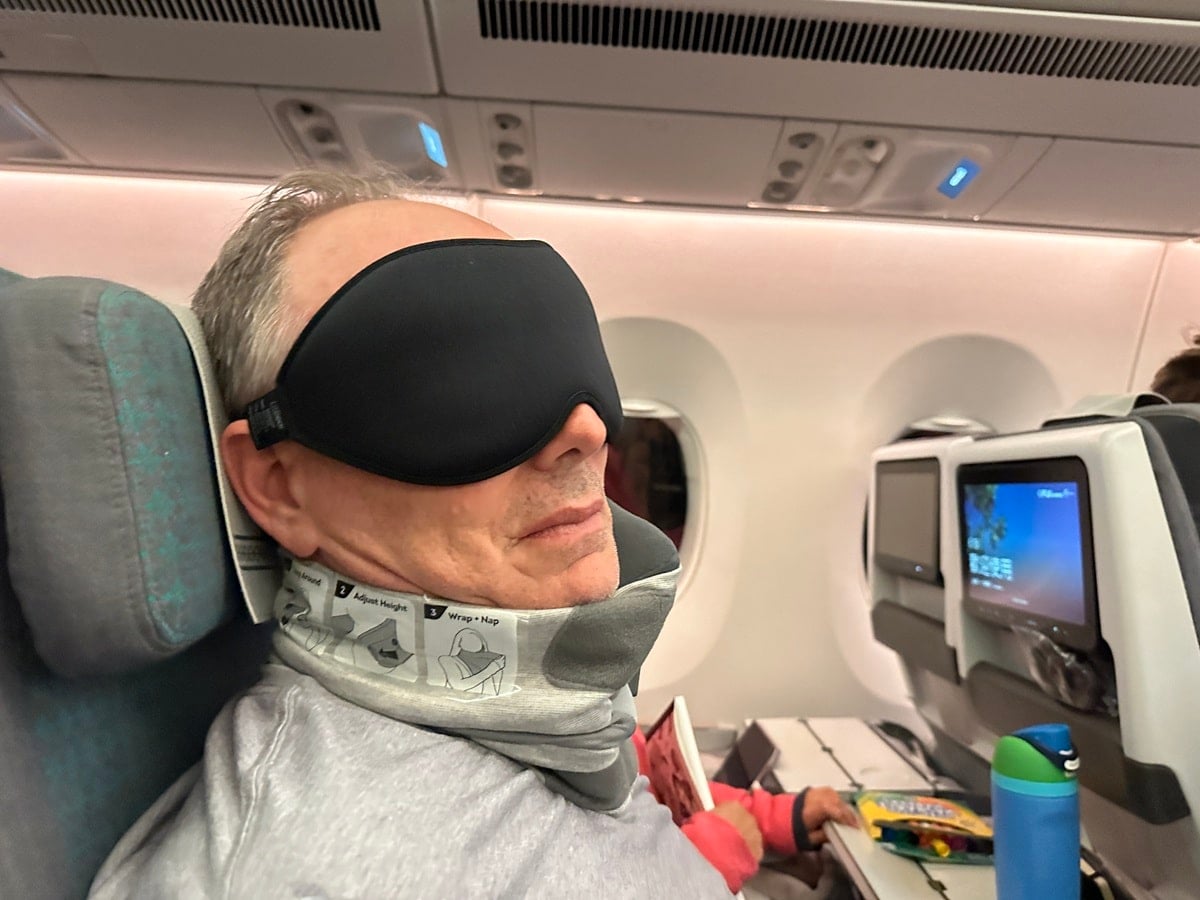 Trtl Travel Pillow
Price: $49.99
The Trtl is one of the most recognizable alternatives to the traditional U-shaped travel pillow. It looks more like a scarf than a pillow and has an internal support system designed to hold your head and neck in a more comfortable position while you sleep.
It’s also considerably less bulky than many memory foam pillows, which is a big plus if you’re trying to travel light. The original Trtl weighs less than many traditional neck pillows and can be attached to the outside of your bag.
Some travelers swear by the Trtl while others find the internal support too rigid, which again demonstrates why it’s so important to find the type of travel pillow that works for you.
 Tempur-Pedic All-Purpose Pillow
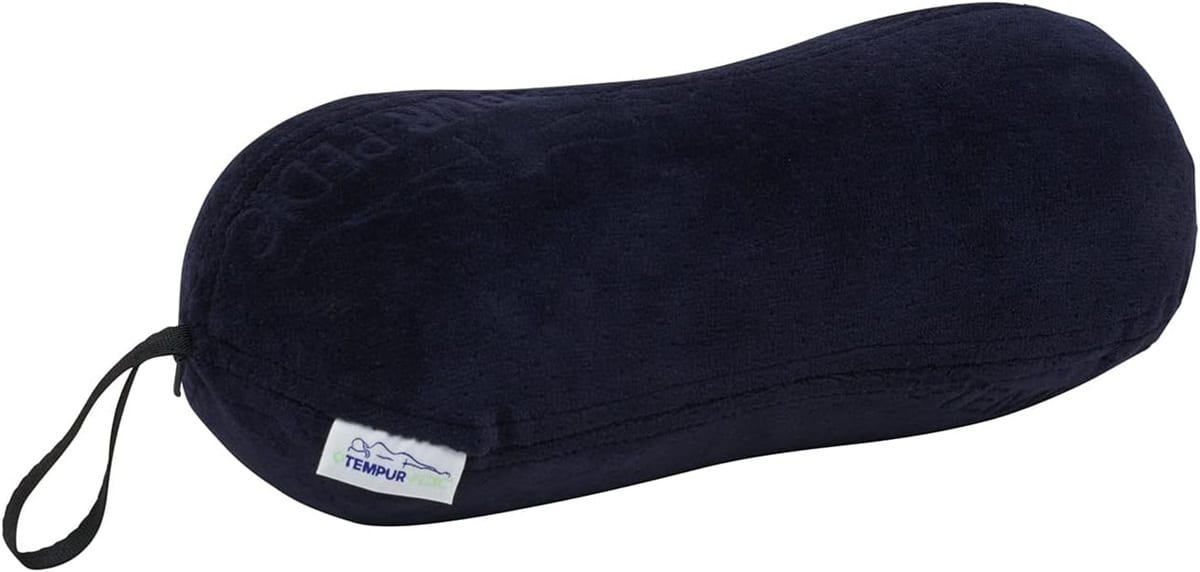 Tempur-Pedic All-Purpose Pillow
Price: $37
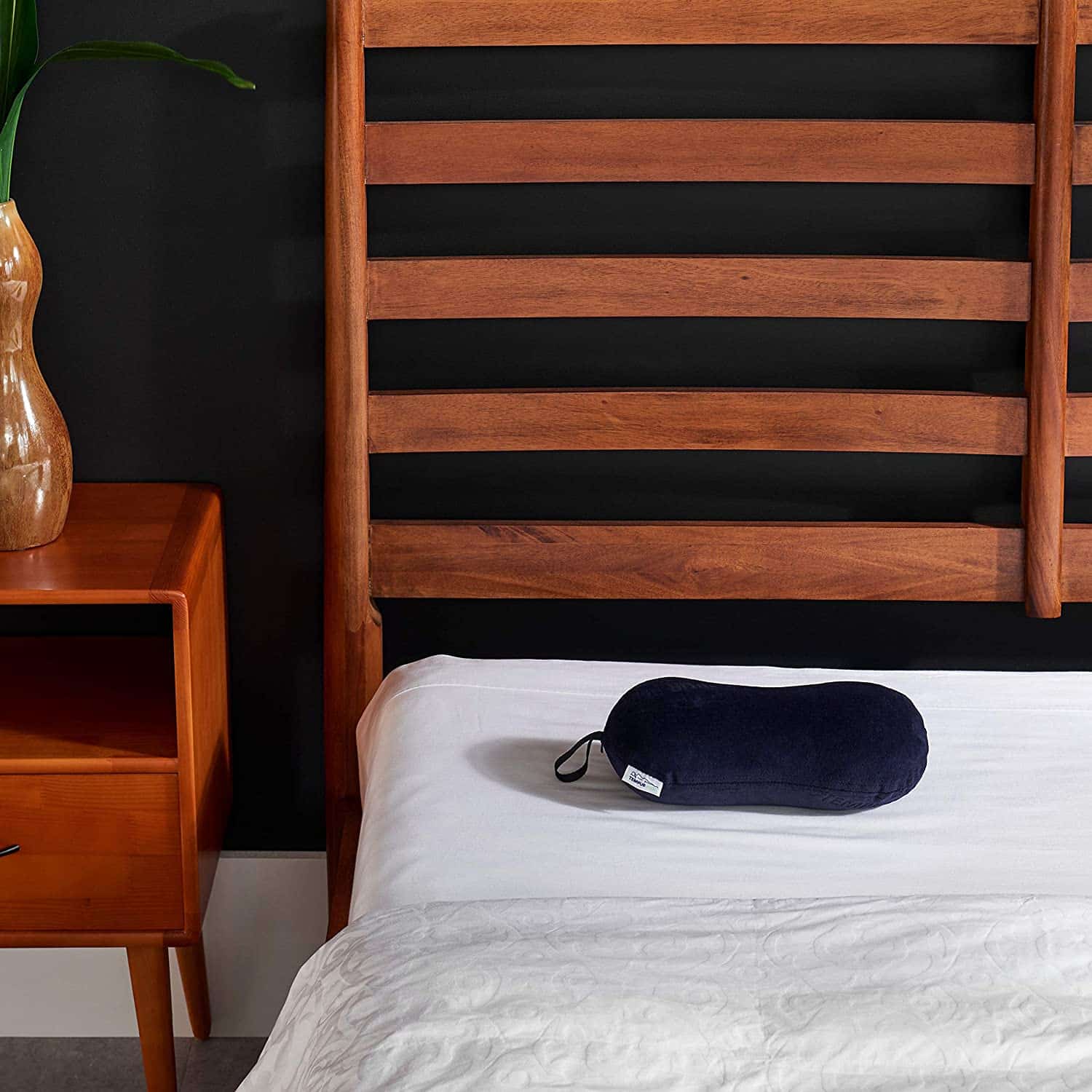
Here’s another option for travelers who don’t necessarily want a traditional U-shaped neck pillow. The Tempur-Pedic All-Purpose Pillow has a small peanut shape and is made from the company’s TEMPUR material. Because of its shape, you can use it as a travel pillow or neck roll as well as a lumbar cushion or even a leg spacer.
It also has a carrying strap, which makes it easier to bring along.
The big advantage is versatility. You can use it on the plane and then continue using it in your hotel room, rental car or wherever else you need a little extra support.
 Ostrichpillow Go Neck Pillow
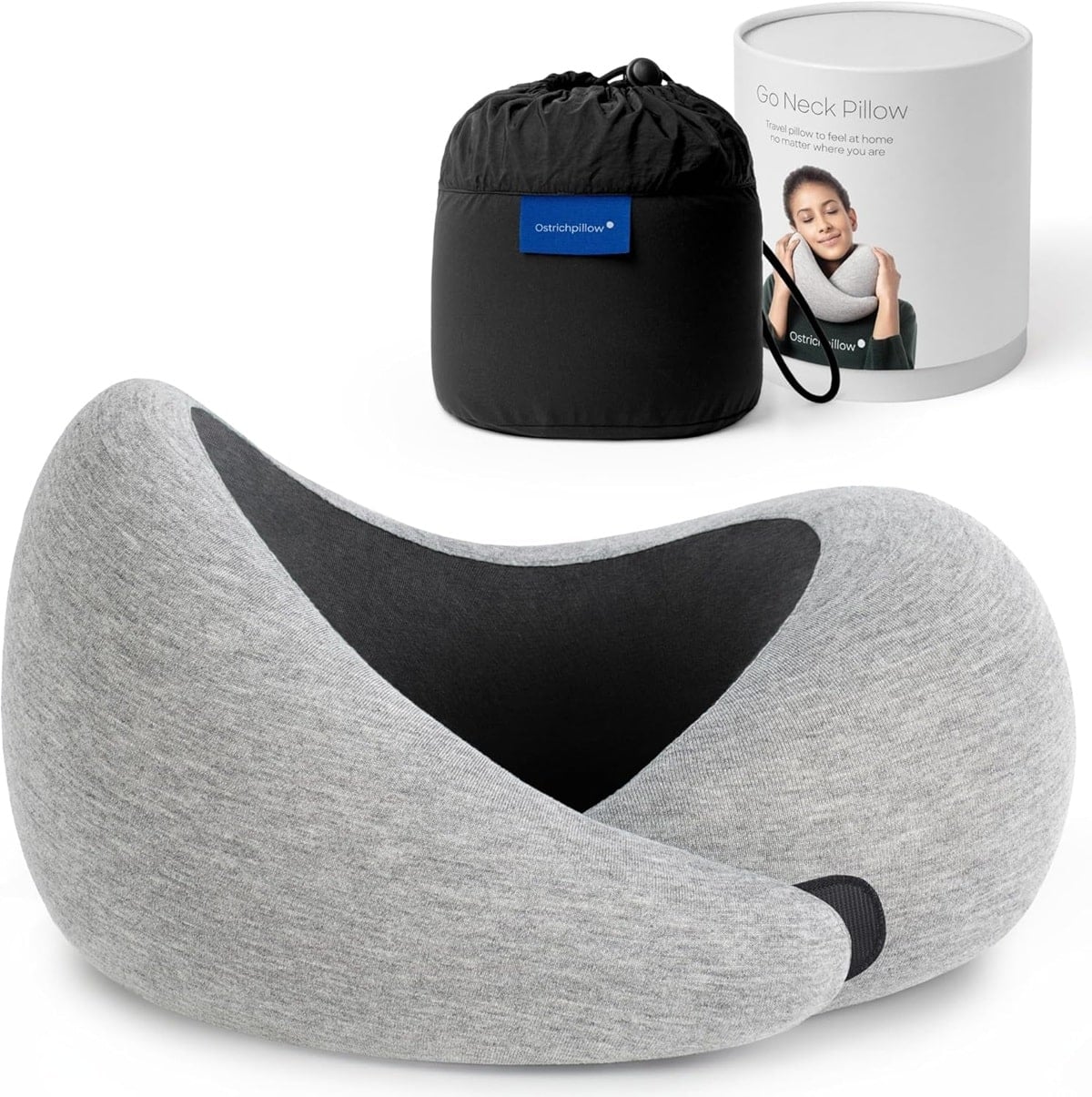 Ostrichpillow Go Neck Pillow
Price: $69
I’ve seen some pretty crazy-looking travel pillows over the years and the original Ostrichpillow, which basically covered your entire head, was definitely one of them. The Ostrichpillow Go is much more practical for air travel.
It uses memory foam and has an asymmetrical ergonomic design that wraps around your neck to provide support. You can adjust the fit depending on how tightly you want it around your neck and it compresses to about 60% of its size for packing. The cover is also removable and machine washable, which is important since anything you wear around your neck for hours on an airplane is going to need a good washing eventually.
Before buying a new neck pillow, make sure you’re wearing your old one correctly
Here’s a tip that could save you some money. If you already have one of those traditional U-shaped travel pillows and don’t find it comfortable, try turning it around.
Most people automatically put the opening in the front and the thickest part of the pillow behind their neck. But if your biggest problem is your head falling forward after you fall asleep, try putting the opening behind your neck so the thickest part of the pillow is underneath your chin. It might look a little strange but who cares? If it helps you sleep on a long flight, that’s what matters.
RELATED: Have You Been Wearing Your Travel Pillow Wrong?
How to sleep better on a plane
Before the pandemic, I used to fly more than 150,000 miles a year and I’ve seen just about every method and contraption passengers use to try to sleep on airplanes. Everyone is different but after spending that much time on airplanes, I’ve learned a few things that make sleeping on a plane easier.
A travel pillow is just one part of the equation. I also travel with a comfortable eye mask and take other steps to help get as much rest as possible, especially on overnight flights.
RELATED: 10 Ways to Help You Sleep Better on a Plane
There’s no travel pillow that’s going to work for everyone. My experience with the Vesta Loop proved that. I didn’t particularly like it but my wife loved it.
If you like a traditional memory foam neck pillow, I’d look at the Cabeau options. If you want something less bulky and don’t mind having support wrapped closely around your neck, the Trtl is worth considering. And if you hate neck pillows altogether and just wish you could bring your pillow from home, the Pillowpacker is a clever alternative.
Whichever one you choose, my advice is to try it out before your trip rather than discovering 30 minutes into a 10-hour flight that you can’t stand it.
And Rodney, I hope this helps and have a great trip to the Dolomites!