

This post contains references to products from one or more of our advertisers. We may receive compensation when you click on links to those products. For an explanation of our Advertising Disclosure, visit this page.
I used to be so afraid of flying that I didn’t get on a plane for three years. Fortunately, I overcame it, though I still get nervous now and then—especially when we go through severe turbulence (which is rare) or when flying to Hawaii or other destinations over vast oceans with no islands in between to land on in case, God forbid, something goes wrong.
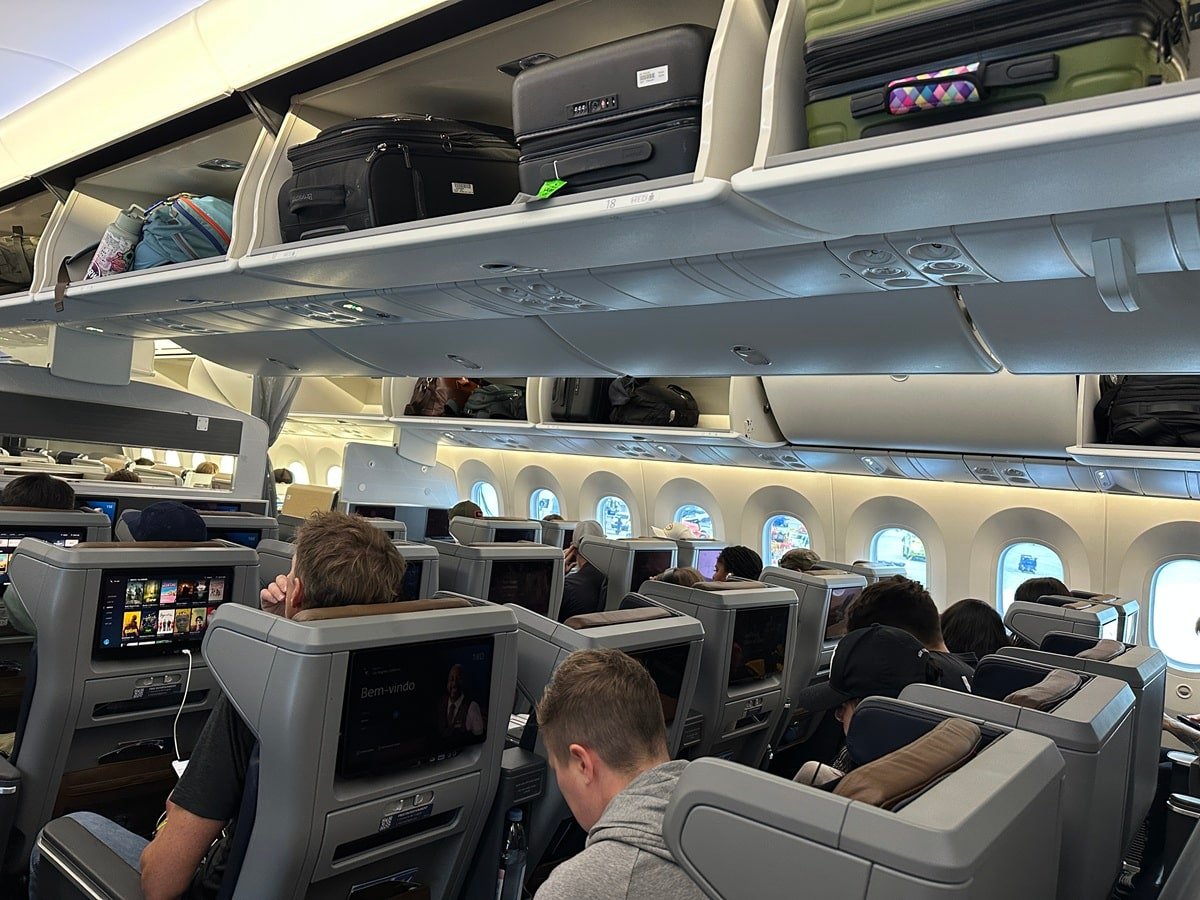
Lately, my fear has intensified with the significant rise in lithium battery fires inflight. The latest incident occurred today when a power bank in a passenger’s bag in the overhead compartment caught fire. See the video below.
View this post on Instagram
The Hong Kong Airlines Airbus A320, carrying 160 passengers onboard, was traveling from Hangzhou, China, to Hong Kong when it was forced to make an emergency landing in Fuzhou, China. The crew acted quickly, using bottled water and juices to extinguish the fire. However, this can actually make things worse by causing the fire to spread or even explode.
Lithium-ion batteries or power banks should be extinguished with a Class D fire extinguisher, but if one isn’t available, a Class ABC fire extinguisher can be used instead.
In the rare case there is no fire extinguisher onboard, the best alternative is to use sand, baking soda, or a fire blanket to help put out the flames and prevent the fire from spreading.
Lithium-ion batteries and power banks have been a growing concern for airlines because they can catch fire. In the past year, I’ve written about several high-profile incidents, including VIDEO: Former American Idol Star’s Backpack Catches Fire on JetBlue Flight and American Airlines plane evacuated after smoke fills the cabin in intense incident.
This is why every check-in agent asks if you packed a lithium-ion battery in your checked luggage. They’re prohibited for this specific reason—because it’s nearly impossible to put out a fire if it’s in the cargo hold.
I’ve also shared these tips: What Every Savvy Traveler Packs When They Travel and Why It’s Not Great to Check Lithium-ion Batteries and The Real Reasons Flight Attendants Tell Passengers to Hold on to Their Phones During Takeoff and Landing.
We’re starting to see a lot of airlines in Asia change their policies, and I wouldn’t be surprised if this spreads globally. According to the Daily Mail, “The airline announced that, starting April 1, 2025, its customers—and those on its low-cost subsidiary Scoot—will not be allowed to charge portable power banks via onboard USB ports or use them to charge personal devices.”
Portable power banks are one of the most popular tech gadgets for frequent travelers, and flight attendants usually don’t leave home without them since they ensure your phone won’t run out of juice while on the go.
One of the scariest things that happened to me was a couple of years ago when I almost inadvertently caused a fire on my Hawaiian Airlines flight from Honolulu to Los Angeles. I was working on my HP laptop and noticed the bottom cover had popped out of one of its base screws. Turns out, my battery was swelling, and I later learned that when this happens, it’s time to replace the battery immediately—and definitely don’t fly with it. Lesson learned.


Johnny,
Is it possible for a power bank to catch fire if it is not being used. Ie: if you just have it in your handbag.
Great question! I had to ask ChatGPT: “Yes, it is possible for a power bank to catch fire even if it is not actively being used, although it is relatively rare. There are several factors that can cause this to happen:
Battery Damage: If the internal battery of the power bank is damaged, either from physical impact or manufacturing defects, it can short-circuit, overheat, and catch fire, even when not in use.
Overcharging or Poor Quality Charging Circuit: If the power bank is left plugged in for an extended period of time, especially with a faulty charging circuit, it can overheat, increasing the risk of a fire.
Age of the Power Bank: As power banks age, the internal components, especially lithium-ion batteries, can degrade. This degradation can increase the chances of a malfunction that could cause a fire.
Exposure to Extreme Temperatures: Power banks exposed to high temperatures, whether in direct sunlight, a hot car, or other extreme conditions, can overheat and become dangerous.
Defective or Poor-Quality Power Banks: Low-quality power banks or ones from untrustworthy brands may not have the proper safety mechanisms in place (such as overcharge protection, temperature regulation, or short-circuit prevention), making them more susceptible to overheating or fires.
To reduce the risk of a fire, it’s important to store power banks in cool, dry places, avoid overcharging, and only purchase power banks from reputable brands with proper safety certifications.
What really disturbs me is how gate agents for EVERY SINGLE Alaska Air flight on an Embraer ERJ-175 spend 20 minutesprior to boarding begging people to gate-check their carry-on bags because it’s a full flight with not enough room in the overhead. The one time I handed over my backpack they didn’t ask if there was a lithium battery in it. It appears they don’t ask other passengers who give up their bag, either. Maybe you could interview the company about this?
Good point! I will look into this