Great news for American Airlines (AA) passengers – especially their frequent fliers as they just announced today that they plan on a major upgrade for faster inflight internet. According to their press release the Fort Worth-based airline plans to equip more than 500 narrowbody aircraft with SpaceX’s Starlink Wi-Fi system beginning in early 2027. The move marks one of the airline industry’s largest Starlink rollouts to date and signals just how competitive the battle for premium travelers has become.
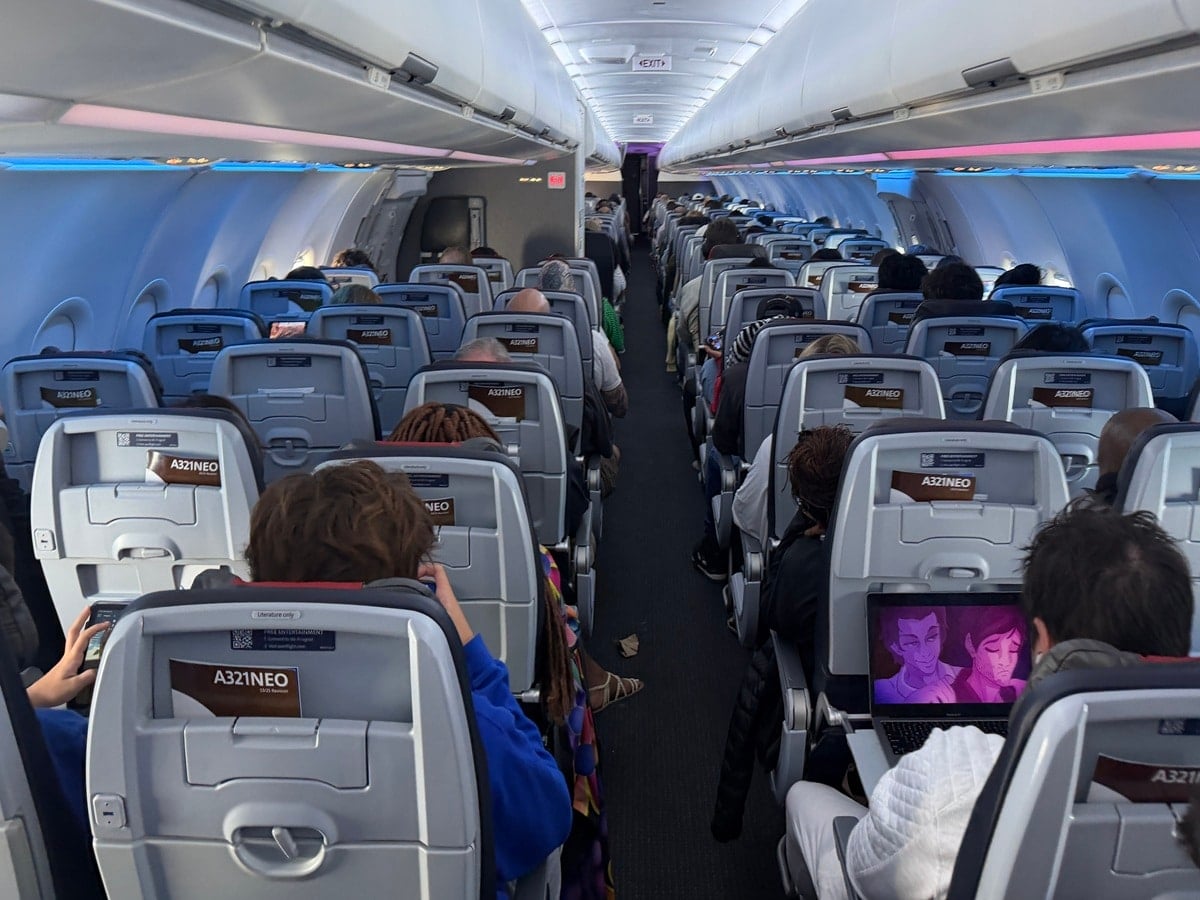
According to American, the installation will begin with its Airbus narrowbody fleet, including new Airbus A321neo and A321XLR aircraft deliveries. The airline says Starlink’s low-Earth-orbit satellite network will provide a dramatically improved onboard internet experience, capable of supporting streaming video, online gaming, real-time collaboration tools and faster browsing speeds throughout the flight.
It’s true since I’ve flown with airlines that have Starlink like United Airlines and Hawaiian and their internet can be faster than mine at home at times. I flew American Airlines twice last week and on the outbound LAX to Miami flight the WiFi was down. On the way back, it worked but it wasn’t that fast. Tip: Be sure to sign up for AA’s frequent flier program and login into your account to get free WiFi. Otherwise they charge up to $25 for two hours.
In a statement, American Airlines Chief Customer Officer Heather Garboden said the airline is focused on giving passengers “an at-home level of Wi-Fi experience” and described the partnership as part of the carrier’s broader effort to modernize the customer experience.
For travelers, this could be a significant upgrade from the often slow, unreliable and expensive inflight Wi-Fi many have become accustomed to over the years. Traditional satellite systems have struggled with bandwidth limitations, especially on full flights when dozens of passengers are trying to connect simultaneously. Starlink’s system uses thousands of low-orbit satellites, which reduces latency and increases speeds compared to older geostationary satellite technology.
The airline industry has increasingly treated inflight connectivity as a competitive advantage rather than just an add-on service. Business travelers now expect to send large files and stream content while in the air. Leisure travelers also want the ability to scroll social media, watch Netflix or message family and friends during flights without interruptions.
American’s announcement comes as several major U.S. carriers are racing to improve onboard connectivity. United Airlines, Alaska Airlines and Southwest Airlines have already selected Starlink for portions of their fleets. Delta Air Lines, meanwhile, recently announced it would use Amazon’s Project Kuiper satellite network for future onboard internet upgrades which seems like a mistake.
According to CNBC, American had reportedly been evaluating both Starlink and Amazon’s satellite offering before ultimately choosing SpaceX’s system for its narrowbody fleet. The airline does not currently plan to replace Wi-Fi providers on its Boeing aircraft, which still use systems from Viasat and Panasonic.
Another major shift is the growing trend toward free inflight Wi-Fi. Earlier this year, American rolled out complimentary Wi-Fi for members of its frequent flyer program, following similar moves by Delta and United. Airlines increasingly view connectivity as part of the overall customer experience rather than a standalone revenue stream.
The timing is also notable for SpaceX. CNBC reported that SpaceX’s connectivity division, which includes Starlink, generated more than $11 billion in revenue last year and accounted for the majority of the company’s total sales. The company is also reportedly preparing for a public offering that could become one of the largest IPOs in recent years.
If American’s rollout goes as planned, flying connected may soon become the norm instead of a frustrating luxury.