Passengers paid hundreds of thousands of dollars to live aboard a residential cruise ship. Now the ship’s lender has taken control, residents have been forced off and their dream of living at sea has turned into a financial nightmare.
I’ve been on more than 30 cruises and I can certainly understand the appeal of living on a cruise ship. Imagine waking up in a different destination every few days, having someone cook your meals, clean your cabin and take care of practically everything while you travel the world.
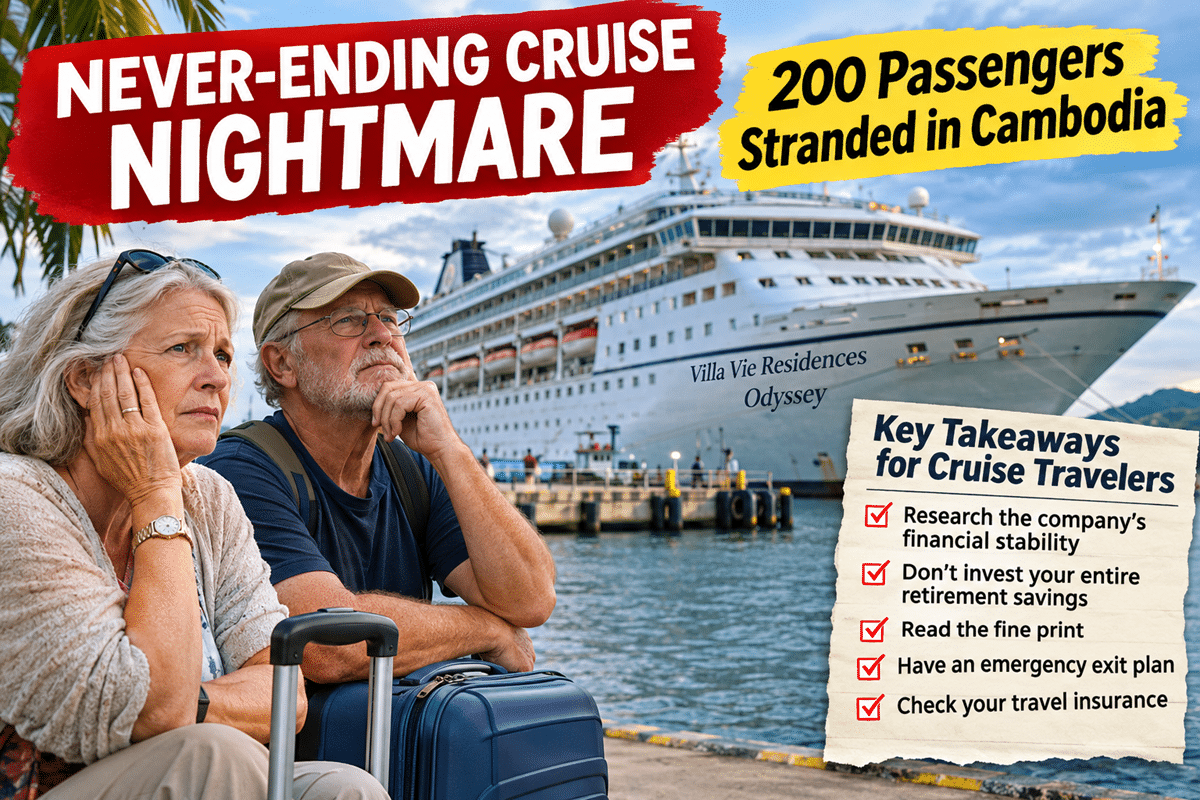
For some retirees, that sounds like paradise. But for approximately 200 passengers aboard the Villa Vie Odyssey, that dream has turned into a nightmare.
According to The New York Times, Villa Vie Residences, a Florida-based company that promised passengers a never-ending cruise around the world, abruptly suspended operations on October 27, 2026, while its ship was docked in Sihanoukville, Cambodia.
Passengers were reportedly given less than 24 hours to pack their belongings and leave the ship, with many suddenly scrambling to find hotels and figure out how to get home. And now, the situation has gotten even worse.
The Cruise Ship’s Lender Has Taken Control
According to a new report from PEOPLE, citing CBS News, the Odyssey’s lender has taken possession of the ship, which is expected to be moved to Singapore without its former residents. Passengers reportedly had only the weekend to retrieve their remaining belongings before losing access to the vessel.
Villa Vie’s CEO, Mikael Petterson, told CBS News that the company is still hoping to find an operational partner or investor who can help it regain control of the ship. However, there’s no guarantee that will happen. The ship could potentially be auctioned off if a financial solution isn’t reached.
Imagine selling your home, giving away your furniture, investing your retirement savings into what you believed would be your permanent residence and then suddenly being told you have to leave. That’s exactly the kind of situation some passengers are now facing.
Some Passengers Paid Hundreds of Thousands of Dollars
Villa Vie marketed the Odyssey as an affordable alternative to traditional retirement living, offering passengers the opportunity to travel the world while living aboard a cruise ship. But affordable is relative.
According to The New York Times, permanent residency options ranged from approximately $119,999 to $439,999, plus monthly fees that could run from $3,500 to $11,000. Five-year ownership plans started at $49,999, plus monthly fees.
One passenger, Joel Grieff, reportedly paid $350,000 for a lifetime prepaid contract that promised permanent residency aboard the ship without monthly fees. He boarded on October 1, 2026. Just 26 days later, the cruise was suspended. Grieff told The New York Times that his brief stay effectively cost him $13,461.53 per day. That’s an astonishing amount of money for a vacation, let alone what was supposed to be a permanent home.
What Went Wrong?
Villa Vie blamed extraordinary increases in fuel costs, saying its monthly fuel expenses per cabin had climbed from approximately $1,800 to between $6,000 and $8,000 in parts of Asia. The company reportedly attempted to introduce a $1,500 monthly fuel surcharge, but according to Petterson, approximately 70% of residents refused to pay it.
The ship also had a troubled beginning. The Odyssey, which is more than 30 years old, was originally scheduled to begin sailing in May 2024. However, extensive repairs and inspection issues delayed its departure from Belfast, Northern Ireland, for months. Those delays reportedly cost the company millions of dollars.
There were other warning signs, too. According to PEOPLE, citing NBC News, the company faced lawsuits involving allegations of contract violations and unpaid overtime. The Odyssey also received an unsatisfactory score of 81 during a July 2025 inspection by the CDC’s Vessel Sanitation Program.
A California Woman Says She Saw the Warning Signs
One of the most troubling accounts comes from Sharon Lane, a 78-year-old Orange County woman who had planned to spend the next 15 years living aboard the Odyssey. According to NBC Los Angeles, Lane sold most of her belongings before moving aboard.
She told the station that she began noticing changes, including fewer meals, fewer port visits and extended periods when the ship wasn’t traveling anywhere. At one point, she described the vessel as simply floating at sea to conserve fuel. Lane left the ship in August because of health issues, but many of her friends remained aboard.
She expressed particular concern about residents who had sold everything and were relying on Social Security to support themselves. That, to me, is the most heartbreaking part of this story. For some of these passengers, this wasn’t just a vacation gone wrong. It was their home and potentially their life savings.
My Take: I Love Cruising, but Would I Live on a Cruise Ship?
Before I took my first cruise, I thought I would hate cruising. I figured I’d feel claustrophobic, get seasick and be bored out of my mind. Boy, was I wrong. My first sailing was aboard a Carnival cruise ship which is on the lower end and I was still hooked. Since then, I’ve been on more than 30 cruises across numerous cruise lines.
My kids, who are now 7 and 10, have already been on five cruises and we’re about to embark on another one. Our whole family loves cruising.
Could I imagine living on a cruise ship full-time? Definitely, especially when I’m much older. But I’d want a luxurious ship, a spacious cabin and plenty of places to escape to when I needed some peace and quiet.
There’s something very appealing about having meals prepared for you, housekeeping taken care of and entertainment available every night. And if you could have reliable access to medical care around the clock, that would make it even more attractive.
I’ve met and heard about retirees who spend much of their retirement cruising because, depending on the cruise fare and their needs, it can be less expensive than certain senior living arrangements. And let’s face it, visiting beautiful destinations sounds a lot more fun than sitting around a retirement community.
But there’s a huge difference between booking back-to-back cruises with an established cruise line and handing over your life savings to a relatively new company promising you a permanent home at sea. I love cruising, but I would never put all my financial eggs in one floating basket.
7 Important Lessons for Anyone Considering a Residential Cruise
If you’ve ever dreamed of retiring on a cruise ship, this story offers some important lessons.
1. Research the company’s financial stability. Don’t just look at glossy brochures, beautiful cabins and ambitious itineraries. Find out who owns the company, how long it has operated and whether it has a sustainable business model.
2. Don’t invest your entire retirement savings. This is probably the most important lesson. Never put yourself in a position where losing access to your cabin means losing your home and financial security.
3. Understand what you’re actually buying. A lifetime residency contract is not necessarily the same as owning real estate. Read the fine print, particularly what happens if the company becomes insolvent, the ship is sold or operations are suspended.
4. Have an emergency exit plan. Always maintain enough accessible money to pay for hotels, flights home and unexpected expenses. Make sure your passport is valid and that you have access to important documents and medications.
5. Don’t assume travel insurance will cover everything. Standard travel insurance policies may not cover the collapse of a residential cruise company, particularly when the arrangement involves long-term residency or ownership. Read the exclusions carefully and ask specifically about supplier financial default and trip interruption coverage.
6. Pay attention to warning signs. Repeated itinerary changes, unexpected surcharges, reduced services, missed ports and requests for passengers to contribute additional money can all signal financial trouble. Not every change is a red flag, but a pattern deserves scrutiny.
7. Consider booking shorter cruises instead. Rather than committing hundreds of thousands of dollars upfront, consider taking multiple cruises throughout the year on established cruise lines. You’ll have more flexibility and won’t be tied financially to a single ship.
Bottom Line
I feel terrible for the passengers aboard the Villa Vie Odyssey, particularly those who sold their homes and invested substantial portions of their retirement savings into what they believed would be the adventure of a lifetime.
Hopefully, the company can find a financial solution and passengers can recover at least some of their money. But with the lender now in control of the ship, the future remains uncertain.
There’s nothing wrong with dreaming about spending your retirement sailing around the world. In fact, I think it sounds pretty amazing. Just make sure that if your dream cruise suddenly comes to an end, you still have a safe place to land.
Would you ever consider living on a cruise ship full-time, or does this story make you think twice?