This post contains affiliate links and references to products or services from sponsors and other partners. We may receive compensation if you click on or make purchases through those links.
I’ve been fortunate to travel to almost 100 countries and these days, I often travel internationally with my wife and our two kids, ages seven and 10, who have already been to more than 30 countries.
After decades of packing, unpacking, overpacking and occasionally forgetting something important, I’ve learned that packing well isn’t about bringing everything you could possibly need.
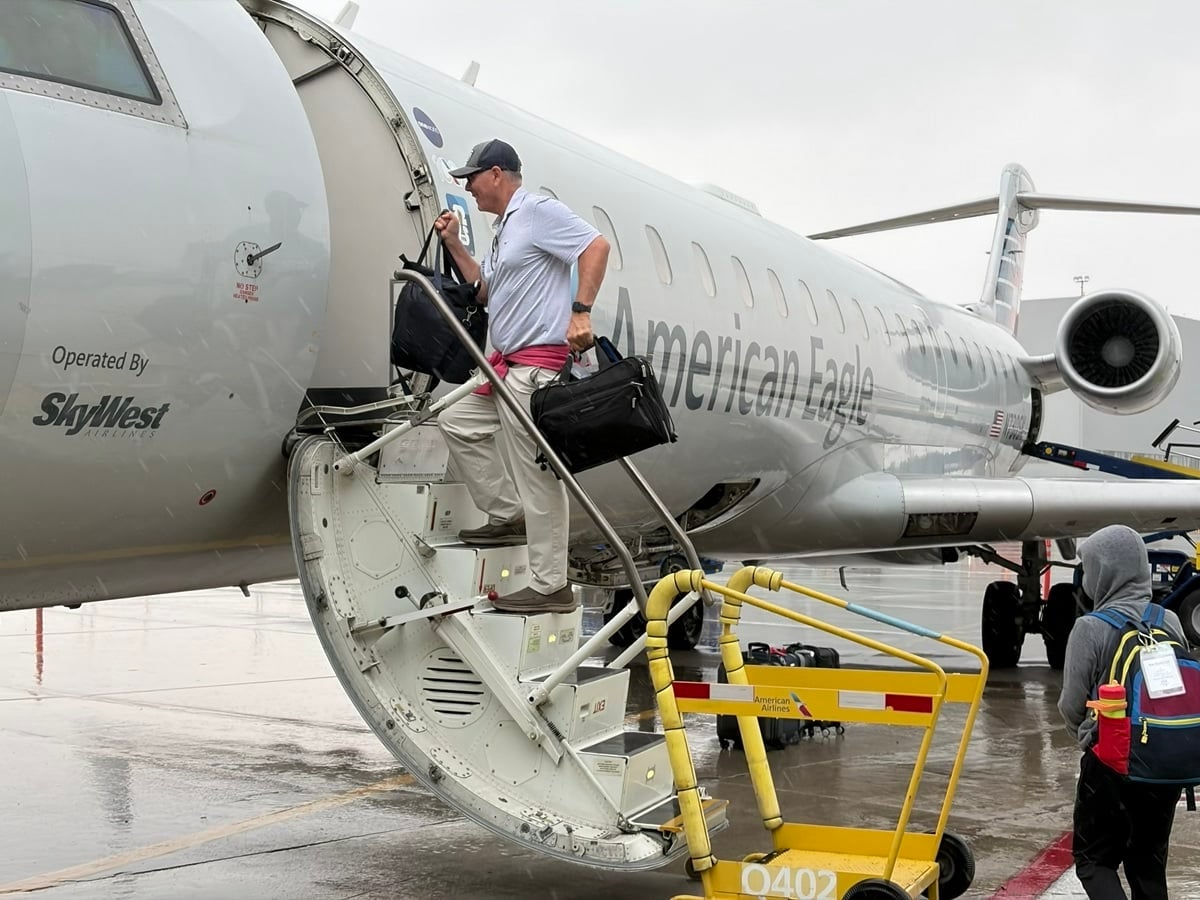
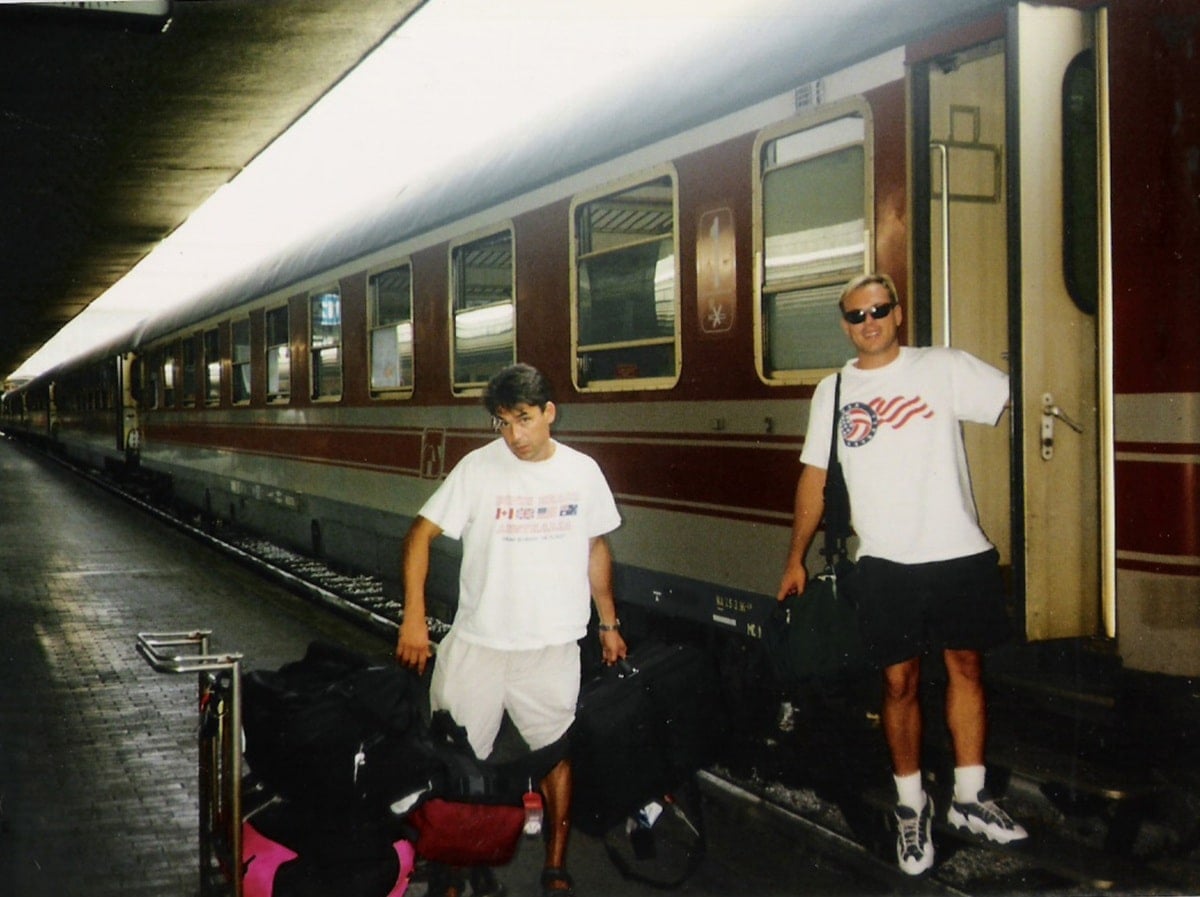
It’s about bringing the right things so you’re prepared without dragging your entire house around the world, which I think a lot of first-time international travelers do. I know I did on my first trip to Europe. Just look at my giant suitcase in the photo below!
 My packing strategy has also changed considerably since having kids. Before they came along, I rarely checked a bag. Now, it’s usually the opposite.
When you’re responsible for multiple passports, clothes, electronics, chargers, medications and everything else a family needs, being organized can make the difference between starting a trip relaxed or stressed.
Here are some of the international packing tips I’ve learned over the years.
1. Start with the right luggage
Before deciding what to pack, think about what you’re packing it in. I’m a big believer in traveling as light as reasonably possible. Obviously, that’s easier when I’m traveling alone than when my wife and I are taking our kids overseas for several weeks.
How much luggage I bring really depends on where I’m going and the time of year. If it’s summer and I’m headed somewhere warm or to a beach destination, it’s relatively easy to pack light and travel with just a carry-on. But if I’m going somewhere cold, that’s a different story. Winter coats, sweaters, boots and other cold-weather gear take up a lot of room, so packing light can be nearly impossible unless you wear your heaviest and bulkiest clothes on the plane, which I know some travelers do.
Whenever I can get away with just a carry-on, I prefer it. It saves time at the airport, eliminates the possibility of the airline losing my checked bag and makes taking public transportation much easier. And if you need a taxi or rideshare, you may not have to order a larger vehicle just to fit all your luggage.
For longer family trips, checking luggage is sometimes unavoidable. Whatever luggage you use, make sure it’s sturdy, easy to maneuver and, most importantly, has strong wheels. There’s nothing worse than dragging a heavy suitcase through a huge airport, train station or down a city street with a broken or wobbly wheel. I prefer four-wheel rollers because they’re much easier to maneuver, especially when you’re traveling with kids and multiple bags.
When I’m traveling with just carry-on luggage, whether it’s a short trip or a month-long trip, I use my Briggs & Riley laptop bag and put a Roots tote bag similar to this one on top of it. For longer trips, I don’t pack a month’s worth of clothes. I usually pack about a week’s worth and do laundry along the way. It saves a ton of space and makes getting around so much easier.
When we do check bags, we use large four-wheel rollers from Away, Ricardo of Beverly Hills or ROAM Luggage. No matter which brand you choose, look for something durable with sturdy wheels that can handle being dragged through airports, hotels, train stations and city streets.
I also recommend making your bag easily identifiable and putting your contact information inside in case the exterior luggage tag gets ripped off. If you’re buying new luggage, consider avoiding the standard black suitcase. Choosing a distinctive color or design makes your bag easier to spot on the baggage carousel and easier to identify if it goes missing.
Before checking a bag, I always take a quick photo of it with my phone. If it doesn’t show up at your destination, having a current photo makes it much easier to show airline employees exactly what they’re looking for.
2. Use packing cubes and mix up everyone’s clothes
I’m a big fan of packing cubes thanks to my wife who turned me onto them. She swears by the Quince Eco-Compression Packing Cubes and doesn’t use anything else. I only use them when traveling with my family because they make it much easier to keep everyone’s clothes organized instead of digging through a suitcase trying to figure out what belongs to whom.
But there’s another reason I use them: I don’t necessarily put all of one person’s clothes in the same suitcase.
When we’re checking multiple bags, we’ll mix and match some of our packing cubes between suitcases. That way, if one bag gets delayed or goes missing, no one is left without any clothes.
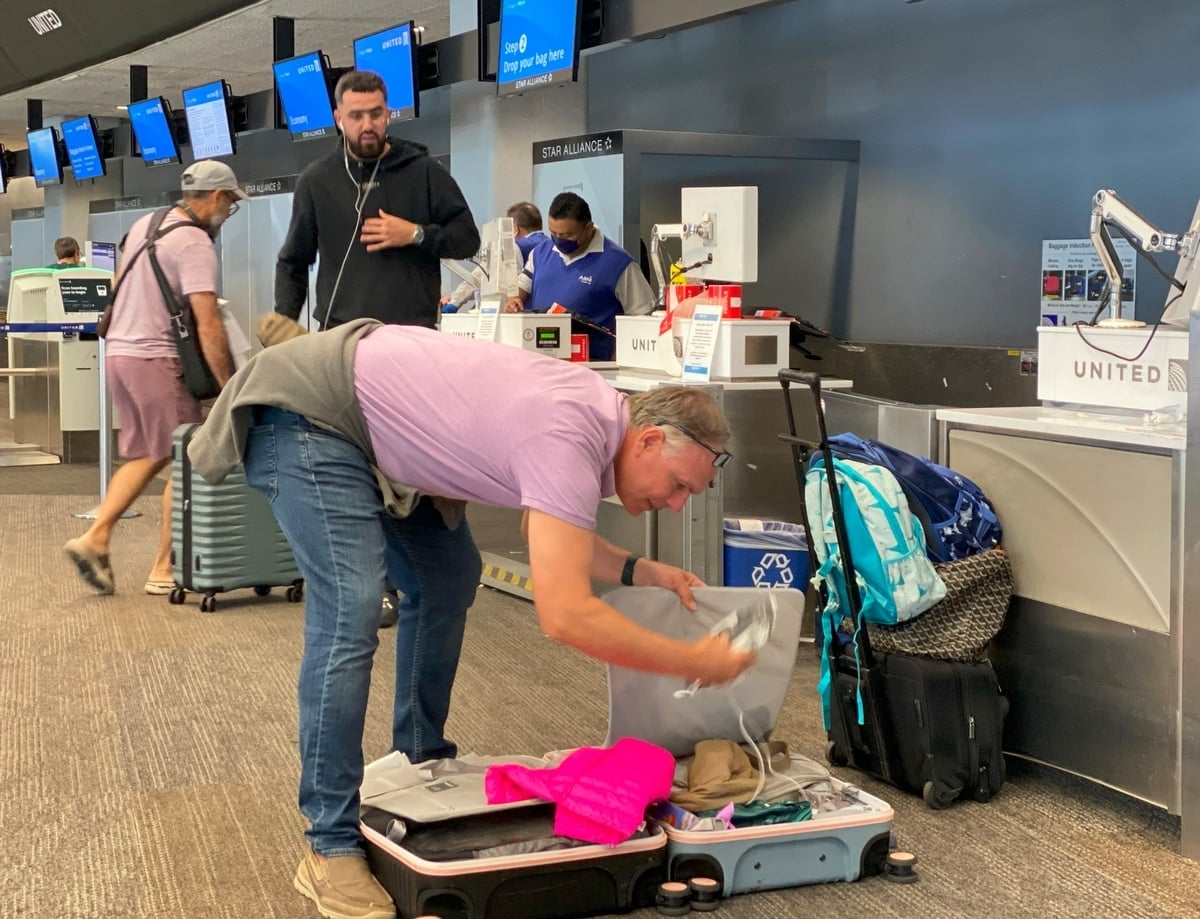 Packing cubes can also save you money at the airport. If you discover at the check-in counter that one suitcase is overweight, it’s easy to pull out a cube and move it to another suitcase or, if allowed, put it in your carry-on instead of paying an overweight baggage fee.
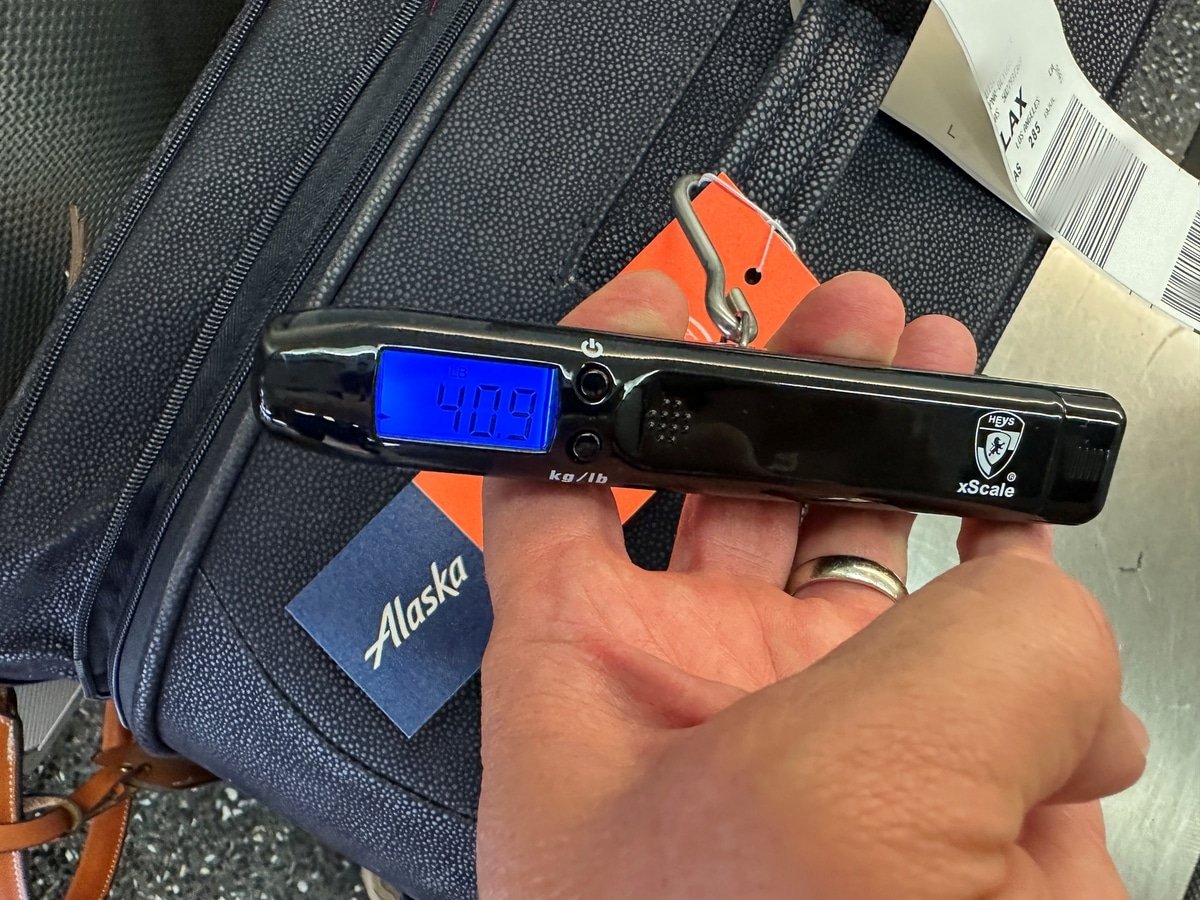 Better yet, don’t wait until you’re standing at the airline counter with a line of people behind you watching you rearrange your underwear. I always recommend traveling with a small portable luggage scale so you can weigh your bags before leaving for the airport and avoid an embarrassing and potentially expensive surprise.
And remember that baggage weight limits aren’t necessarily the same everywhere. Check your airline’s baggage allowance before leaving home, especially if your trip involves multiple airlines.
3. Put an AirTag in every checked bag
Another thing I won’t check a bag without is an Apple AirTag. I put one inside each suitcase (checked and carry-on) so we can see where my bags are. They’re especially useful when making connections because you can often tell whether your bag made it onto your next flight.
AirTags don’t prevent an airline from losing your luggage, but they can give you valuable information when something goes wrong. I hide mine somewhere inside the suitcase and change the battery every year (here’s how to quickly change them).
4. Never check anything you can’t afford to lose
This is one of my most important packing rules. Your passport, medications, wallet, keys, electronics, jewelry and other valuables should always go in your carry-on or personal item.
The same goes for anything you absolutely need when you arrive. Even if I’m checking luggage, I like to have at least a change of clothes and basic toiletries in my carry-on. If my suitcase spends the night in Chicago while I’m sleeping in Rome, I don’t want to be wearing the same clothes the next day.
When traveling with kids, an extra outfit and bathing suit in a carry-on is even more important. Spills, airsickness and other surprises happen.
5. Pack less clothing than you think you’ll need
One of the biggest mistakes travelers make is packing for every possible scenario. You don’t need an outfit for every hypothetical dinner, weather event or activity. Before packing, check the weather forecast for your destination and think realistically about what you’ll be doing.
I try to pack clothes that can be mixed and matched and worn more than once. Layers are particularly useful because they’re more versatile than bulky clothing and airplanes can be freezing even when your destination isn’t.
Shoes take up an enormous amount of suitcase space, so I try not to bring more just one extra pair (I place them in a plastic bag so they don’t get my clothes dirty). Comfortable walking shoes are especially important in Europe and other destinations where you can easily walk miles every day.
6. Pack for your destination, not just the weather
Research local customs and what you’ll be doing. Some churches and religious sites require shoulders or knees to be covered. Upscale restaurants may have dress codes. Certain destinations are much more formal than others.
If you’re going hiking, swimming or participating in another activity requiring specialized clothing, obviously factor that in too. A few minutes of research before leaving home can prevent you from having to buy something you already own.
7. Bring the right power adapters and chargers
International travel has become dramatically easier thanks to our phones and other electronics, but those devices aren’t much help when they’re dead. Before every international trip, I check which electrical outlets are used in each country we’re visiting.
There’s also an important distinction travelers sometimes overlook: A plug adapter changes the shape of your plug so it fits into a foreign outlet. A voltage converter changes the electrical voltage.
Many modern electronics, including most phone and laptop chargers, support dual voltage, but don’t assume every device does. Check the details on your charger or device before plugging it in overseas.
I also try to consolidate my charging gear rather than bringing a separate wall plug for every device. A good international travel adapter and multi-port charger can dramatically reduce the number of chargers you need.
Don’t forget charging cables for your phone, watch, tablet, laptop, headphones and anything else you’re bringing.
8. Always bring a portable charger
A portable power bank is another item I rarely leave home without. Your phone is now your boarding pass, camera, map, translator, entertainment system, communication device and often your wallet. International travel can drain the battery quickly, especially when you’re using maps, taking photos and videos and searching for cellular service.
I charge my portable batteries before leaving home and keep them in my carry-on. Remember that spare lithium batteries and power banks generally need to travel in your carry-on baggage, not your checked luggage.
9. Pack medications carefully
Never put essential prescription medication in checked luggage. I keep medications in my carry-on so they’re always with me, and I bring enough for the trip plus some extra in case we’re delayed.
For prescriptions, it’s also smart to keep medications in their original labeled containers and have a copy of the prescription or a note from your doctor when appropriate, particularly when traveling internationally. I also take photos of the prescription labels, a habit that once saved us when I was traveling through Europe with my then-88-year-old dad and he realized he’d forgotten his pills. Having photos of the labels made it much easier to figure out exactly what he needed and helped the pharmacist fill them. As an added bonus, they were much cheaper than they would have been back home!
Rules vary by country and some medications that are perfectly legal at home may be restricted elsewhere, so check the destination’s rules before traveling. I also bring a small assortment of basic over-the-counter medications and first-aid supplies so I don’t have to hunt for a pharmacy at midnight because someone has a headache or upset stomach.
10. Don’t go crazy with toiletries
Toiletries can add a surprising amount of weight. For carry-on travel, remember the liquid restrictions and use travel-size containers when necessary.
For checked luggage, I still don’t see much reason to haul around huge bottles of shampoo, conditioner and other products unless there’s something specific you can’t live without. Hotels provide many basic toiletries and there’s a good chance your destination has stores.
I do make sure we have essentials like toothbrushes, toothpaste, deodorant, sunscreen and anything specific my family uses. And I always pack hand sanitizer and wipes. Airports and airplanes have a lot of high-touch surfaces.
11. Pack for the flight, not just the destination
For a long flight, I keep the things I’ll actually use onboard somewhere I can easily reach them rather than buried in the overhead bin. That typically includes headphones or AirPods, a sleep mask, charging cables, a portable battery and snacks.
I also like to have a sweater or another layer available because airplane temperatures can be unpredictable. Bring an empty reusable water bottle too. You can take it through security empty and fill it once you’re past the checkpoint.
For an overnight flight, I want everything I need for sleeping within reach so I’m not climbing over people and opening the overhead bin after the lights go out.
12. Bring your own snacks
Never assume the airport or airplane will have something everyone in your family wants to eat. Flights can be delayed, airport restaurants can close and airlines can run out of your preferred meal.
We bring snacks we know our kids will eat. If someone in your family has food allergies or dietary restrictions, bringing your own safe food is even more important.
Just remember that certain fresh foods, fruits, meats and agricultural products may not be allowed into another country. Eat them onboard or dispose of them before going through customs if required.
13. Packing for kids requires a different strategy
In addition to their clothes, we pack headphones, entertainment and plenty of snacks. I also make sure they have something familiar and comforting from home, particularly on a long trip.
Tablets can be lifesavers on long flights, but download movies, shows, games and books before leaving home. Don’t count on airport or airplane Wi-Fi being fast enough to download a movie at the last minute.
And don’t forget the device’s charge and a portable charger as a back-up. Ask me how many times parents discover that one after the battery hits 2%.
14. Download entertainment before you leave
Download movies, TV shows, podcasts, music, books and anything else you might want before leaving home. Even when an airline advertises Wi-Fi, it can be unavailable, slow or unable to stream.
I also download offline maps for places where I might have spotty service. Technology is fantastic when it works. Experienced travelers have a back-up for when it doesn’t.
15. Keep copies of important documents
I keep digital copies of important travel documents somewhere secure and accessible. That can include passports, visas, travel insurance information, prescriptions and important reservation information.
You don’t want the only copy of something important to be inside the bag that just disappeared. I also make sure my family knows how to access important information if something happens to my phone.
After decades of international travel, I’ve learned that the best-packed suitcase isn’t necessarily the fullest one. The goal is to have everything you need while avoiding dragging a bunch of stuff around the world that you’ll never use.
If I forget a T-shirt or toothbrush, I can buy one. A forgotten passport or prescription medication is a much bigger problem.