Veronica thanks Perillo Custom Vacations for hosting this trip so she could write this detailed review of her experience.
“More, more,” boomed Chef Antonio Castronovo, as I gingerly added olive oil to the tomato bruschetta we were preparing in his home kitchen in Palermo, Sicily. “Those are American drops; do Sicilian ones,” he encouraged with a smile.
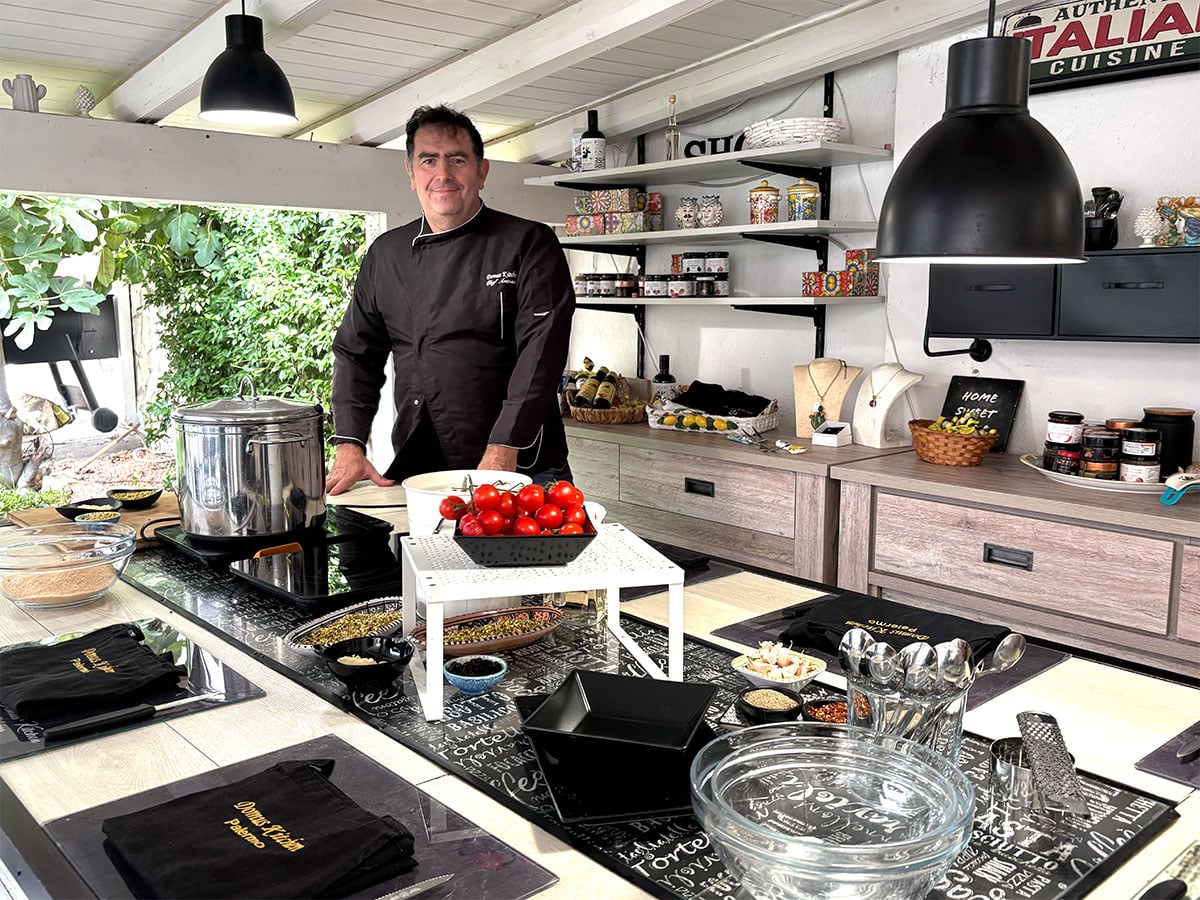 The bruschetta was just a part of a four-course meal I helped prepare during the Domus Kitchen cooking class that took place in the chef’s inviting open-air kitchen. Filled with laughter, banter, and fascinating insights from Chef Antonio (“the best shrimp flavor is in the head”), this hands-on cooking class featured local ingredients, traditional Sicilian recipes, and the warm hospitality of the chef’s own family. After preparing our meal with four fellow students, we all sat down to feast on the fruits of our labor.
 This culinary experience was just one highlight of my five-day tour of Sicily arranged by Italy specialist Perillo Custom Vacations, which designs and books personalized itineraries tailored to a traveler’s interests, time, and budget. With deep roots in the country based on eight decades arranging Italian travel for Americans, Perillo provides the best of both worlds: the expertise and exclusive access of a specialized tour company and the independence of a bespoke trip customized to an individual, couple, or small group. My tour with four companions included all transportation, meals, and hotels, as well as expert guides in every location. It was ideal for my first visit to Italy’s largest island.
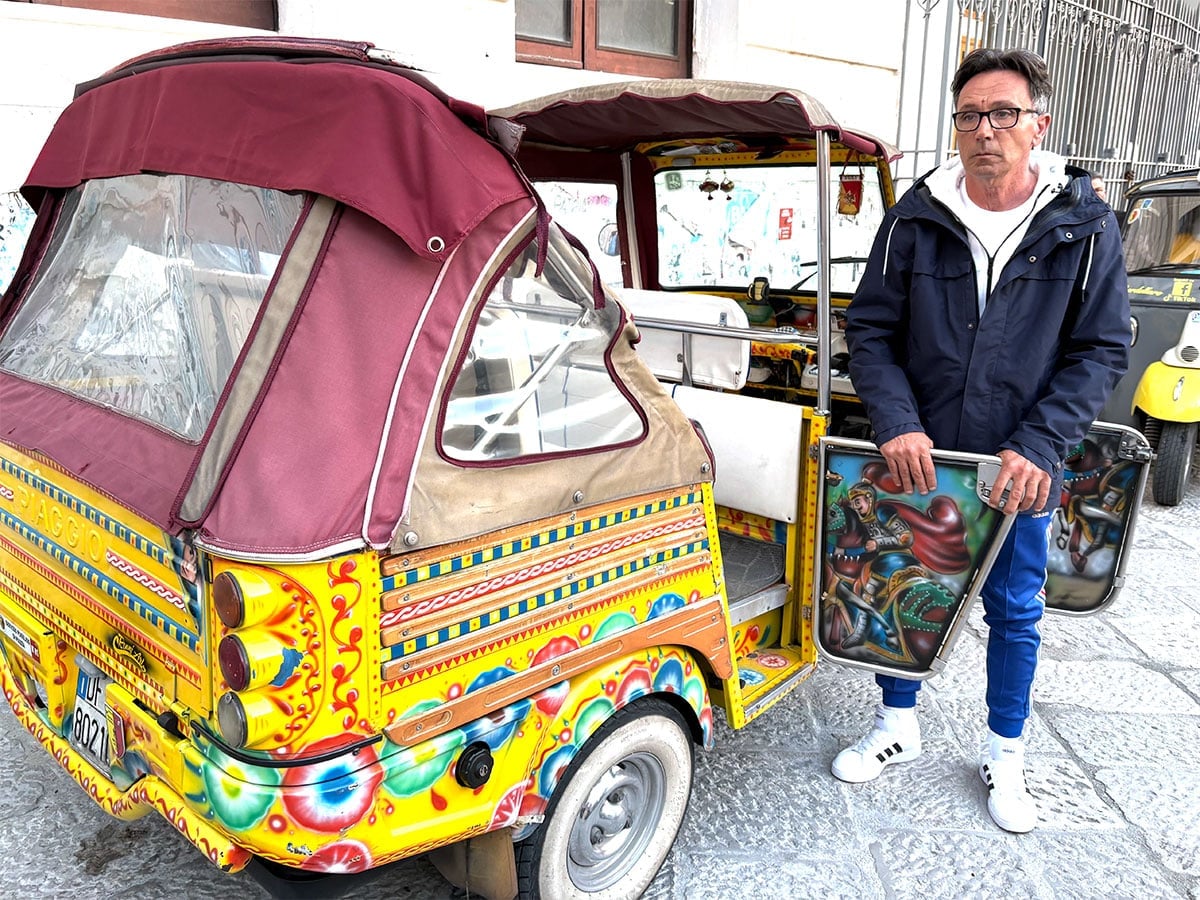 Each day was packed with memorable immersive experiences. In Sicily’s capital of Palermo, Perillo arranged for a guided tuk-tuk tour of the city. As we careened around the traffic-clogged streets, passing one grand historic building after another — the Teatro Politeama Garibaldi, the Teatro Massimo di Palermo, and the Palermo Cathedral — I learned that Palermo boasts more than 200 churches, many showcasing the unique Arab-Norman architecture characteristic of the city. “Historically, building shutters were either brown for the poorer people or green for the wealthier,” our guide, Francesca, pointed out.
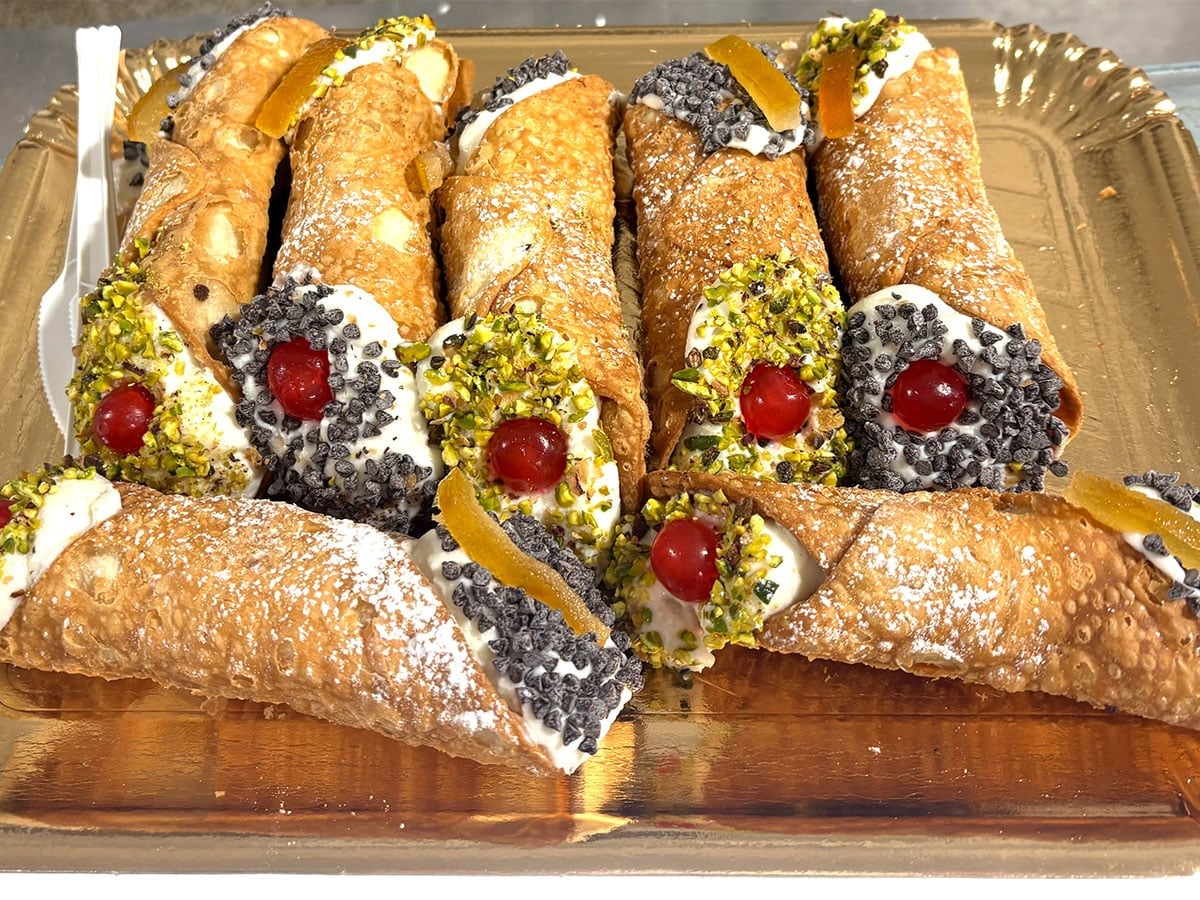 We set off on foot along Palermo’s oldest street, the pedestrian-only, restaurant-lined Via Vittorio Emanuele to the Quattro Canti, a historic intersection of four streets. This tiny baroque piazza felt like the beating heart of the Old City. “Walking around Palermo is like walking through multiple cities,” Francesca said, referring to its lasagna-like layers of history — from the ancient Phoenicians to the present-day Italians. From the top of the 14th-century Church of Saint Catherine of Alexandria, I gaped at the church-spire-dotted rooftops spread before me before indulging in a traditional Sicilian cannoli (some say the city’s best) from the on-site bakery.
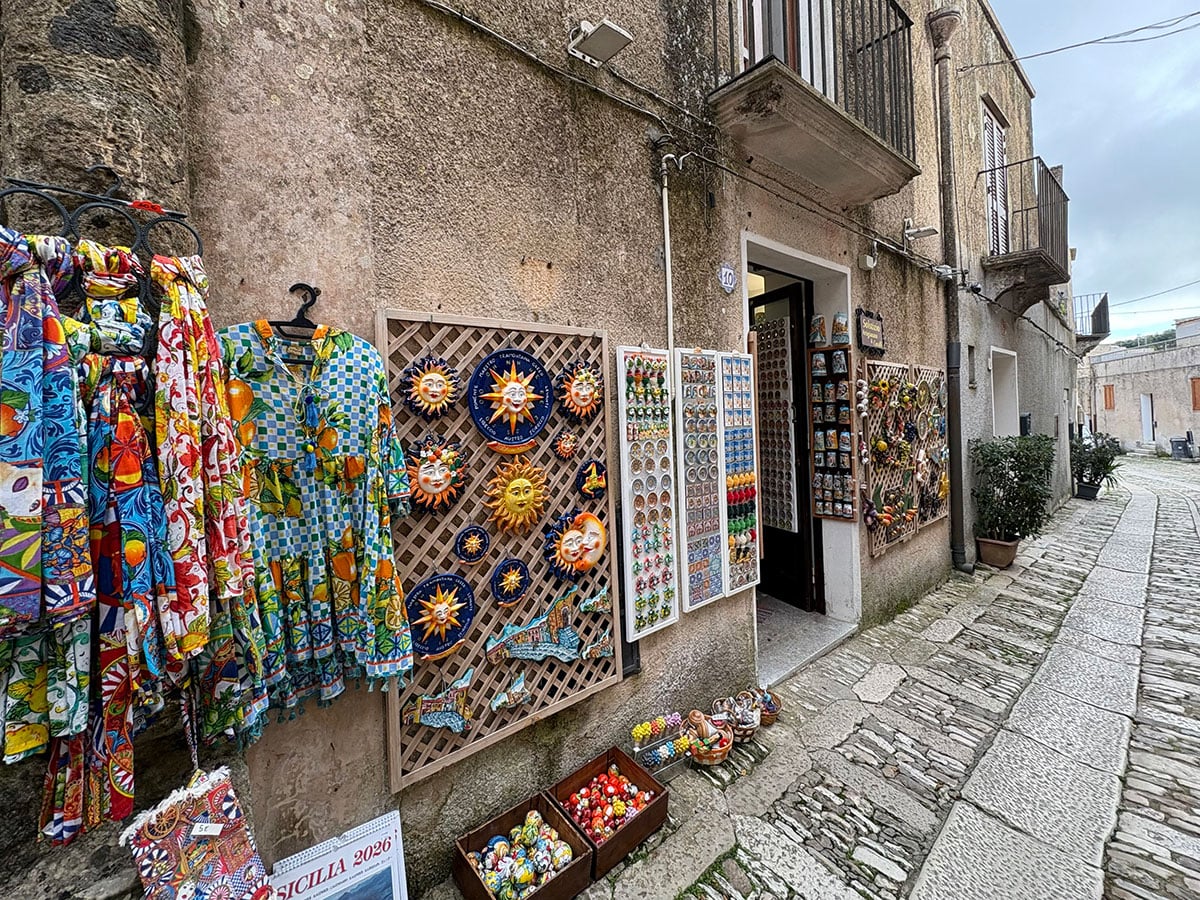 More treats awaited in the mystical hilltop town of Erice, a short drive away on Sicily’s northwestern coast. Known as the “city of 100 churches,” this medieval, stone-paved village claims an impressive Norman Castle of Venus and signature almond pastries from Maria Grammatico’s tiny bakery. After sampling her sweets, we met the traditional weaver Francesca Vario in her workshop. There, she crafts spontaneously designed canvases and carpets using rag strips on an ancient loom. “I hear the music in the colors,” she shared, as her fingers nimbly threaded the cloth.
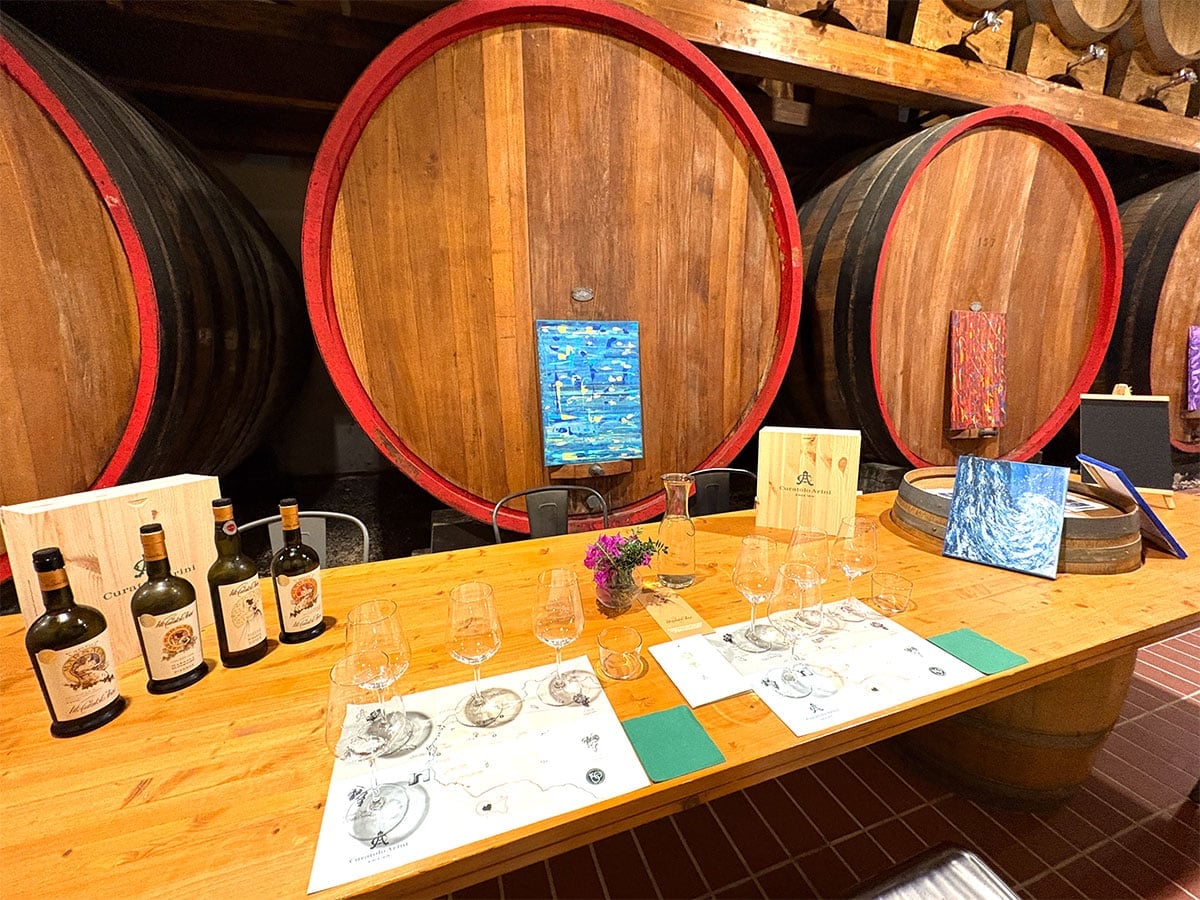 During a wine tasting at the Curatolo Arini winery in nearby Marsala, fifth-generation owner Alexandra Curatolo observed that “Sicily is like a continent” because it changes so widely. “Within just 50 kilometers, you have different words.” As we toured her family winery, which dates to 1875, she added that “eating, drinking, and chatting is what Sicily is all about.”
Indeed, we took that to heart over many fine meals, especially the standout farmhouse lunch at Agriturismo Sanacore in a 1,000-year-old former stable near Marsala. Over traditional Sicilian specialties — arancini, busciate pasta with divine pesto trapanese, and farm-produced antipasti — the owner, Enzo Sanacore, shared his tips for tasting olive oil, which he produces on his estate. “Warm it, sip it, move it left and right in your mouth, and breathe it in,” he advised.
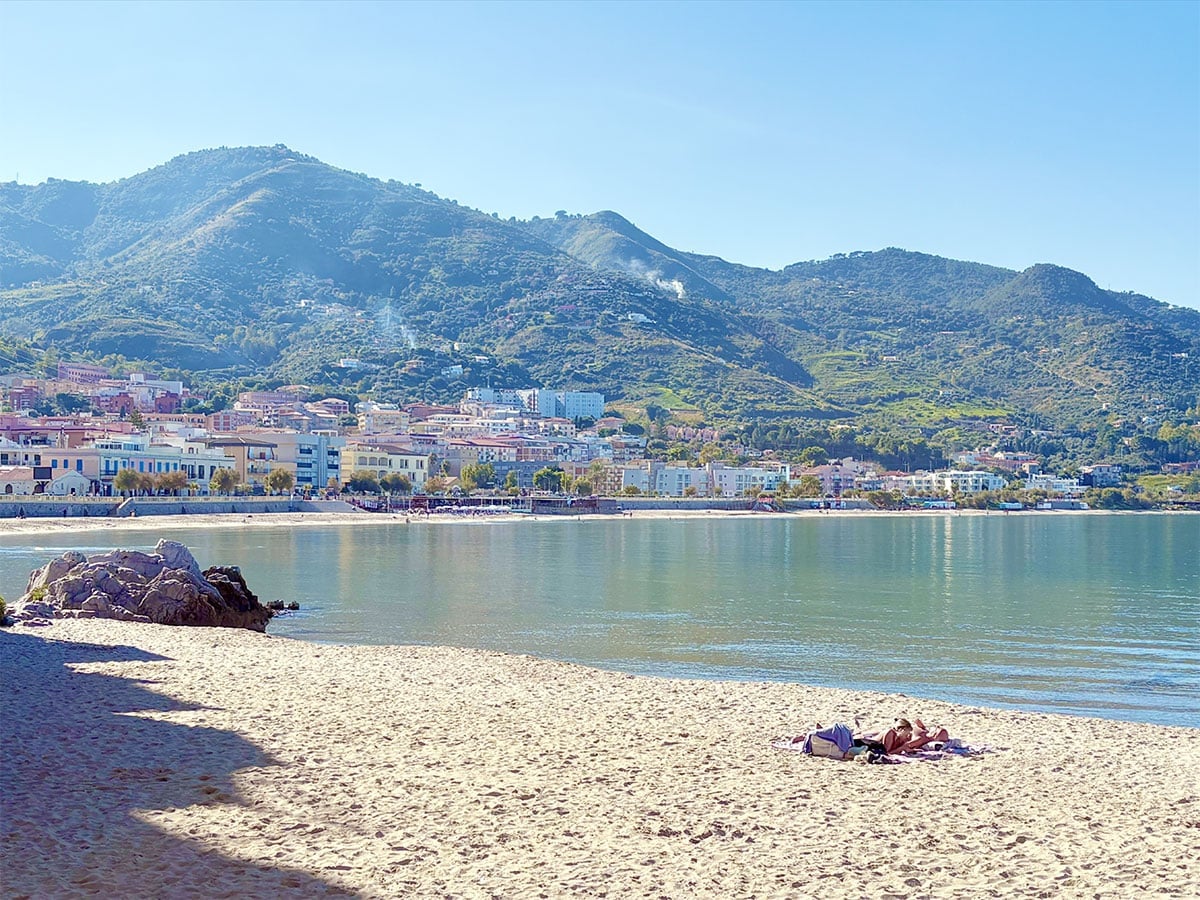 Another picture-perfect town, Cefalù, left me starry-eyed. Though less glam than the more-famous Taormina, Cefalù is a coastal charmer of winding, cobbled streets, medieval architecture, and sandy beaches, dominated by the Norman cathedral, a UNESCO World Heritage Site. Its magnificent Byzantine mosaic depiction of Christ Pantocrator stopped me in my tracks. Francesca, our guide, observed that Greek, Latin, Arabic, and Hebrew were all spoken here in medieval times.
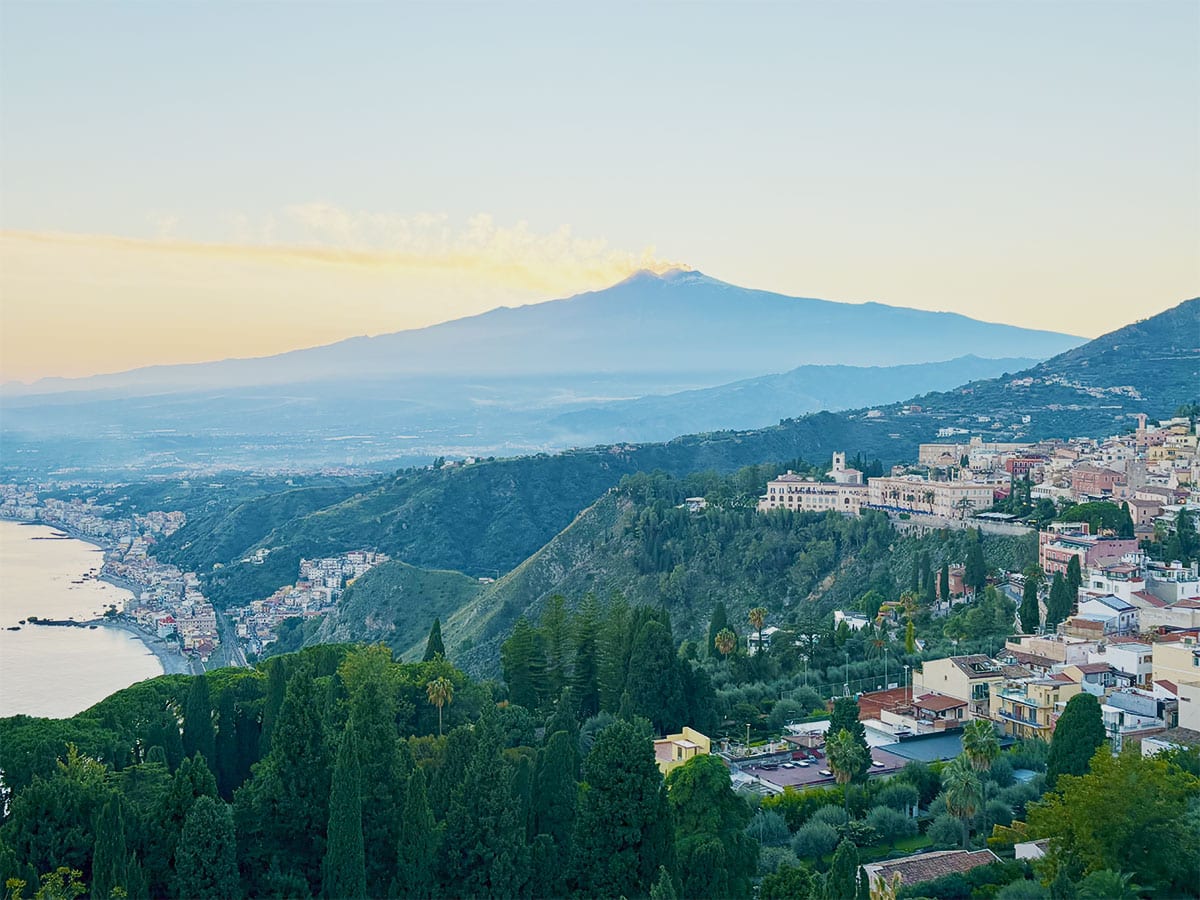
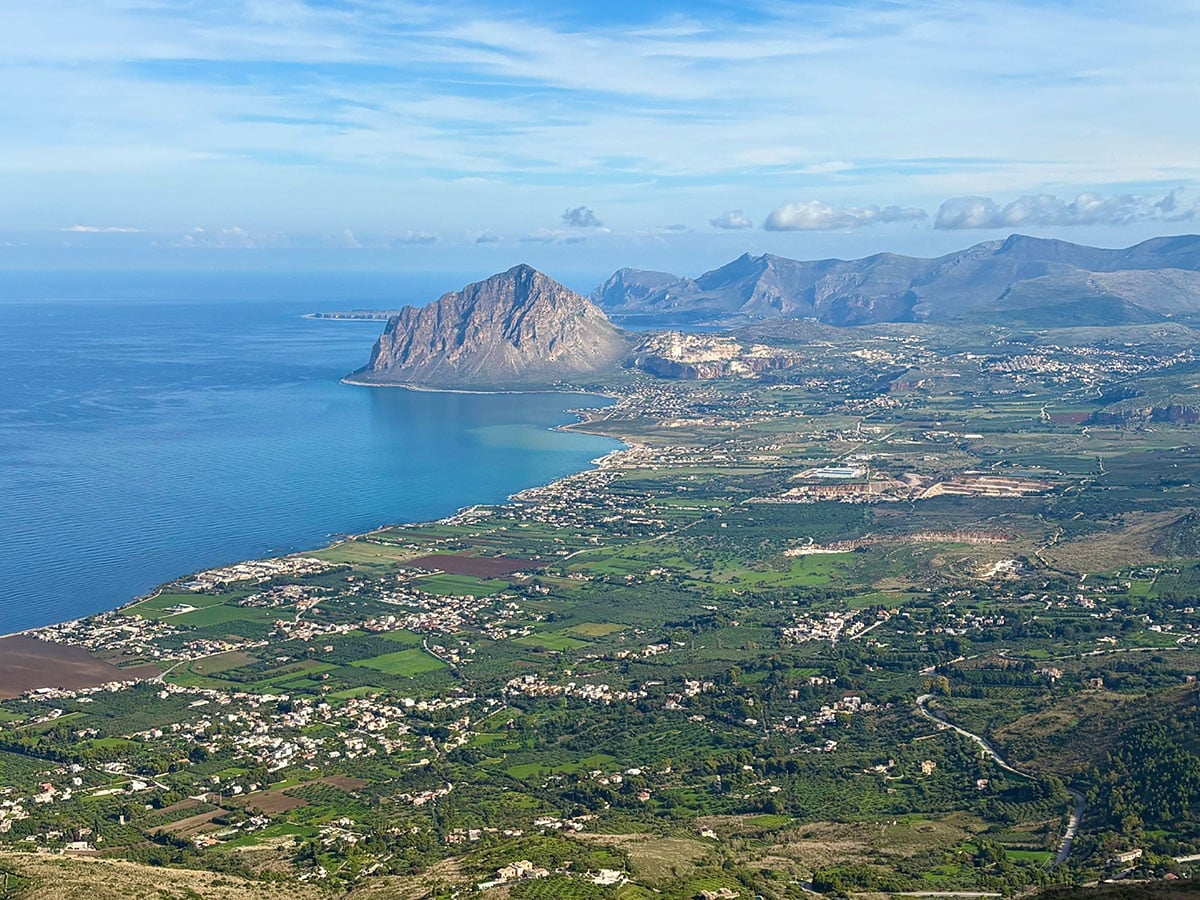 Chi-chi Taormina did not disappoint. With well-preserved Greek and Roman ruins, a lovely medieval quarter, and trendy boutiques and restaurants (which we prowled at will), no wonder it’s a tourist magnet. From the pedestrian-only stone streets to the outdoor cafés, it invites people-watching at its best. Plus, Taormina’s enviable hillside location has showstopping views of the scalloped coastline and Mount Etna in the distance.
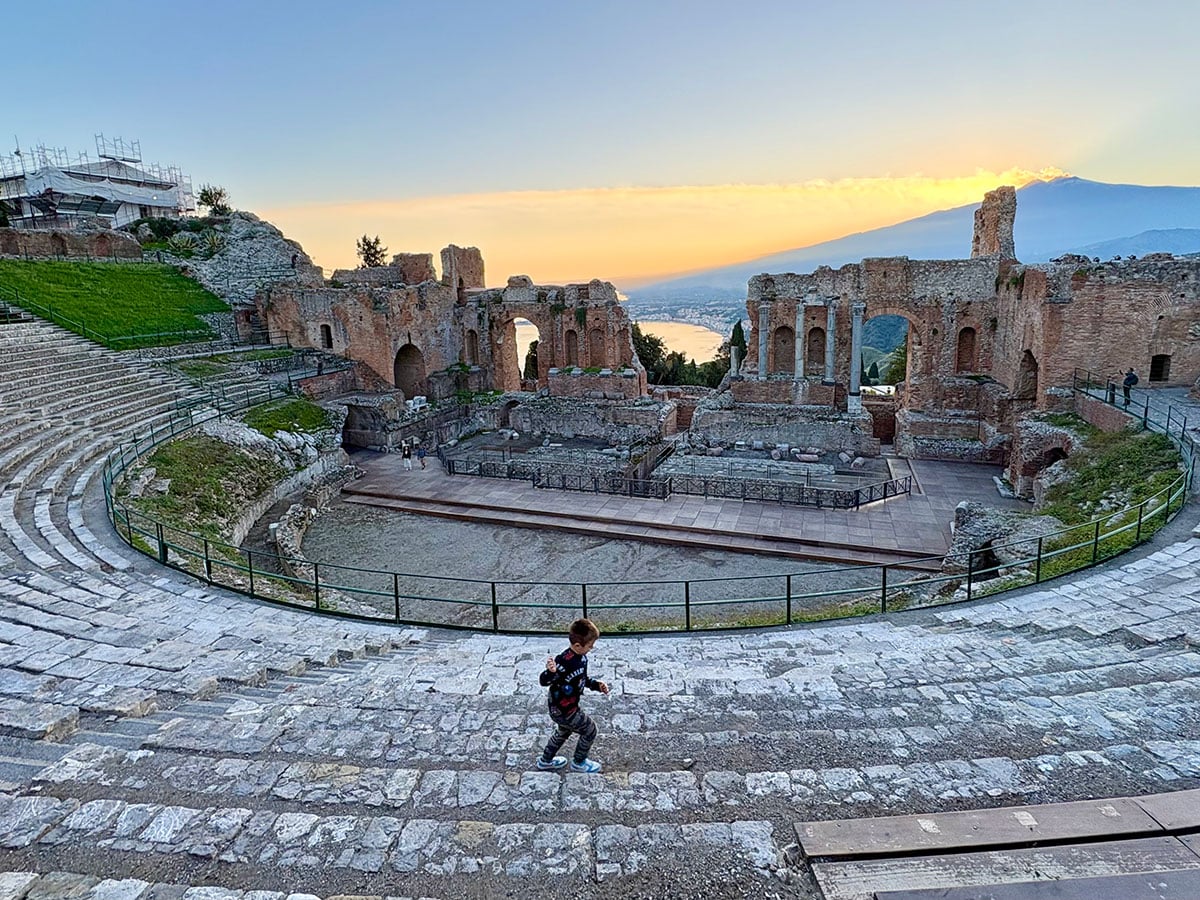 “Ahh, our Etna,” sighed our local guide, Paola Arcidiacono, as she shepherded us through the hillside Greek Theater, built in the third century BC and now used for summer performances. “Always she puffs in and out. And sometimes, she sneezes.” With Etna beckoning from afar, I marveled at the ancient stones, once used for gladiator contests before 10,000 spectators, now aglow in the setting sun.
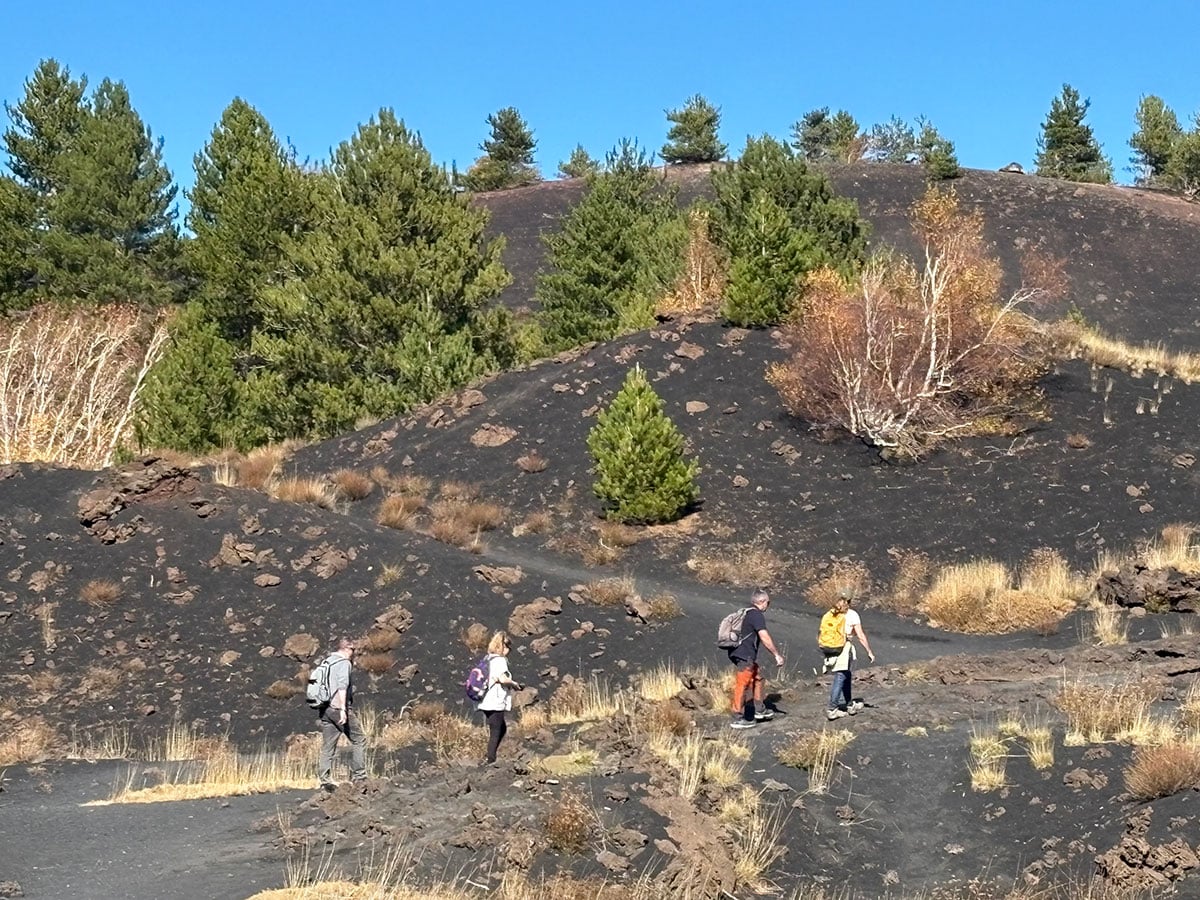 We visited Etna the next day. Volcano expert Giacomo Strazzeri-Assab guided our little group up its slopes, highlighting the major eruptions over the years — 1669, 1928, 1971, and 1983 — including as recently as 2002, which destroyed much of Sicily’s most famous ski area.
“Etna is the most active volcano in the world,” he explained. “It has no plug, so gas escapes all the time. But the lava flow rarely kills people, because it’s slow moving. That’s why people return.” Still, ash repeatedly blows onto the houses in its path as it did in 2020.
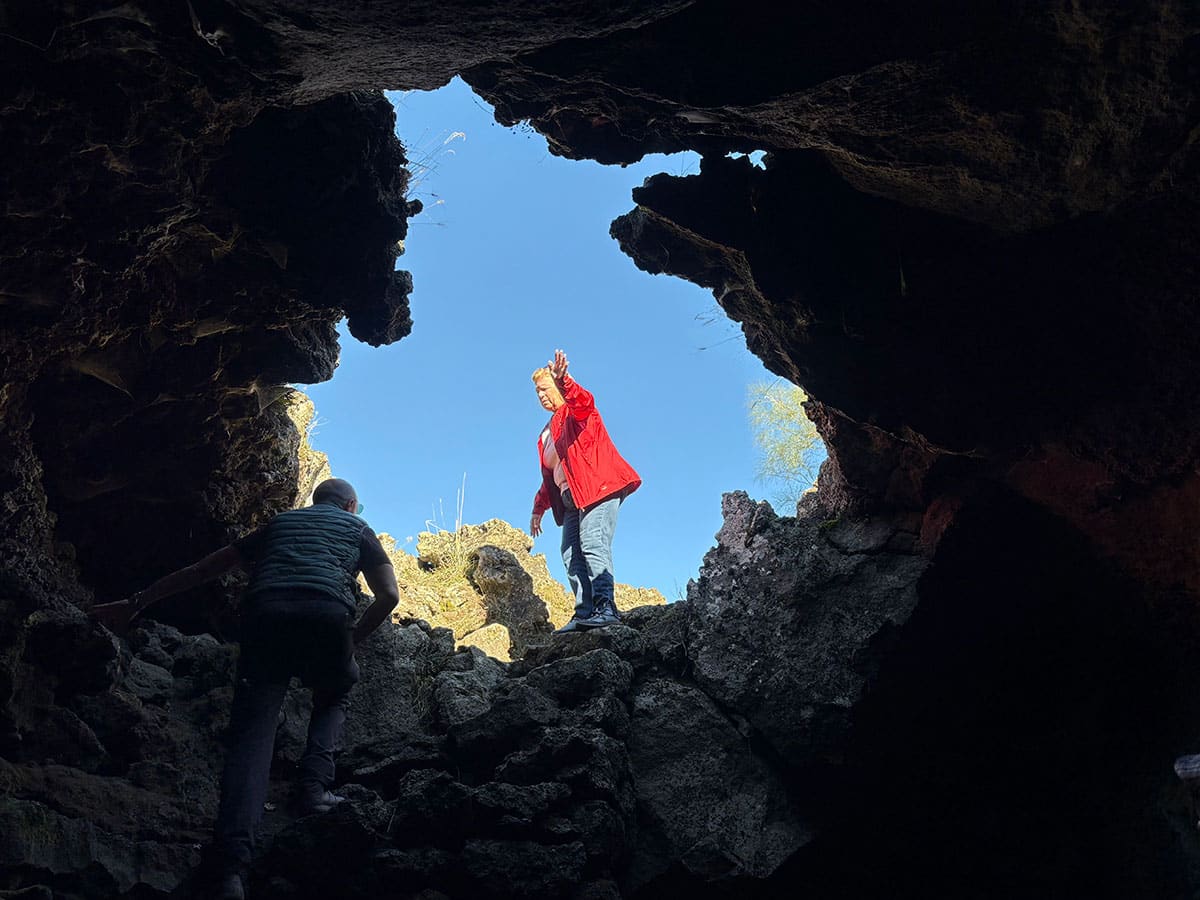 A drive through various climatic zones brought us to a lava field on the peak, which we crossed on foot to climb into an underground cave carved from lava flows. It was visceral proof of Etna’s power to sculpt the landscape.
“People feel Etnian who live near the mountain,” observed Giacomo. Not surprising, given that the volcanic soil supports nearby farms and villages. The mountain’s mineral-rich ash enhances the flavors of local fruits and prized pistachios and nourishes the grape vines that turn into award-winning wines.
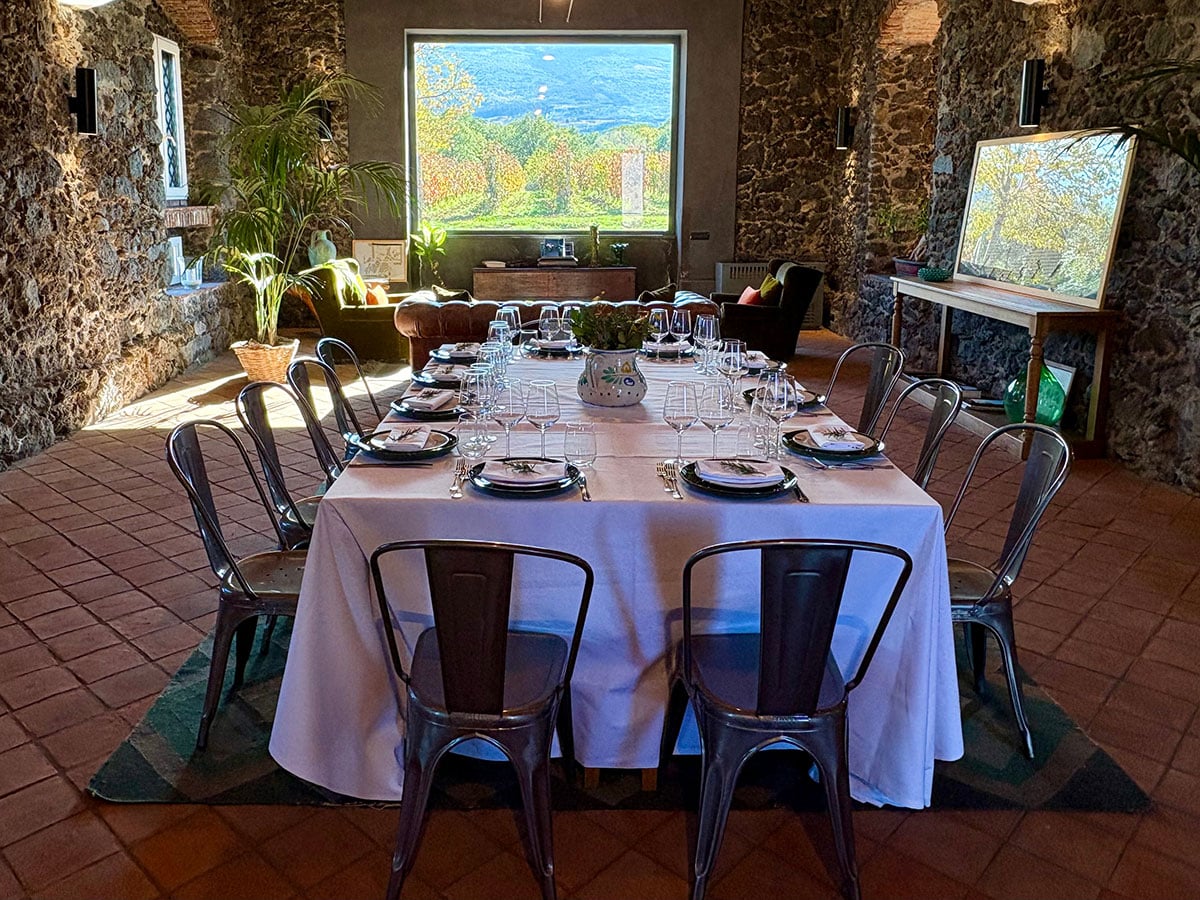 To sample those vintages, we visited the nearby Cottanera Winery for a memorable post-Etna lunch. In a gorgeous lava-stone dining room, we feasted on cheese from sheep that graze on the grounds, pasta made from local grain, and a succession of wine-paired antipasti. It was a pinch-me moment as I gazed out the picture window at what resembled an Impressionist painting: the neatly planted vineyard marching toward Etna’s perpetual plume.
Before leaving Taormina, we toasted our good fortune at the elegant Four Seasons hotel bar, made famous in Season 2 of HBO’s hit show, “The White Lotus.” While Hollywood may have boosted Sicily’s recent popularity, the island’s considerable charms, I discovered, are as eternal as they’ve ever been.