If you read my newsletter regularly, you probably know that I fly American Airlines a lot. I’ve been one of their top-tier elite frequent flyers for more than a decade and I’m also a Million Miler. But that doesn’t mean I think American is the best airline. In fact, I’ve been pretty critical of some of their decisions over the years, especially as Delta and United continued improving their products while American seemed to be falling further behind.
 The main reason I’ve remained loyal to American is: Their route network worked best for me. For years, I flew from Los Angeles to Miami every three weeks to visit my late father. I also traveled frequently to New York and Connecticut to see my siblings. American offered convenient flights to the places I needed to go, and having elite status came with some great perks, including complimentary upgrades (gotta love a lie-flat seat) that I used to receive quite often. Unfortunately, those upgrades have become much harder to score since they started selling them.
But there’s no question that Delta and United have been capitalizing on some of American’s mistakes, questionable decisions and failure to invest in certain parts of the passenger experience.
That’s why I’ve been pleasantly surprised by the number of announcements American has made over the past several weeks. It almost feels like someone at headquarters finally said, “Enough is enough. We need to start competing again.”
Here are some of the biggest changes American Airlines has announced recently and what they mean for travelers.
1. American Airlines is bringing Starlink Wi-Fi to its entire mainline fleet
On October 8, American announced that it plans to install Starlink high-speed internet on every mainline aircraft, including its Airbus and Boeing narrowbody jets and widebody aircraft. Installations will begin in early 2027, with plans to equip more than 1,000 aircraft.
According to American’s announcement, the technology can deliver speeds of up to 1 Gbps per terminal, potentially making streaming, browsing and working in the air much easier.
American already began rolling out complimentary high-speed Wi-Fi for AAdvantage members earlier this year, so this is another significant investment in connectivity.
I’ve experienced Starlink on other airlines and it’s impressive. Reliable, fast internet is becoming increasingly important, especially for business travelers and people like me who work while flying.
One important note: American’s announcement covers its mainline fleet of more than 1,000 aircraft, but not the hundreds of smaller American Eagle regional jets. The airline hasn’t announced whether those aircraft will eventually receive Starlink.
2. American is bringing back seatback entertainment screens
On August 18, American announced plans to install seatback entertainment screens at every seat across its narrowbody fleet. Why is that such a big deal? Because American spent years ripping them out!
The airline made a calculated bet that passengers would increasingly bring their own phones, tablets and laptops onboard and wouldn’t need a screen built into the seat. Removing the systems also reduced aircraft weight, which saves fuel and therefore money.
Personally, I love having a seatback screen, even when I’m using my laptop or phone. One of my favorite things to do is leave the moving map on throughout the flight so I can see exactly where we are.
The new screens will feature 4K displays, Bluetooth audio connectivity and USB-C charging ports. American says the installation program is expected to be completed by early next decade, so passengers shouldn’t expect to see screens on every flight anytime soon.
I wrote about this announcement in more detail here: American Airlines Spent Years Ripping Out Seatback Screens. Now It’s Putting Them Back.
3. American wants to stop involuntarily bumping passengers
Here’s another change that could make a real difference. According to a recent report in The Wall Street Journal, American is changing how it handles oversold flights and directing employees to keep looking for volunteers rather than involuntarily denying passengers boarding.
The airline is reportedly willing to hold a flight while employees continue seeking volunteers and is also making it easier to accommodate passengers who agree to give up their seats. This is welcome news because few things are more frustrating than arriving at the airport with a confirmed reservation only to be told you can’t board because the airline sold more tickets than it has seats.
Of course, American’s published conditions of carriage still allow involuntary denied boarding under certain circumstances, so we’ll have to see how consistently the new approach works. But encouraging employees to find volunteers instead of forcing passengers off flights is absolutely a step in the right direction.
4. The American Airlines app can automatically move you to a better seat
This is one of my favorite new features because it’s something frequent flyers can actually use right now. American recently announced that eligible AAdvantage members can select their preferred seat characteristics after booking.
For example, if you’re stuck in a middle seat but would prefer an aisle or window, you can indicate your preference in the app instead of checking the seat map every five minutes like I used to. (I also set a seat alert.)
If an eligible seat matching your preferences becomes available, American can automatically move you and send a notification. That’s fantastic because it eliminates the need to constantly check the seat map hoping a better seat opens up.
As someone who frequently checks seat maps before departure, I appreciate this feature. Just remember that it’s available only to eligible AAdvantage members and doesn’t guarantee you’ll get a better seat.
5. American is testing food preorders in economy
How many times have you been on a flight, wanted to purchase something to eat and discovered that the flight attendants had already sold out?
American is testing a solution. Beginning October 13, eligible passengers traveling between Dallas-Fort Worth and Los Angeles will be able to reserve select food items before their flights, with the first eligible departures scheduled for October 20.
The new program is called Reserved Buy on Board. According to the Dallas Morning News report, passengers will be able to reserve food between seven days and 20 hours before departure. Their selections will be loaded specifically for their flight, and payment will be processed when the food is delivered onboard.
I think this is a great idea. Airlines have become so focused on reducing costs and waste that they sometimes don’t stock enough food for passengers who actually want to buy something. Hopefully, American expands this program to more routes if the test is successful.
6. American is building its largest Admirals Club in Charlotte
On October 6, the airline announced plans for a new Admirals Club at Charlotte Douglas International Airport. At more than 40,000 square feet, it will be American’s largest standard Admirals Club. Construction is expected to begin this year, with an opening targeted for early 2028. The airport’s existing American lounges are expected to remain open during construction. That’s welcome news for travelers connecting through Charlotte, one of American’s busiest hubs.
American has also announced other lounge investments, including improvements at Dallas-Fort Worth, Miami and several other airports. Of course, bigger lounges are only part of the equation. Travelers also want comfortable seating, reliable Wi-Fi, clean restrooms and good food.
7. American now lets travelers combine cash and miles
On October 2, American announced the launch of cash-and-miles bookings, allowing eligible U.S. members to combine AAdvantage miles with money when purchasing qualifying domestic flights. Previously, travelers generally had to choose between paying entirely with money or redeeming miles for an award ticket.
This added flexibility could be useful for travelers who don’t have enough miles to cover a full award ticket. However, I would still recommend comparing the cash price with the value of the miles you’re redeeming before booking.
Remember: Just because an airline allows you to use miles doesn’t necessarily mean you’re getting a good deal.
8. American is improving its airport lounge food
American also recently announced refreshed fall menus across its Flagship and Admirals Club lounges. Some of the new offerings include chicken adobo at Dallas-Fort Worth, truffle arancini with Parmesan fondue in Philadelphia and Florida snapper ceviche in Miami.
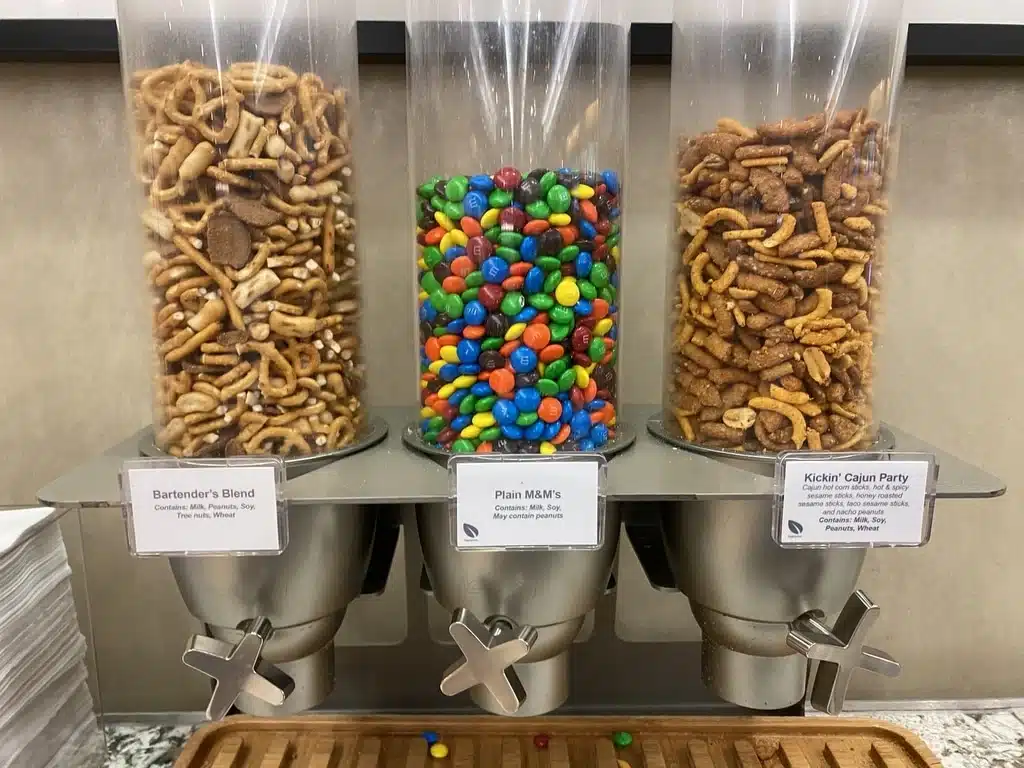
These might sound like small changes, but lounge food is one area where airlines can really differentiate themselves. Delta has invested heavily in its premium lounge experience, and United has also made significant improvements to its lounges. American clearly recognizes that premium travelers expect more than cheese cubes, crackers and a bowl of pretzels. You can see the new offerings in American’s fall lounge menu announcement.
9. American is adding more premium seats and upgrading its cabins
American is also investing in the seats themselves. The airline has announced plans to expand premium seating across its narrowbody fleet, including more spacious seating options and upgraded cabin features.
On September 2, American also unveiled a premium-configured Boeing 777-300ER featuring its new Flagship Suite seats. This is important because premium seating has become a major battleground among U.S. airlines.
Delta and United have spent years investing in premium cabins, and American needs to offer a competitive product if it wants travelers to pay higher fares. The challenge will be making the experience consistent across the fleet. A beautiful new cabin doesn’t help much if the aircraft operating your flight still has an outdated interior.
10. American is improving complimentary snacks and elite benefits
In August, the airline announced an expanded lineup of complimentary Main Cabin snacks, including Goldfish, Tate’s Bake Shop chocolate chip cookies and Peterson’s snack mix. The refreshed selections began appearing on select flights in early October.
And beginning August 25, eligible AAdvantage elite members became eligible for complimentary upgrades to Premium Economy on select Hawaii and transcontinental flights. There’s a catch, though. On flights offering Premium Economy, some travelers who previously might have been eligible for a complimentary upgrade directly to Business Class will now be considered for Premium Economy instead, unless they meet certain exceptions. So while this is a new benefit in some respects, it isn’t necessarily an improvement for every elite traveler.
Still, it’s another example of American adjusting its product and loyalty program.
Is American Airlines finally heading in the right direction?
As I mentioned earlier, I fly American Airlines a lot. I’ve been one of their top-tier elite frequent flyers for more than a decade and I’m also a Million Miler, so I’m very familiar with American’s planes, lounges and onboard experience.
But I also fly plenty of other airlines. So far this year, I’ve flown Alaska, Southwest, United, Finnair, Austrian and Air Tahiti Nui, among others, and when you fly different airlines regularly, you really notice the differences.
Some airlines simply do certain things better, whether it’s their onboard service, food, technology, cabin interiors or how they handle passengers when things go wrong.
For years, I’ve felt that American was falling behind Delta and United in several important areas. While those airlines continued investing in their passenger experience, American sometimes seemed more focused on cutting costs than improving the product. That’s why these recent announcements have caught my attention.
It all started to feel different in August when American announced it was bringing back seatback entertainment screens after spending years removing them. Since then, the airline has announced expanded Starlink Wi-Fi, better app features, improved lounges, more premium seating and changes designed to make traveling less frustrating.
To be fair, many of these improvements are still months or even years away. Announcing a better product is one thing. Actually delivering it consistently is another.